

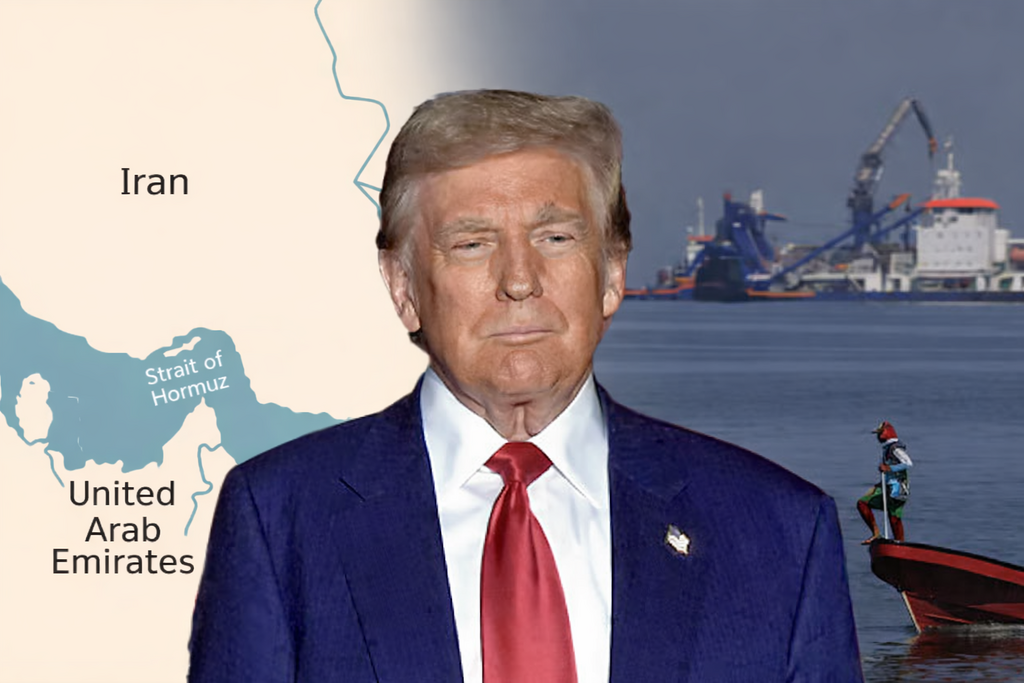
President Donald Trump is weighing ending the U.S. military campaign against Iran without first reopening the Strait of Hormuz, a shift that could leave Tehran with continued control over one of the world’s most critical energy routes, The Wall Street Journal reported, citing U.S. officials.
According to the report, Trump and his advisers have concluded that forcing the waterway open would likely prolong the conflict beyond the administration’s preferred timeline. Instead, the current strategy focuses on weakening Iran’s naval forces and missile capabilities before scaling back military operations.
Officials said Washington intends to rely more heavily on diplomacy once that phase is complete, while also encouraging European and Gulf partners to take a leading role in securing maritime traffic if Iran does not restore access.
The approach underscores competing priorities within the administration. Trump has at times threatened to escalate strikes, including against Iran’s energy infrastructure, if shipping is not restored. In other instances, he has suggested the disruption is a greater concern for other economies than for the United States.
The Strait of Hormuz, a narrow passage connecting the Persian Gulf to global markets, carries roughly a fifth of the world’s oil supply. Its partial closure has already disrupted trade flows, driven up energy prices and created knock-on effects across industries dependent on steady supplies of fuel and raw materials.
Analysts say leaving the strait unresolved risks prolonging instability in global markets. Some warn that Iran could continue to use the chokepoint as leverage in negotiations, forcing the United States and its allies to choose between diplomatic concessions and further military action.
Critics of the emerging strategy argue that ending the campaign before restoring shipping would leave a central objective unaddressed. Suzanne Maloney, a senior fellow at the Brookings Institution, said such a move could deepen economic fallout, noting that global energy markets make it difficult for the United States to insulate itself from disruptions.
At the same time, the administration has continued to reinforce its military presence in the region. Additional naval assets and Marine forces have been deployed, and further troop deployments remain under consideration, the report said.
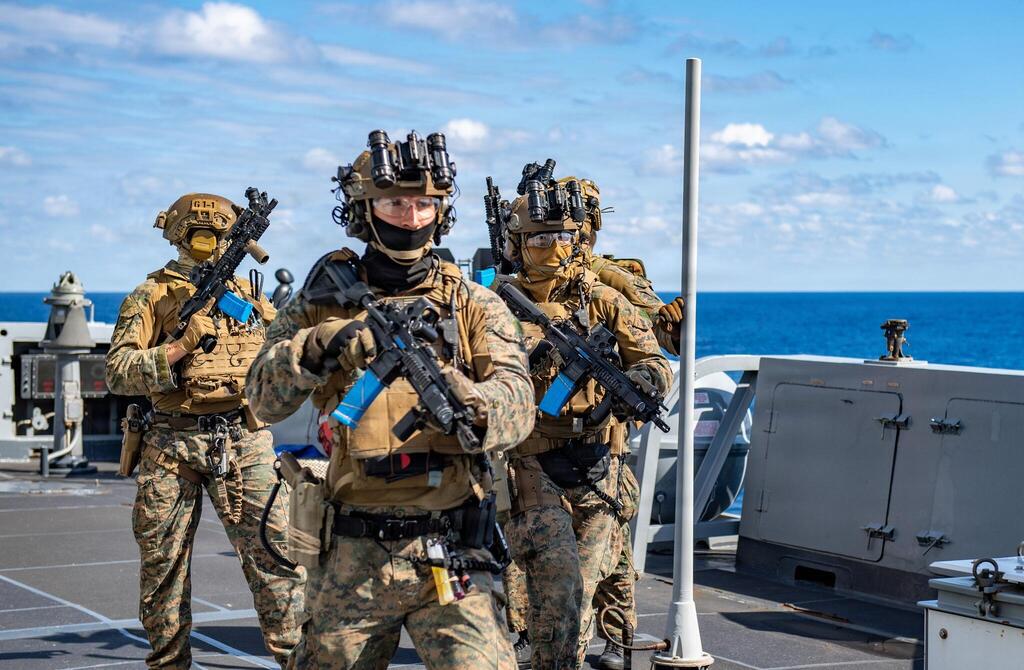
US Marines
Despite that buildup, officials indicated that reopening the strait is not currently among the core military objectives, which remain focused on Iran’s military infrastructure and its nuclear-related capabilities.
Secretary of State Marco Rubio said the current phase of operations is expected to conclude within weeks, after which responsibility for restoring maritime access could shift either to Iran or to an international coalition, potentially backed by the United States.
Iran’s earlier moves to mine the waterway and threaten commercial vessels sharply reduced traffic, complicating efforts to maintain normal shipping. U.S. officials had anticipated such a scenario but have so far avoided committing to a large-scale operation to clear the route.
In the meantime, Washington has explored interim measures, including urging commercial shipping to continue operations and considering multinational naval escorts for tankers.
Administration officials also stress that the strait’s closure has a greater impact on energy-importing regions such as Europe and Asia, and have pressed partners to prepare for a more active role in ensuring freedom of navigation.
Nearly 40 countries have signaled willingness to contribute to such efforts, though no coordinated operation has yet been launched.
Oil prices have already climbed above $100 a barrel, and some analysts warn they could rise significantly further if the disruption persists, adding to pressure on the global economy.