

President Donald Trump said Thursday that the United States has an “armada” moving toward Iran, while stressing he hoped military force would not be needed, as he renewed warnings to Tehran over killing protesters or restarting its nuclear program.
Speaking to reporters aboard Air Force One after attending the World Economic Forum in Davos, Switzerland, Trump said the US was closely monitoring Iran’s actions.
Gallery
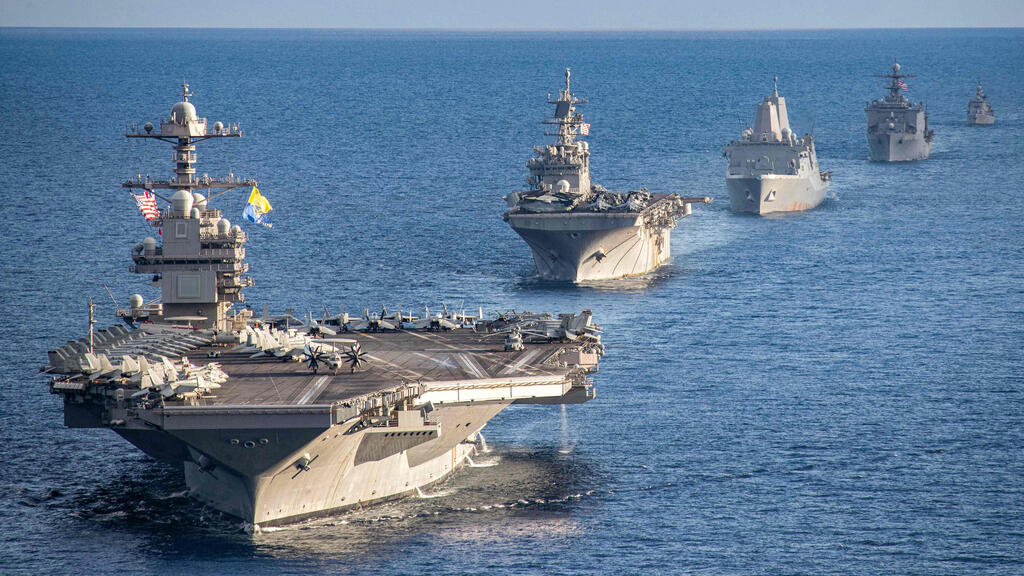
Donald Trump said US has an 'armada' moving toward Iran
(Photo: Maxwell Orlosky / US DEPARTMENT OF DEFENSE / AFP)
“We have a lot of ships going that direction, just in case,” Trump said. “I’d rather not see anything happen, but we’re watching them very closely.”
At another point, he added: “We have an armada heading in that direction, and maybe we won’t have to use it.”
US officials, speaking on condition of anonymity, said the aircraft carrier USS Abraham Lincoln and several guided-missile destroyers are expected to arrive in the Middle East in the coming days. One official said the Pentagon is also considering deploying additional air defense systems to the region, a move aimed at protecting US bases from potential Iranian strikes.
The naval deployments, which began shifting from the Asia-Pacific last week, expand the range of options available to Trump at a time of heightened tensions with Iran. US forces surged in the region last year ahead of American strikes on Iranian nuclear sites in June.
Trump reiterated that the United States would act again if Iran attempts to restart its nuclear program.
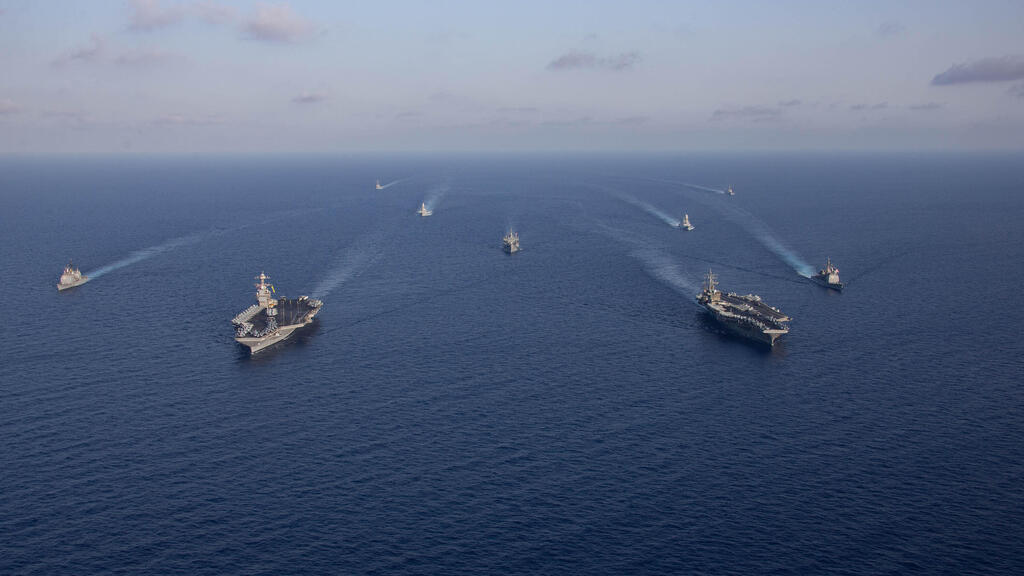
The US navy
(Photo: AFP/ US Department of Defense/US Navy/Mass Communication Specialist 2nd Class Jacob Mattingly)
“If they try to do it again, they have to go to another area,” he said. “We’ll hit them there too, just as easily.”
Iran is required to report to the International Atomic Energy Agency on the status of nuclear sites struck by the United States and on the fate of nuclear material believed to be stored there. That includes an estimated 440.9 kilograms of uranium enriched to 60 percent purity, which, if further enriched, could be sufficient for about 10 nuclear bombs, according to IAEA benchmarks.
The agency has not verified Iran’s stockpile of highly enriched uranium for at least seven months, despite recommendations that such inspections be conducted monthly.
Trump also repeated claims that his threats had deterred mass executions in Iran following months of protests.
“I said: ‘If you hang those people, you’re going to be hit harder than you’ve ever been hit,’” Trump said, adding that Iran canceled nearly 840 planned executions. The claims have not been independently verified.
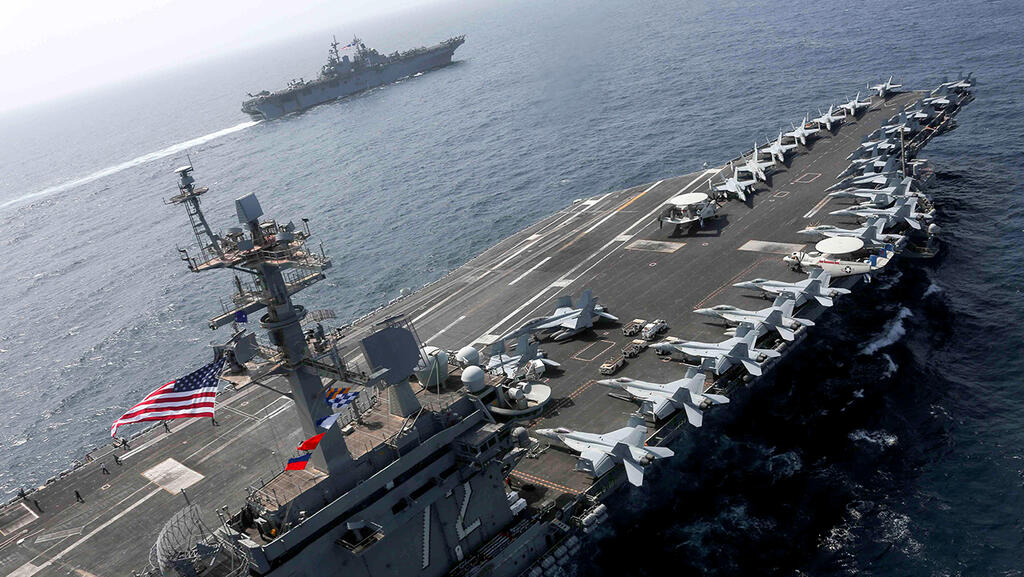
The ‘Abraham Lincoln’ aircraft carrier
(Photo: Reuters)
Protests in Iran erupted on December 28 over economic hardship and quickly spread nationwide, prompting a sweeping security crackdown. The US-based Human Rights Activists News Agency said it has verified 4,519 deaths linked to the unrest, including 4,251 protesters, with thousands more under review.
An Iranian official told Reuters the confirmed death toll exceeded 5,000, including about 500 members of the security forces. Asked how many protesters were killed, Trump said, “Nobody knows. It’s a lot, no matter what.”
Earlier this week, Trump declined to say whether the United States would strike Iran if executions resume, calling it “foolish” to publicly commit to specific actions.
Meanwhile, Prime Minister Benjamin Netanyahu convened a security discussion Thursday evening with Defense Minister Israel Katz and senior defense officials. While not a full security cabinet meeting, officials said Iran, Gaza and regional developments were discussed.
Turkey also weighed in, with President Recep Tayyip Erdogan telling his Iranian counterpart that Ankara opposes foreign intervention in Iran and supports regional stability.
Iranian President Masoud Pezeshkian said the protests were exploited by foreign enemies and pledged investigations into the unrest, while acknowledging public grievances and promising compensation for those harmed.
Internet access across Iran remained severely restricted, according to NetBlocks, more than two weeks after widespread outages began.