

The US aircraft carrier ‘Abraham Lincoln’ continued its journey toward the Middle East on Thursday evening. The carrier, which was sent to the South China Sea, was redirected amid President Donald Trump’s intention last week to strike Iran over plans by the Islamic Republic to execute protesters. The aircraft carrier is expected to arrive in the region in the coming days, US officials told Reuters.
President Trump said last night that he hopes there will be no further American action in Iran. Asked today whether he would strike Iran if it kills or hangs protesters, he declined to respond. “I do not want to talk about it and put myself in that position. I think it is foolish to say,” Trump said in an interview with Fox Business.
Gallery
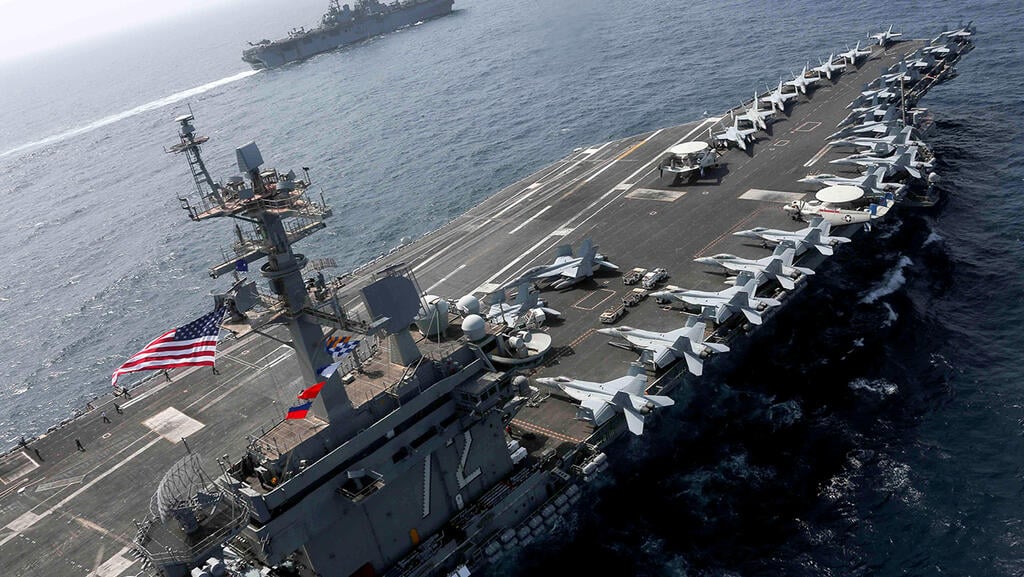
The ‘Abraham Lincoln’ aircraft carrier is expected to arrive in the region in the coming days
(Photo: Reuters)
Prime Minister Benjamin Netanyahu convened a security discussion on Thursday evening with Defense Minister Israel Katz and senior defense officials. It was not a meeting of the narrow security cabinet. It can be assumed that Iran, Gaza and other issues were discussed.
In addition to military assets already deployed to the region, a US official quoted by Reuters said Washington is also examining the possibility of reinforcing its air defense systems in the Middle East. In an interview with CNBC today, Trump warned that if Iran resumes nuclear activity, another US strike could follow. “They cannot do the nuclear. If they do it, it is going to happen again,” he said.
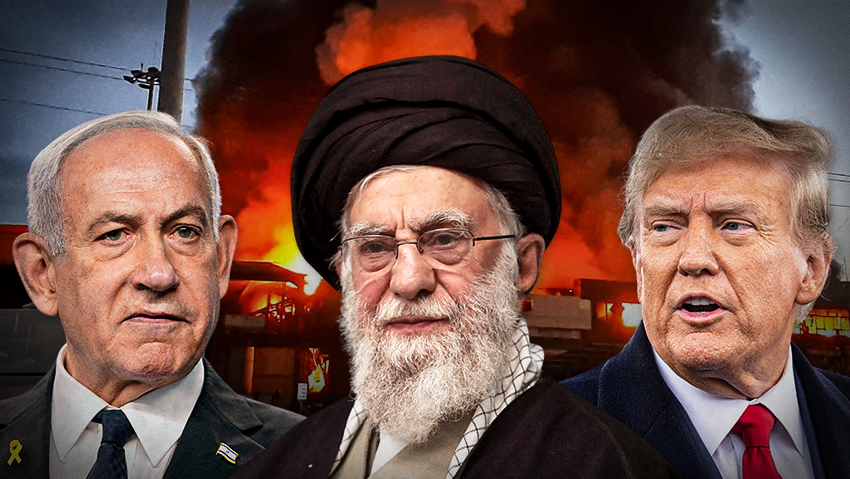
Trump stressed it would be “foolish to say” whether he would strike Iran, as Netanyahu convened a security meeting
(Photo: lev radin/Shutterstock, AP, Nathan Howard/Reuters)
Asked on Fox Business about other casualty figures, including reports of about 20,000 dead, Trump said: “There are different numbers that I hear. I know they wanted to hang 887 people. They decided not to and they did not do it. Beyond that, we will see what happens. If we had not removed the nuclear threat, there would have been no peace. They were the bully of the Middle East.”
The International Center for Human Rights Violations in Iran, an opposition group, claimed on Thursday evening that 43,000 people were killed in the unrest, 350,000 were wounded and about 10,000 were blinded. These figures have not been verified by any other source.
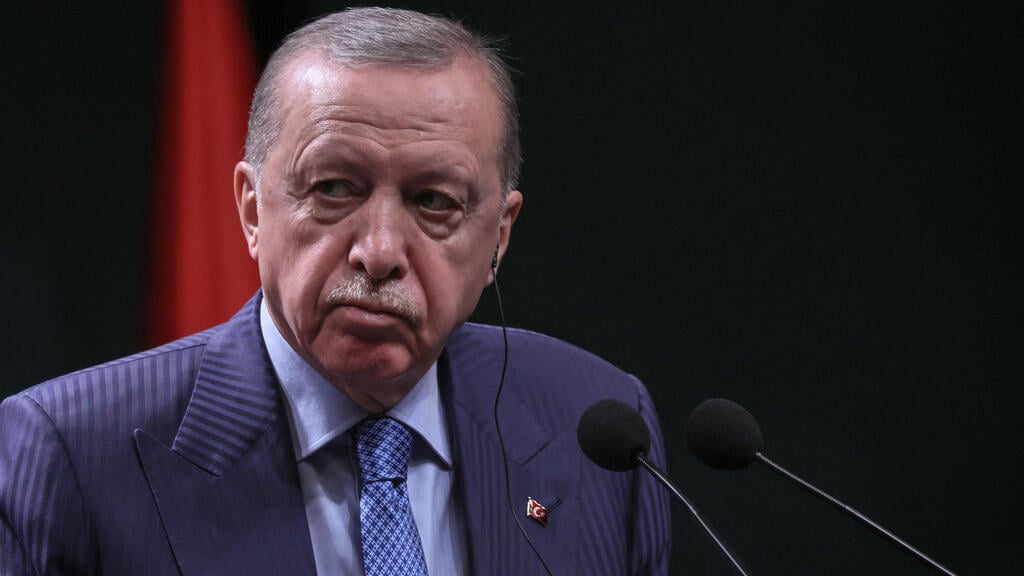
'Turkey opposes any foreign intervention in Iran,' Erdogan said
(Photo: Adem Altan / AFP)
Meanwhile, Turkish President Recep Tayyip Erdogan spoke on Thursday evening with his Iranian counterpart, Masoud Pezeshkian, and stressed that “Turkey opposes any foreign intervention in Iran and values the peace and stability of its neighbors.” The Turkish presidency said the two leaders discussed recent developments in Iran and that Erdogan emphasized that resolving the problems without further escalation is important “also for Ankara’s benefit.”
Pezeshkian also addressed the Iranian people on Thursday evening, saying “the events of recent weeks were a difficult test that left deep pain in all of us.” He said “the plot of Iran’s enemies turned the legitimate and peaceful protest of the people into a bloody and violent battle. The conspiracy of Iran’s enemies led to the deaths of about 3,000 citizens and the injury of thousands more.” He claimed that “the malicious hands that spilled the blood of more than 1,000 Iranians in the ‘12-day war’ were exposed, using mercenaries.”
“This American-Zionist plot is revenge against the Iranian people after they were defeated in the ‘12-day war,’” he added. He said various groups were tasked with conducting a thorough investigation into the causes and motives behind the events “to eradicate the root of the violence.”
“Protest is a natural right of citizens, and the government sees itself as committed to listening to the voice of the people,” Pezeshkian said. He added that “in dealing with detainees, precautions will be taken and a distinction will be made between protesters and those whose hands are stained with the blood of innocent people.” “The government and the authorities bear responsibility toward those harmed in the events and will do everything they can to compensate for the losses. Identifying and addressing weaknesses and learning from experience will guide us toward the future,” he said.
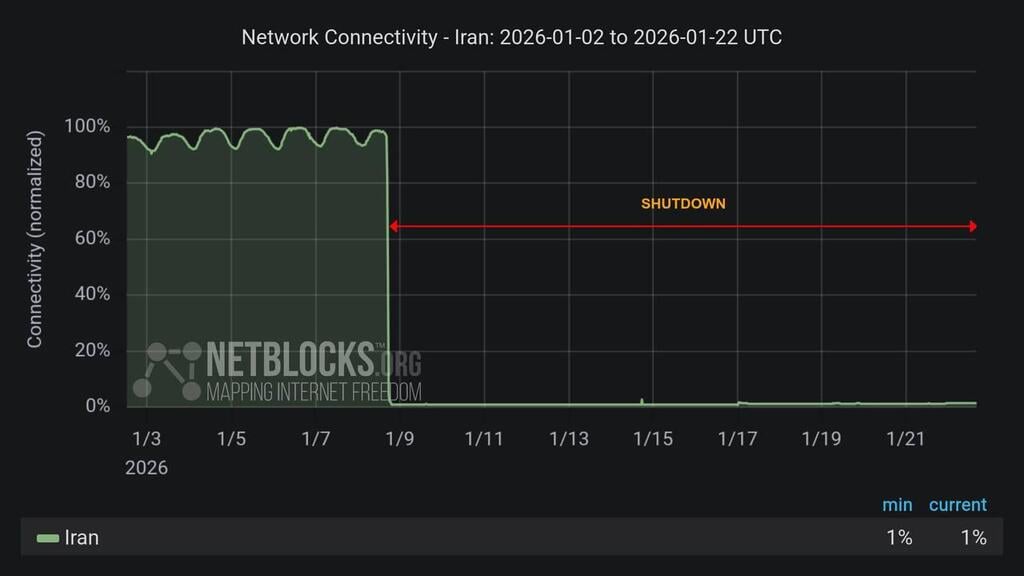
The state of internet access in Iran, according to NetBlocks
At the same time, NetBlocks, an organization that monitors internet accessibility worldwide, said on Thursday evening that 336 hours after internet access was cut across Iran, connectivity levels remained low to nonexistent. On Wednesday, Iranian state television issued its first official update on the death toll from the mass protests, figures that were far lower than those published by human rights activists. According to state television, 3,117 people were killed, including 2,427 civilians and members of the security forces. State television did not detail the remaining fatalities included in the total.
The Iranian statement said the 2,427 dead are considered ‘martyrs’ because they are “innocent victims.” According to the announcement, “many martyrs were simply bystanders who were deliberately targeted as part of a strategy to increase the number of casualties, or were killed by indiscriminate gunfire and acts of terrorist violence.”
First published: 23:46, 01.22.26