

Border Police officers shot and killed a Palestinian on Monday morning as he tried to cross into Jerusalem through a breach in the separation fence near Atarot. Last week, two terrorists who carried out the deadly attack at the Ramot junction — where six people were killed — entered Israel through the same spot.
Palestinian medical teams said the man was critically wounded and later died of his injuries. On Thursday, two Palestinians without entry permits were moderately wounded when they attempted to infiltrate the city at the same location and were shot by police.
The breach in the fence near Atarot
(צילום: אלכס גמבורג )


Despite heightened security tensions, recent weeks have seen several cases of Palestinians entering Israel, often by climbing the fence. Since the start of the war, the army has tightened open-fire regulations in these areas. Soldiers now conduct arrest procedures that may end with gunfire, including against those tampering with the barrier, and especially against those crossing it.
Military officials say the breaches along the seam line keep them awake at night. The security establishment fears a wave of copycat attacks by lone terrorists. Even after last week’s incidents, some gaps in the fence remain wide open. A Ynet team that spent about an hour near one such breach saw only a single police car drive by.
Most Palestinians crossing through the barrier around Jerusalem are job seekers, but at times terrorists also make use of the openings. In 2019, a Palestinian who entered through a breach near Har Gilo murdered Ori Ansbacher, and the same route was later used by others who carried out attacks in the city.
Police reported last week that more than 11,000 Palestinians without entry permits have been arrested since the start of the year. But despite repeated warnings about the breaches, authorities have done little to address the problem for more than a year.
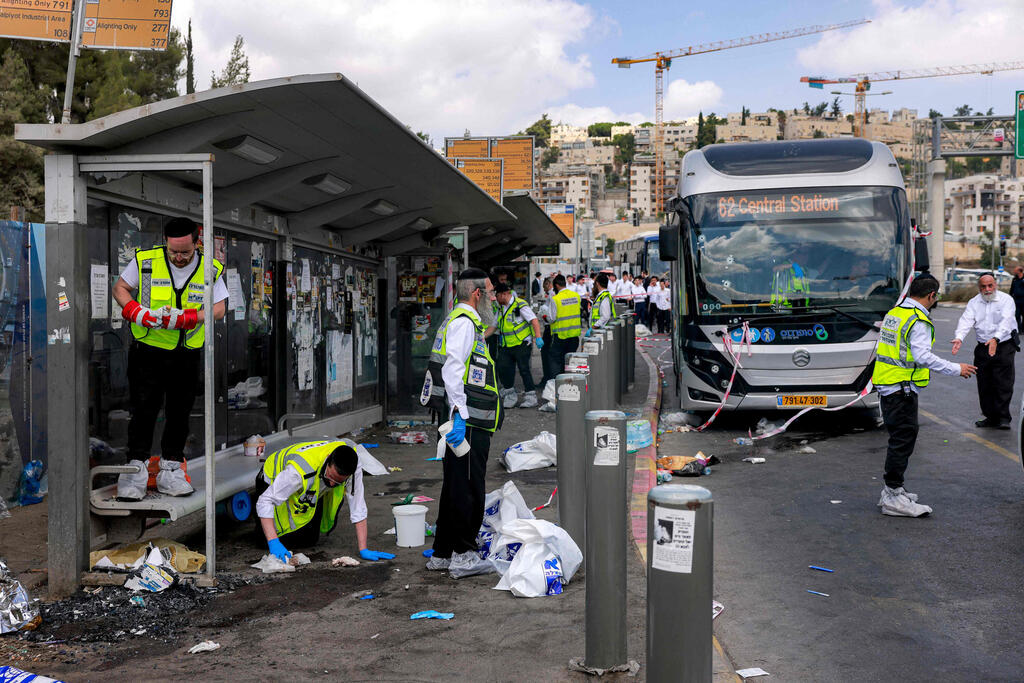
Aftermath of the terrorist attack in Ramot
(Photo: Menahem KAHANA / AFP)
The surge in infiltrations stems partly from the dire economic situation in the West Bank, combined with tight restrictions on Palestinian entry to Israel since the Oct. 7 massacre. Many are willing to take greater risks to find work.
A security official told Ynet that the ban on Palestinian workers has fueled the underground employment system, which lacks oversight of who is entering. “If work permits were approved, it would help us track people,” he said.
“It’s clear that if Israel really wanted to seal every breach hermetically, it could,” he added. “But it hasn’t happened, and for years Palestinians without permits have been coming in. It benefits the economy, both in Israel and in Palestinian cities, and only after a terrorist attack does everyone wake up. If they want to close it, they should close it completely — all the way.”