


Ministers exchanged sharp words during a tense Cabinet meeting Sunday night over the decision to reopen the Rafah border crossing, ultimately overridden by a directive from Prime Minister Benjamin Netanyahu’s office aligning with the U.S.-brokered agreement.
Cabinet hardliners Itamar Ben-Gvir, Bezalel Smotrich, Miri Regev and Orit Strock voiced fierce opposition to the move, calling it “a major mistake” and “a broken promise” that would effectively transfer control of Gaza to the Palestinian Authority.

Despite public assurances in recent months that the crossing would remain closed, the Prime Minister’s Office issued a statement after the meeting confirming Israel’s compliance with the U.S. plan: “Upon completion of this operation, and in accordance with what has been agreed upon with the US, Israel will open the Rafah Crossing.”
The reopening is part of a broader 20-point plan led by U.S. envoys Jared Kushner and Steve Witkoff, which Netanyahu adopted despite resistance from several Cabinet members. No formal vote was held during the meeting, as ministers were informed that the plan had already been accepted.
The plan permits a limited reopening of the Rafah crossing for the passage of individuals only, under full Israeli supervision. According to Netanyahu’s office, the opening is conditional on the return of all living hostages and Hamas’ full cooperation in locating and returning the remains of fallen hostages, including Sergeant First Class Ran Gvili, the last captive remaining in Gaza.
The IDF continues to carry out targeted operations aimed at collecting intelligence related to Gvili, who was declared dead in captivity. The statement emphasized that Israel “remains committed to bringing home the remains of Israel’s hero, Sergeant First Class Ran Gvili, and will spare no effort in doing so.”
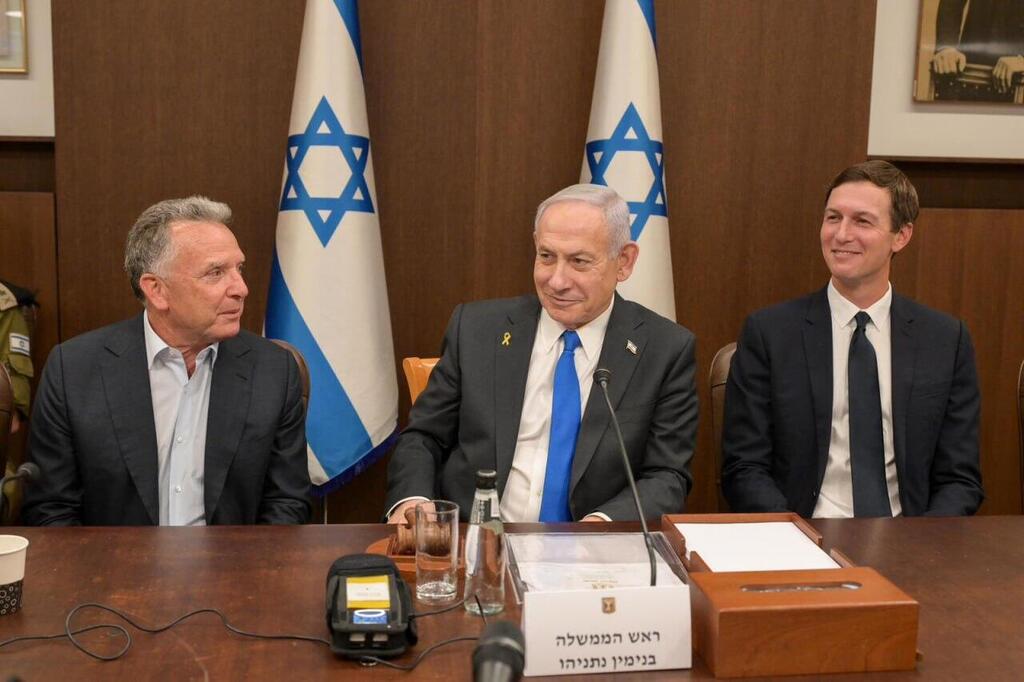
Prime Minister Benjamin Netanyahu, center, meets with US envoys Steve Witkoff and Jared Kushner in Jerusalem
(Photo: GPO)
Despite Witkoff’s recent remarks calling for an immediate opening of the crossing and suggesting that Hamas was making genuine efforts to locate Gvili’s body, the Cabinet’s decision underscores the influence of Washington’s demands. Israeli officials had sought to delay the move, but U.S. pressure, including Kushner’s plan, ultimately prevailed.
The Rafah crossing is expected to reopen in the coming days, whether or not Gvili’s remains are recovered.
Double game
While ministers at Sunday’s Cabinet meeting opposed any involvement by the Palestinian Authority at the Rafah crossing and insisted it be used as leverage for Gvili's return, it appears Netanyahu had already decided to follow the path pushed by Trump emissaries, whom he met with on Saturday night. He staged a drama: his team briefed that without Gvili’s return, Rafah would not open. Perhaps they hoped for a miracle, that Gvili would be found.
Just before the Cabinet session, the military revealed the existence of a covert operation to locate Gvili in a cemetery in northern Gaza. Political leaders prayed that finding Gvili would neutralize ministers' opposition to opening the crossing. When that failed, they settled for saying “100% effort” had been made.
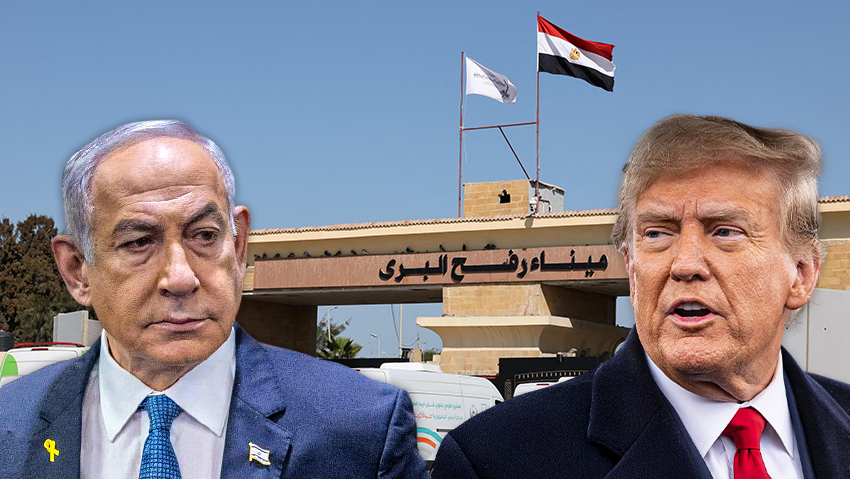
(Photo: Lev Radin/Shutterstock, AP, Chaim Goldberg/Flash90, REUTERS/Mohamed Abd El Ghany)
For Gaza's new technocrat government, known as the National Committee for the Administration of Gaza (NCAG), reopening the crossing is seen as essential for its success and for demonstrating results even before it formally takes over running the enclave. The Americans are invested in its success, and Netanyahu, it appears, is unwilling to open a front with President Donald Trump, even if the cost is abandoning principles he vowed to uphold.
Ben-Gvir said at the meeting that opening Rafah would be a grave mistake and send a terrible message. “We’ve done big things like killing tens of thousands of terrorists, but we still haven’t destroyed Hamas completely. We need to dismantle and demilitarize—it’s time to stop being naïve about Witkoff and Kushner,” he said. Smotrich added, “If we don’t take control there with military rule, it will mean we’re accepting a Palestinian state.”
Strock criticized the move, saying, “We’re handing Gaza to the Palestinian Authority at the cost of our children’s blood. This Cabinet will eventually vote to send our soldiers to fight Hamas, because no one else will do it. What will we tell them then?” Regev agreed, saying, “We must ensure that Gaza is governed neither by Hamas nor by the Palestinian Authority.”
Netanyahu, in his typical style, allowed ministers to “let off steam” while he continued to lead the diplomatic maneuvering outside the formal security forum. There was no vote during the meeting, but frustration ran high. “There were no objections. No one’s thrilled about it. But we get that it’s the lesser evil,” one Cabinet minister said
The remaining obstacle
The real challenge now is not just political, but security-related. The second phase of the plan speaks of dismantling Hamas and demilitarizing Gaza. Yet weeks after the plan’s announcement, no one has stepped up to implement it. An international stabilization force, meant to handle this task, has yet to materialize, as countries remain reluctant to participate.
In the absence of an alternative, the responsibility is likely to fall once again on IDF soldiers, while the political leadership moves forward with opening the gates that, based on past experience, may allow Hamas to regroup.
A report released Sunday by a state commission investigating the alleged irregularities in the controversial purchase of submarines by the military stated it found that “despite its responsibility, the Cabinet does not shape force-building policy. Cabinet members told the commission they served as a ‘rubber stamp’ for decisions made by the defense establishment.”
Sunday’s decision suggests little has changed. Even today, the Cabinet remains a forum for theoretical discussions, while strategic decisions, those that shape the future of Gaza and define relations with Iran, are made in a separate channel led by Netanyahu.