

A man attacked and injured four people on Thursday on a high-speed train in southern Germany, around 70 kilometres (43.5 miles) from the Austrian border, before being arrested, police said. The German newspaper Bild reported that the attacker was a 20-year-old Syrian man.
The ICE 91 train was carrying around 500 passengers from Hamburg in northern Germany to the Austrian capital, Vienna. The man was arrested and the rail line shut down, a police statement said.
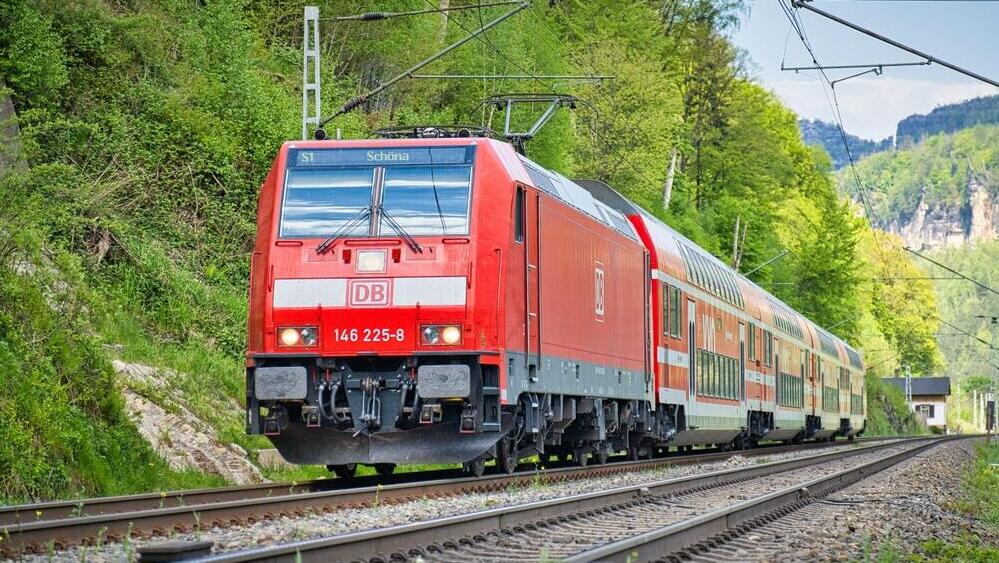
(Photo: Wirestock Creators / Shutterstock)
"Today at around 1:55 p.m. (1155 GMT), a man injured several people with dangerous objects on an ICE train heading towards Vienna shortly before Strasskirchen," a statement from police in the southern state of Bavaria said.
The attacker was also injured, police said.
The attack on the train in Bavaria comes at a time when security in Germany is on high alert. Germany and other countries on the continent have been hit by a series of Islamist terrorist attacks in recent months, mainly through car rammings and stabbings. In one of the most serious attacks, last February, a 24-year-old immigrant from Afghanistan whose asylum application was rejected drove a car into a crowd of protesters in Munich, running over and killing a mother and her infant daughter, and injuring dozens more. It later emerged that he held extremist views and that before the attack he had published Islamist posts online.
Get the Ynetnews app on your smartphone: Google Play: https://bit.ly/4eJ37pE | Apple App Store: https://bit.ly/3ZL7iNv
Many of the stabbing and car ramming incidents that have occurred in Germany in recent years have been linked to Syrian citizens, as was the case about a month and a half ago, when five soccer fans were stabbed in a pub in the western city of Bielefeld. That attack, which is believed to have been planned in advance, was carried out by a Syrian named Mahmoud Muhammad, 35. He stabbed four men aged 22 to 27 and a 26-year-old woman, seriously injuring three of his victims.
Many of the Syrians now living in Germany arrived as refugees in 2015 and 2016, when Chancellor Angela Merkel opened the country’s gates to hundreds of thousands fleeing wars and persecution in the Middle East, including the Syrian civil war and the atrocities committed by ISIS there and in Iraq.
Last month, the Federal Statistical Office revealed that no fewer than 291,955 people were granted German citizenship last year, a 46% increase compared to 2023, and that the largest population of naturalized citizens in 2024 was Syrians – a testament to the changing face of the country, a decade after the massive wave of immigrants from the Middle East. Some 83,150 Syrians were granted German citizenship last year, making up 28% of those naturalized. They were followed on the list by Turks (8%), Iraqis (5%), Russians (4%) and Afghans (3%).