


Israeli officials expressed anger Friday over an emerging memorandum of understanding between the United States and Iran, warning that the reported deal would fall far short of Israel’s strategic goals, even as U.S. President Donald Trump cast new doubt on whether any agreement would be signed.
“Trump screwed us,” one Israeli official told ynet, referring to the emerging U.S.-Iran understanding. Another Israeli official said the deal taking shape “looks very bad.”
Trump talk about Iran deal
(Video: X)


“From our perspective, it is a catastrophe, because it does not meet any of the principles we spoke about when the war began,” the official said.
But after Trump’s latest post on Truth Social, it was no longer clear whether an agreement would be finalized at all.
Iranian reports had listed a long series of provisions allegedly included in the memorandum of understanding. Trump, however, said the terms leaked by Tehran were false.
“The terms that Iran leaked out to the Fake News have NOTHING to do with the terms that were agreed to, in writing,” Trump wrote. “What they said, including their weak and pathetic statement on having a deal, bears no relation to the truth.”
Trump then launched a sharp attack on Iran.
“Very dishonorable people to deal with. With them, there is no such thing as dealing in good faith. AMAZING! Also, their totally rebuffed Drone attack last night against Indian Ships leaving the Hormuz Strait is TOTALLY UNACCEPTABLE. They better get their act together, and FAST!”
The statement appeared to place in doubt the possibility that a memorandum of understanding could be signed within days, despite Trump saying Thursday night that such a deal was imminent.
A senior U.S. administration official said Friday that Washington’s conditions include the dismantling of Iran’s nuclear program. The official said frozen funds would not be released until Tehran meets its commitments, adding that the Strait of Hormuz would be opened to traffic and that Iran would stop financing terrorism.
A third Israeli official, speaking before Trump’s post, said uncertainty remained over whether there was any deal at all.
“First, it is not certain there is an agreement,” the official said. “And even if there is one, the regional working assumption is that it was signed under Iranian pressure and an American climbdown, not the other way around. In any case, that is the mood in our region, and therefore an agreement, at least in the short term, will be considered a failure. I am still skeptical about the signing of an agreement and about its durability over time.”
The official said Iran appeared to have concluded that the use of force could win concessions.
“In my view, Iran has ‘smelled’ that it can achieve things through force, and it will use that in the near future against its neighbors and against us,” he said. “The real test of the agreement, or at least the minimum required to save the West’s dignity, is the removal and destruction of the uranium. If that does not happen either, then the feeling that this is a bad deal will become more concrete.”
The official added that both sides were deliberately leaving key elements vague.
“It is important to put a question mark over this entire agreement, because we only know partial information,” he said. “Both Trump’s statements and the Iranians’ statements intentionally leave a great deal of ambiguity. That ambiguity is meant to allow each side to market the agreement at home as a success: The Iranians will say, we fought until the last moment and stood by our principles. Trump will say, I twisted their arm, threatened them with military blows and they surrendered. Each side will have its own narrative.”
The cool response from the Prime Minister’s Office also reflected Israel’s belief that the emerging agreement is a bad one. Unlike the principles discussed when the military campaign began in late February, the reported deal does not include regime change. According to Iranian reports, the issue of Iran’s proxies would also remain outside the agreement, raising Israeli concerns that Hezbollah is already beginning to reassert itself.
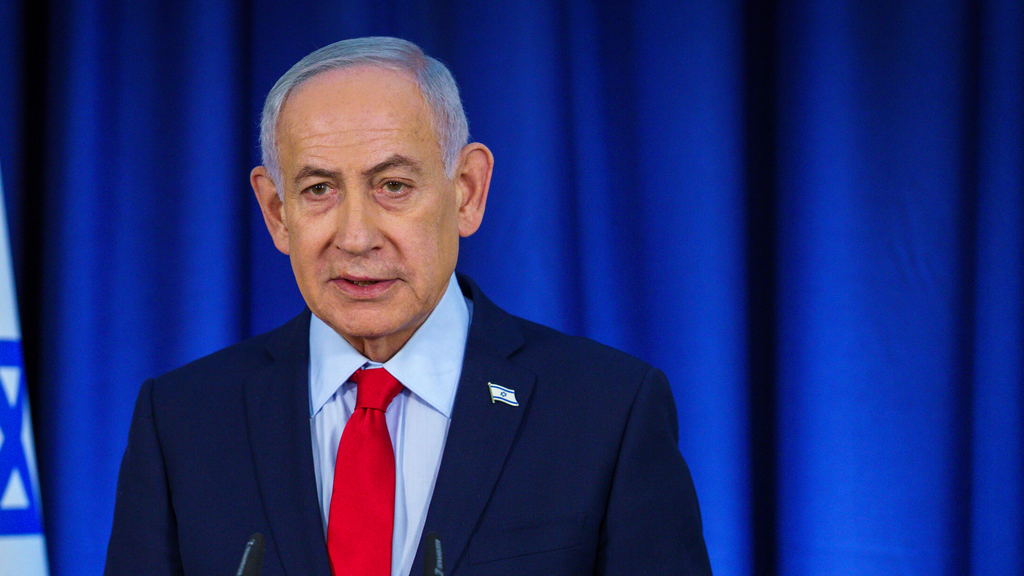
That, in turn, could affect a possible agreement with the Lebanese government. Israeli officials hope that Iran might still give Hezbollah a green light to accept an arrangement with Beirut that would push the terror group north of the Litani River and create a permanent ceasefire that would allow northern Israel to recover. For now, Israeli officials insist there is no unification of fronts with Lebanon and that Iran has failed in its attempt to create such an equation. Israel also stresses that the IDF will retain freedom of action against any emerging threat.
According to the Iranian reports, whose reliability Trump’s statement has now placed in question, the memorandum would see the United States release between 12 billion and 15 billion dollars in frozen funds. Iran would not receive the money in cash, but would be allowed to use it for medicine and food purchases through Qatar, which would serve as trustee for the funds.
The Americans reportedly agreed to increase the sum after Iran accepted that the money would be deposited with Qatar. But Iran would also be allowed to sell oil, a move that could bring Tehran substantial revenue.
The ballistic missile issue also appears to remain entirely outside the deal, because Trump does not view it as an existential threat to Israel or more broadly. That is also why he reportedly told Prime Minister Benjamin Netanyahu, “People weren’t killed on your side, so end this war.”
The core of the agreement is expected to be the nuclear issue. But that issue is complicated, because removing Iran’s fissile material enriched to 60% would not be enough on its own. Even here, Israeli officials believe compromises are likely, and that the fissile material may not be removed from Iran but diluted inside the country under the supervision of inspectors from the International Atomic Energy Agency. On its face, that would be a positive step, but not one that justifies the entire military campaign from Israel’s perspective.
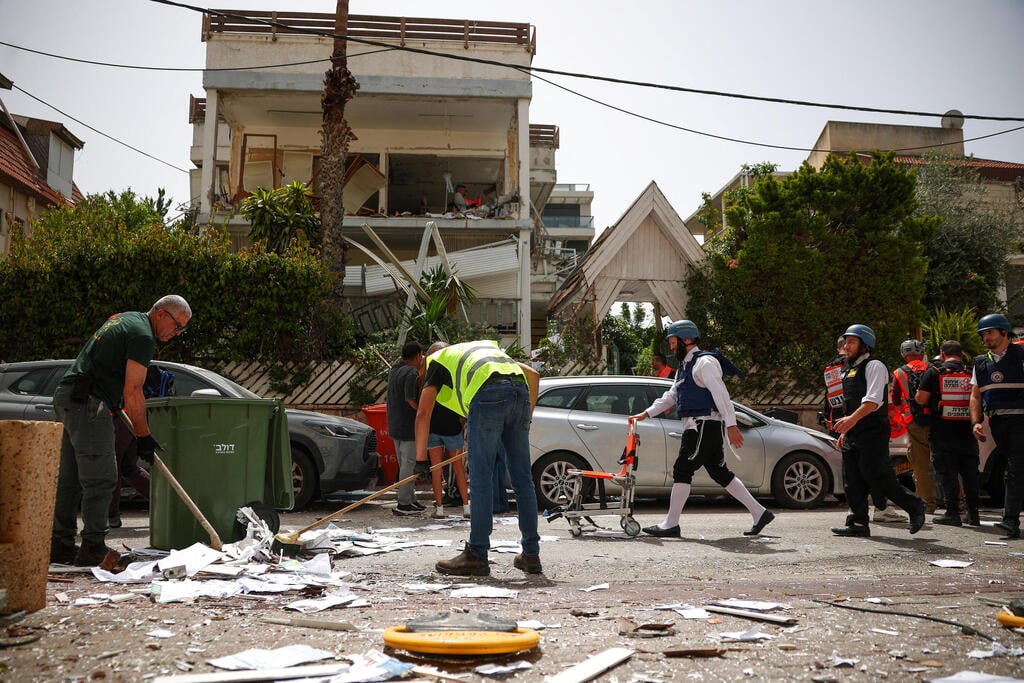
Trump does not view ballistic missiles as an existential threat. A missile strike in Ramat Gan during Operation Roaring Lion
(Photo: REUTERS/Florion Goga)
Beyond that, many questions remain unanswered. Will Iran truly commit not to continue advancing toward a nuclear weapon? Is there a way to supervise its nuclear facilities and scientific activity? Iran has previously become adept at doing such work secretly, and it could also do so elsewhere. Russia and China have already shown they are close allies of Tehran, and Israel could eventually find itself facing an Iranian nuclear program being carried out in Russia.
From Israel’s perspective, the emerging deal looks like a failure and a surrender. It may be a good agreement from Washington’s point of view, allowing Trump to claim he bought 15 years of quiet. But Israeli officials ask how that differs from the Obama-era nuclear deal, which Netanyahu said “paved Iran’s way to the bomb.” The emerging agreement appears far below the minimum threshold Israel set when it launched the war.
Netanyahu said Friday that “as long as I am prime minister of Israel, Iran will not have nuclear weapons.”
“There is full agreement between President Trump and me on this issue,” Netanyahu said. “For more than 30 years, I have been at the forefront of the international struggle against Iran’s nuclear program. Without this struggle, Iran would long ago have had atomic bombs to destroy Israel. Iran is working to destroy the Jewish state, and I am devoting my life to preventing them from doing so. As long as I am prime minister, it will not happen.”
Despite those statements, Israeli officials now believe the war may not have improved Israel’s position and may even have worsened it strategically, because it gave Iran a sense of strength and confidence it had never had before. Tehran saw that it could withstand a severe military assault, while using the closure of the Strait of Hormuz and other moves to turn the situation in its favor and gain more than it lost.
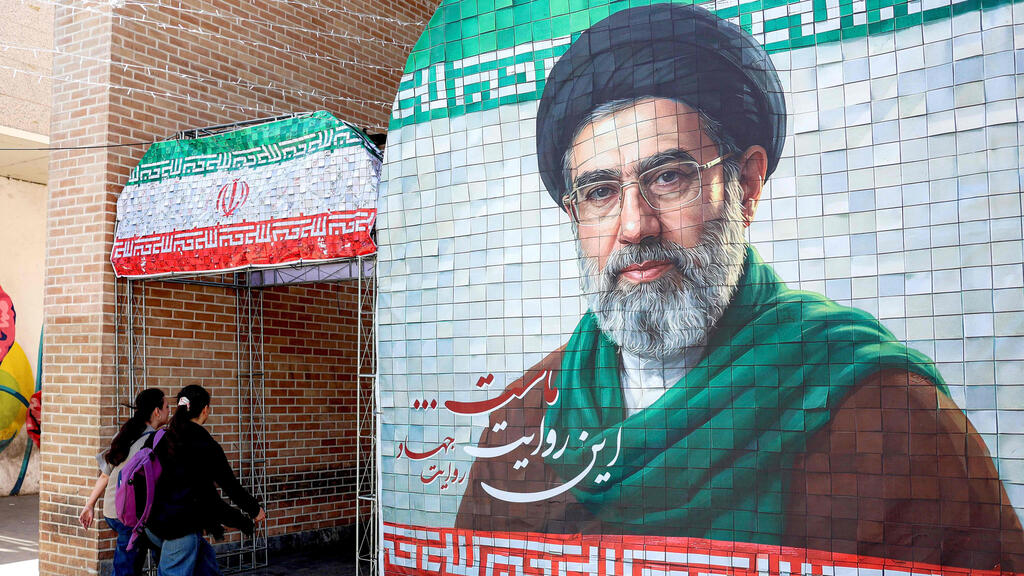
Tehran
(Photo: AFP)
It is still unclear whether Iran can sustain that position over time, whether its economy can recover, what will happen among its population and what the future holds for the regime. But the agreement, as reported, does not address those questions. Israel will have to hope that developments move in a positive direction in the coming years. At this stage, that looks like an enormous gamble.
The bottom line is that the emerging agreement is far from what Netanyahu and Trump promised. What is supposed to be presented as an achievement, reopening the Strait of Hormuz, was already available at the outset. The agreement reportedly does not address missiles or proxies. It may even reinforce the idea of a unified regional front. Most troubling for Israel, Iran is negotiating from a position of strength.
Tehran is being treated as an equal, as a country that did not fold under U.S. and Israeli military pressure, as a country that responded with force and brought the global economy to its knees, as a country regional states fear and as a power whose demands are being heard and taken into account.
Iran has established itself as a strong regional power that does not defer to Israel, does not defer to Europe and is willing to stare down the United States. Every country in the region, including Turkey, has seen that Israel failed to impose its will on Iran, and even the United States did not succeed in doing so.
The conclusions drawn from that will not benefit Israel. Israel has lost deterrence and strategic leverage.
First published: 17:38, 06.12.26