

U.S. President Donald Trump on Monday threatened to launch sweeping strikes on Iran’s infrastructure within hours if Tehran fails to meet a deadline for a deal to end the war.
“We have a plan where every bridge in Iran will be decimated, and where every power plant in Iran will be out of business, burning, exploding, and never to be used again,” Trump said at a White House news conference.
US President Donald Trump
(Video: X)


“I mean, complete demolition — by 12 o’clock, and it’ll happen over a period of four hours if we want it to. We don’t want that to happen.”
Trump said the strikes could begin as early as Tuesday night, ahead of an 8 p.m. ET deadline he set for Iran to comply with U.S. demands, including abandoning nuclear ambitions and reopening the Strait of Hormuz.
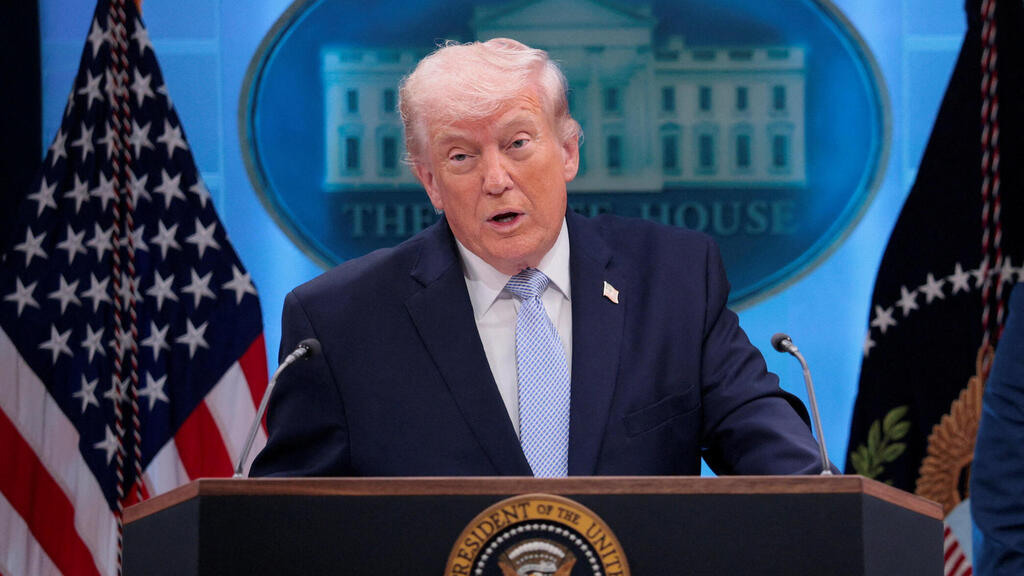
“The entire country can be taken out in one night, and that night might be tomorrow night,” he said. “I hope I don’t have to do it.”
Trump dismissed criticism that targeting civilian infrastructure could constitute war crimes.
“I’m not worried about it. You know what’s a war crime? Having a nuclear weapon,” he said earlier during a White House Easter event.
Defense Secretary Pete Hegseth said the heaviest strikes of the war so far were expected Monday, warning that Tuesday could bring even more.
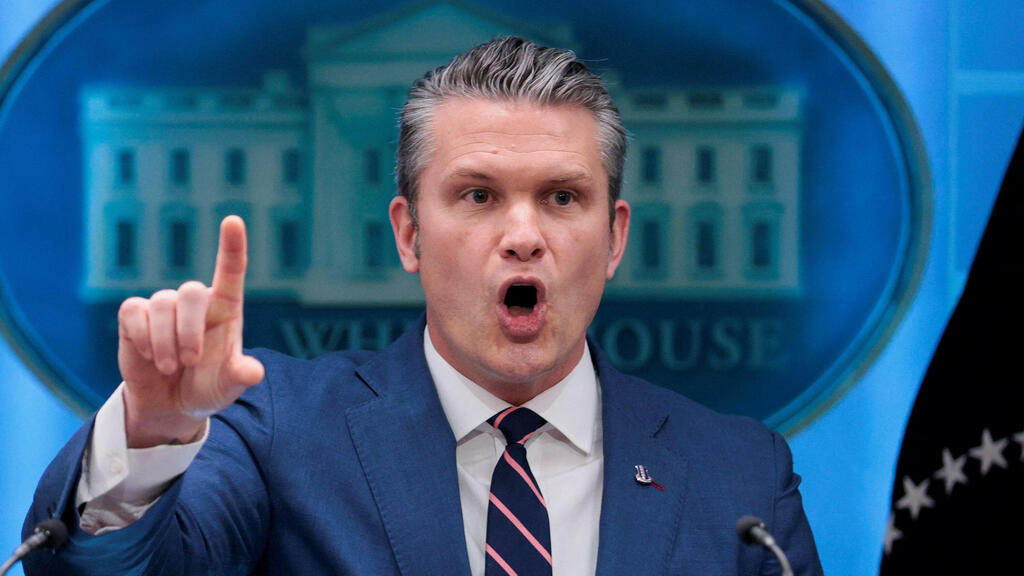
Defense Secretary Pete Hegseth
(Photo: Evan Vucci/ Reuters)
Iran: ‘Trump has lost control’
An Iranian security official told CNN that Tehran has no intention of ending the war on Trump’s timeline, accusing the U.S. president of escalating rhetoric after battlefield setbacks.
“Iran wants the war to end — but not in the way or on the timetable that Trump wants,” the official said.
He added that Iran does not trust Trump or his negotiating team and has therefore demanded additional guarantees in its response to mediators.
According to the official, Trump’s increasingly aggressive language shows he has “lost control” of the conflict.
“The military failure in southern Isfahan, coordinated with Netanyahu, was a strategic failure,” he said, apparently referring to the downing of a U.S. F-15 over Iran and the subsequent rescue operation.
“The escalation in insults and aggressive language toward the Iranian people shows he has lost control of managing the war.”
Tehran’s response, delivered earlier Monday via Pakistan, also includes demands for a new framework governing passage through the Strait of Hormuz.
Iran has made clear the waterway “will not return to previous conditions” unless the war ends permanently, the official said, amid growing calls within Iran to impose fees on shipping in the strategic corridor.
Talks stall as pressure mounts
Earlier Monday, Iran formally rejected a U.S.-backed proposal for a temporary ceasefire, instead demanding a permanent end to the war and broader regional changes.
According to Iran’s state news agency IRNA, the response — structured in 10 clauses — was delivered through Pakistan, a key mediator in the talks.
It rejects a proposed 45-day ceasefire and calls for a full and lasting end to the conflict, as well as an end to “conflicts in the region,” a demand Israeli officials interpret as linking any deal to the war with Hezbollah in Lebanon.
Iran is also insisting on sanctions relief, reconstruction commitments and a new protocol for safe passage through the Strait of Hormuz.
Trump acknowledged the proposal but dismissed it.
“They made a proposal, and it’s a significant proposal. It’s a significant step. It’s not good enough,” he said.
“It could end very quickly, the war, if they do what they have to do. They know that.”
He warned Tehran would face consequences.
“I am very upset. They are going to pay a big price for that,” he said.
Rescue operation and mixed signals
Trump opened his remarks by highlighting the rescue of a downed U.S. airman in Iran, describing it as “one of the largest, most complex, most harrowing combat searches ever attempted.”
Hundreds of U.S. forces were involved in the mission, while CIA Director John Ratcliffe said the agency carried out a deception campaign to mislead Iranian forces about the airman’s location.
The pilot, who had been hiding in mountainous terrain, was recovered Sunday after being shot down two days earlier.
“It was like finding a needle in a haystack,” Trump said.
Despite the threats, Trump sent mixed signals about U.S. intentions.
“If I had my choice, I would take the oil,” he said. “Unfortunately, the American people want to see us come home.”
“We could leave right now, but I want to finish it up,” he added. “Hopefully it will be over with quickly.”
Trump also claimed, without providing evidence, that Iranian civilians are urging the United States to continue pressure on the regime.
“They would be willing to suffer that in order to have freedom,” he said.
Intensifying conflict on the ground
The diplomatic escalation comes as fighting between Israel and Iran continues to intensify.
Israel has launched a series of large-scale strikes on Iranian military infrastructure, including air bases, missile sites and key facilities linked to the Islamic Revolutionary Guard Corps.
Iran, in turn, has responded with sustained missile barrages toward Israel, along with drone attacks coordinated with allied forces in Yemen and Lebanon.
Israeli officials assess that the strikes are aimed at creating what they describe as a “damage and pain equation,” designed to deter further Israeli attacks and, in particular, influence Trump’s decision on whether to escalate further.
At the same time, Israeli officials say Iran has struggled to inflict significant damage on critical infrastructure inside Israel, despite continued attacks.
Prime Minister Benjamin Netanyahu spoke with Trump overnight, as U.S. envoy Steve Witkoff continues contacts with mediators and Iranian Foreign Minister Abbas Araghchi.
Israeli officials say they are preparing for both scenarios: a temporary ceasefire followed by negotiations, or a broader escalation.
For now, Iran has rejected a ceasefire — and the clock on Trump’s deadline continues to tick.