

Balad chairman Sami Abu Shehadeh will not run in Israel’s upcoming election after his party decided Thursday night to withdraw his candidacy, following a Supreme Court hearing in which the court’s president told him that a majority of the nine-justice panel supported his disqualification.
Abu Shehadeh, No. 3 on the Joint List slate, had appealed a Central Elections Committee decision seeking to bar him from running. During Thursday’s hearing, Chief Justice Yitzhak Amit suggested that Abu Shehadeh withdraw his candidacy, which would spare the court from issuing a formal ruling on the matter.
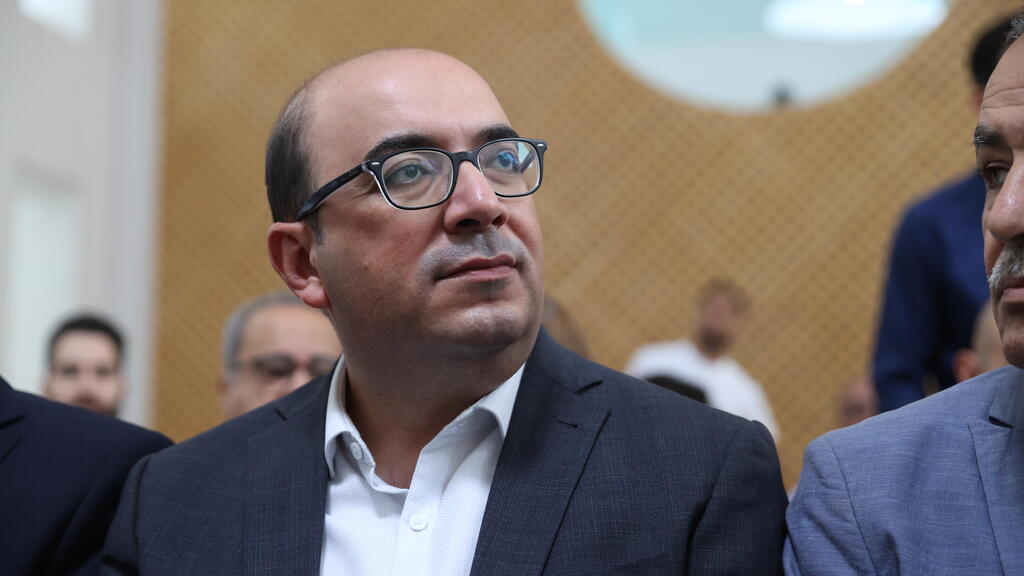
“We recommend that Abu Shehadeh consider whether he wishes to maintain his candidacy or withdraw it, which would make a ruling unnecessary,” Amit told him, after informing him that a majority of the judges supported his disqualification. Following several strongly worded statements from Balad and the Joint List, the party decided to withdraw his candidacy.
The Supreme Court hearing on the Central Elections Committee’s decision regarding Abu Shehadeh was held before an expanded panel of nine justices. The judges also considered decisions concerning the Joint List, the Islamist Ra’am party and lawmaker Ofer Cassif. The Hebrew report said those disqualifications were widely expected to be overturned.
The case against Abu Shehadeh centered on an article he published on Oct. 8, 2023, one day after the Hamas-led Oct. 7 attack. In the article, he described the assault on communities near the Gaza border as “an important historic event from a military, political and strategic perspective.”
“If small, besieged Gaza managed to do this, others can do it more effectively and easily,” he wrote.
Attorney General Gali Baharav-Miara and State Attorney Amit Aisman supported barring Abu Shehadeh from the election. In their submission, they argued that his statements amounted to support for armed struggle against Israel, one of the legal grounds cited in the effort to disqualify him. Abu Shehadeh denied supporting violence or terrorism.
“I advanced issues and legislation for people with disabilities in the Knesset,” Abu Shehadeh told the judges. “My entire life I have dealt with human rights, including together with Jewish Knesset members. I ask you to allow me to continue.”
Justice Alex Stein challenged him over his public record.
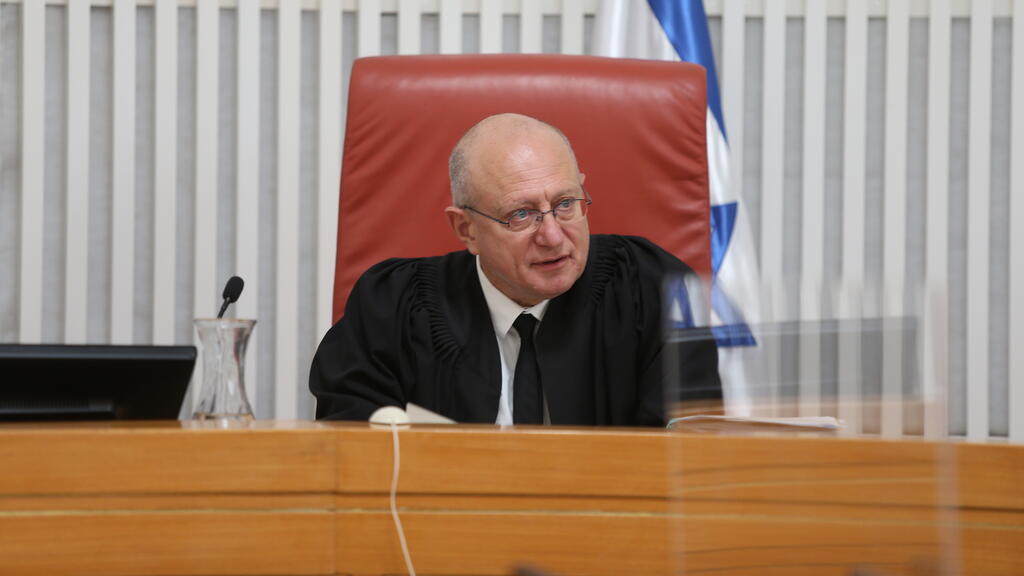
Justice Alex Stein
(Photo: Amit Shaabi)
“You have a great many publications in English,” Stein said. “Perhaps show me one article in which you wrote in English that Hamas is a terrorist organization.”
“There is no such article,” Abu Shehadeh replied.
Stein responded: “What Abu Shehadeh is saying is cheap talk. When a person no longer has anything to lose, he will say anything. Show me one time when Abu Shehadeh, when he had something to lose, said something different. Show me one article in English in which he called Hamas a ‘terrorist organization.’ Show me one time when he said acts were ‘terrorism.’ He has dozens of articles. Is there anything like that?”
Balad said overnight that Abu Shehadeh’s withdrawal did not mark the end of his political activity.
“The withdrawal of the candidacy is not the end of Abu Shehadeh’s political struggle, nor is it the end of Balad’s struggle,” the party said. “Abu Shehadeh continues to lead the party, Balad continues its project, and the Joint List continues its struggle to strengthen Arab representation and contribute to bringing down the Netanyahu-Ben-Gvir government.”
The party said the decision was taken following the Supreme Court hearing and the judges’ proposal.
“After an in-depth and responsible discussion, and in full consultation with comrade Sami Abu Shehadeh and a broad team of Arab lawyers, the central committee decided to approve the withdrawal of his candidacy in the election, out of political responsibility toward our people, toward the Joint List and because of the serious implications for political and parliamentary activity as a whole,” Balad said.
Balad also argued that the case had broader implications for Arab political participation in Israel.
“The decision was made only after it became clear that serious harm could be caused to political parties in general and to national parliamentary work in particular,” the party said. “The issue has already gone beyond the question of Sami Abu Shehadeh’s personal candidacy and has become a matter involving serious questions about the limits of political legitimacy granted to Arab citizens, as well as the use of disqualification as a tool to restrict the scope of Arab political activity and persecute national positions that fall outside the Israeli consensus.”
Religious Zionism party chairman Bezalel Smotrich criticized Amit’s proposal, arguing that the Supreme Court president should have issued a formal ruling rather than offer Abu Shehadeh the opportunity to withdraw.
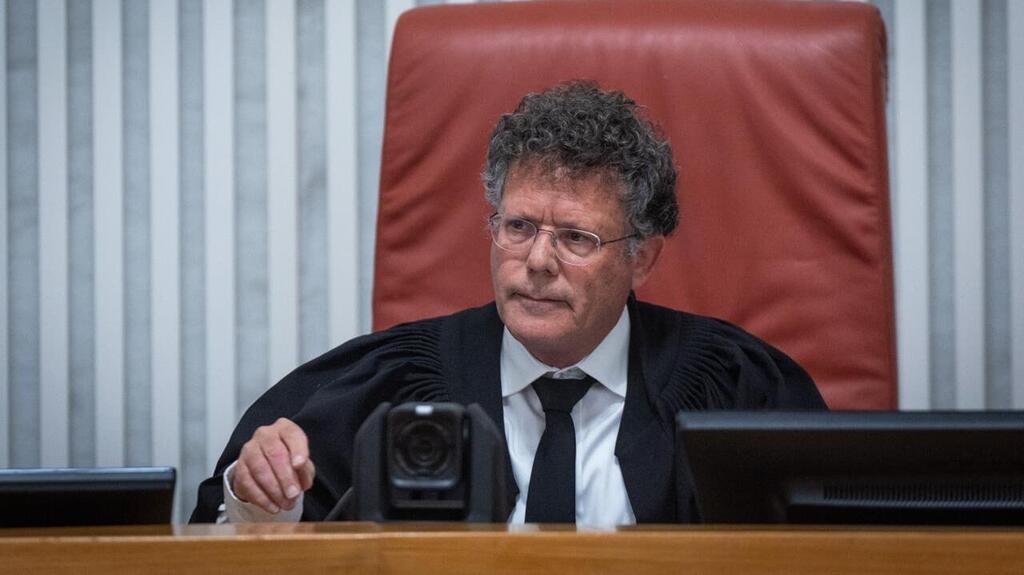
Chief Justice Yitzhak Amit
(Photo: Yonatan Sindel/Flash90)
“Yitzhak Amit does not want and is incapable of writing a simple ruling saying that supporters of terrorism, who support armed struggle against the State of Israel, like this despicable Abu Shehadeh, who supported the worst massacre suffered by the Jewish people since the Holocaust, are barred from running for the Knesset,” Smotrich said, “and instead he begs him to withdraw.”
Smotrich later wrote: “Yitzhak Amit is laughing at us all the way to the ballot box.” These were Smotrich’s characterizations of Abu Shehadeh and the court’s handling of the case.
National Security Minister Itamar Ben-Gvir, whose Otzma Yehudit party sought Abu Shehadeh’s disqualification, also welcomed his withdrawal while criticizing the absence of a formal ruling.
“We promised, and we delivered,” Ben-Gvir said. “I am glad that the struggle we led resulted in Sami Abu Shehadeh’s departure from the Knesset, following what he wrote and his support for Hamas a day after Oct. 7. At the same time, it is regrettable that the Supreme Court allowed him to withdraw without issuing a ruling on the disqualification.”
“Otzma Yehudit will continue fighting with all its strength against supporters of terrorism and haters of Israel who seek to enter the Knesset,” he added. “Abu Shehadeh will watch the next Knesset on Channel 99. Out with Abu Shehadeh!” Ben-Gvir’s claim that Abu Shehadeh supported Hamas was part of the political and legal dispute surrounding the candidacy; Abu Shehadeh denied supporting violence or terrorism.
Yashar! party chairman Gadi Eisenkot responded by posting a video in which Abu Shehadeh discussed contacts between Balad and Likud.
“On behalf of the entire Yashar! party, I would like to express my condolences to Likud and Netanyahu over the disqualification of a true partner in the Likud-Balad alliance,” Eisenkot wrote sarcastically. “Everyone in the Knesset knows how deep the relationship runs. Now Israel’s citizens do too. Sending strength.”