


A new Israel Defense Forces order updating reserve combat readiness standards for 2026 has sparked sharp criticism from reserve commanders and senior officers, who warn it could directly undermine operational preparedness and damage the mental resilience of reservists after two years of sustained fighting.
The directive, distributed Tuesday night to reserve battalion commanders and their deputies, includes the cancellation of post-deployment processing days, a return to one-day readiness status for emergency depots across all units and a reduction of preparation days to just three. According to the report, changes will be applied retroactively to all units mobilized since the start of the calendar year.
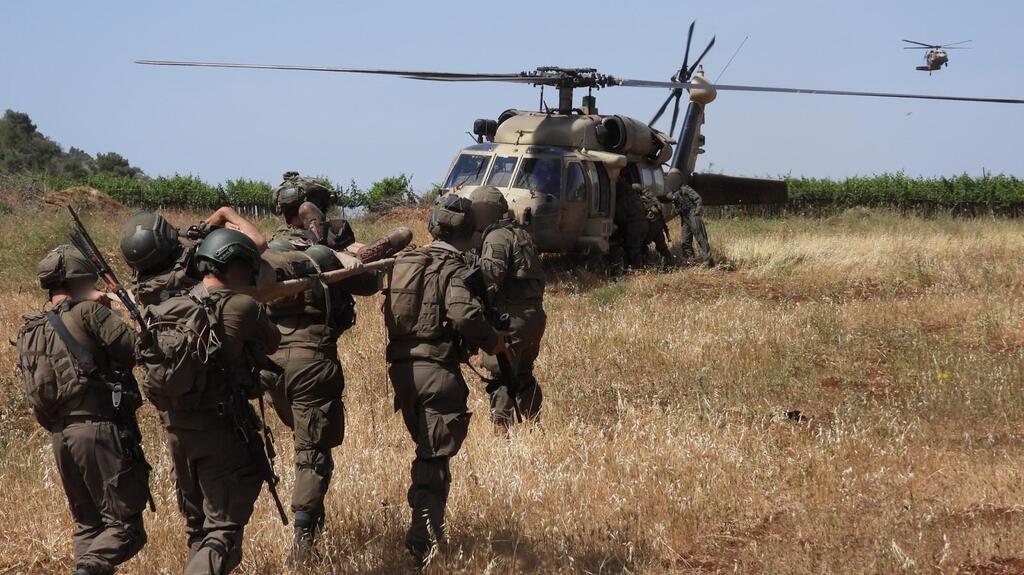
A battalion commander who reported for a reserve rotation last month described the decision as “turning off the tap on the reserve force.”
“They’re cutting preparation days at emergency depots to a single day,” he said. “Everyone is furious. We invest weeks organizing them so they’re ready for anything, before and after every rotation. Reducing that to one day means chaos, shortages and a direct hit to readiness. It’s that simple.”
The commander also criticized the decision to cancel processing days for combat soldiers returning from the front.
“How do you send them home like that, without a structured process where they can talk, decompress and actually take care of their mental health?” he said. “Who are you cutting at the expense of? The reservists who have been doing the hardest work for the past two years?”
He warned that the new policy harms the reserve system’s most critical resource, manpower.
“You don’t touch maneuvering forces,” he said. “Not by cutting reserve days and not with this nonsense of shortening rest periods. After everything they’ve sacrificed, until we return to a reality where a reservist serves no more than 30 days a year, don’t shut off the tap. It’s dangerous.”
Even before the new order, he said, commanders were already struggling with deep budget cuts that ultimately affected soldiers in the field.
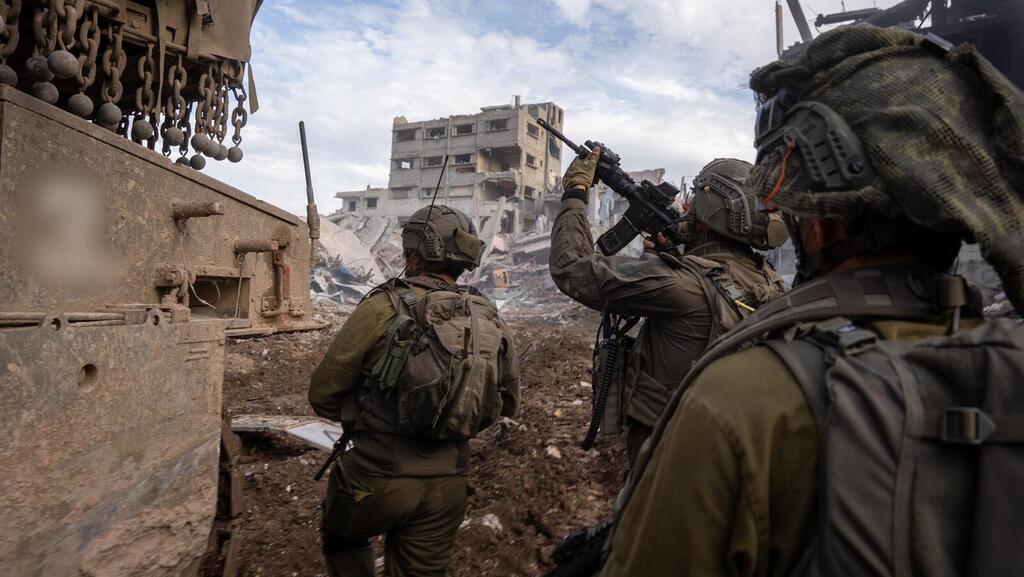
IDF forces in Gaza
(Photo: IDF)
“First and foremost, it’s about how many reserve days we’re allowed to hold a sector at any given moment,” he said. “They set a rigid standard that doesn’t necessarily match operational needs, but it directly dictates and limits leave for soldiers.”
He said the new restrictions have left commanders dealing more with personal crises than operational planning.
“We’re constantly improvising half-solutions because when the orders are crooked, the solutions end up crooked too,” he said.
Lt. Col. (res.) Eli Meiri, a senior armored brigade commander and a leader of the ‘To the Flag’ reserve protest movement, called the directive an “Israeli bluff” and warned it would collapse during the first serious security incident.
“The Finance Ministry comes to the IDF and says it has to fit into a certain budget,” he said. “So what does the army do? Something impossible. It cuts reserve days from 70 to 42 and sets a 10–4 rotation instead of week-on, week-off.”

Lt. Col. (res.) Eli Meiri
Meiri said the demand to cut preparation days is detached from operational reality.
“As an armored brigade deputy commander, I need a week to fix tanks after they’ve been used,” he said. “There’s no way to reduce that to one day. And for all units? It’s a bluff. The IDF knows it, the Finance Ministry knows it.”
He added that security needs have not diminished.
“The ‘yellow line’ is effectively a security buffer zone,” he said. “We know what’s happening on all fronts, including Iran. The smallest security escalation, and this won’t hold. Ultra-Orthodox men weren’t drafted, regular service wasn’t extended to 36 months. It’s simple math. We can’t sustain this anymore.”
Meiri also condemned the cancellation of processing days for soldiers and soldiers returning from prolonged combat.
“How dare they touch processing days?” he said. “After everything reservists have been through, with the immense mental burden they carry. That’s where you cut? Have you completely lost it?”
Following the directive, Knesset member Moshe ‘Kinley’ Tur-Paz of the Yesh Atid party sent a letter to IDF Chief of Staff Lt. Gen. Eyal Zamir under the heading: “Harm to readiness and resilience of the reserve force.”
“Reservists who have borne the burden of war for more than two years are not an inexhaustible resource,” the letter said. “Processing and preparation days are not luxuries. They are essential operational tools for maintaining a soldier’s mental fitness and ability to function at home and at work, which is a prerequisite for future service.”
Tur-Paz wrote that cutting recovery days at a time of peak exhaustion was both a moral and operational mistake.
“It is unacceptable for saving two reserve days to come at the expense of soldiers’ mental health,” he wrote, calling for an immediate review of the order and the restoration of processing and preparation days to their previous scope.
Speaking to ynet, Tur-Paz said: “After two years of fighting, the soldiers are worn down to the edge. Instead of easing their burden and bringing in additional manpower, the coalition is promoting exemptions for hundreds of thousands of healthy young people and cutting the recovery and processing days the fighters desperately need. This is a direct blow to readiness and resilience.”
The IDF Spokesperson’s Unit had not responded by publication time.