


Against the backdrop of reports that the United States and Iran are close to signing a temporary memorandum of understanding to end the war, the IDF on Sunday released footage showing the elimination of Hezbollah terrorists in southern Lebanon.
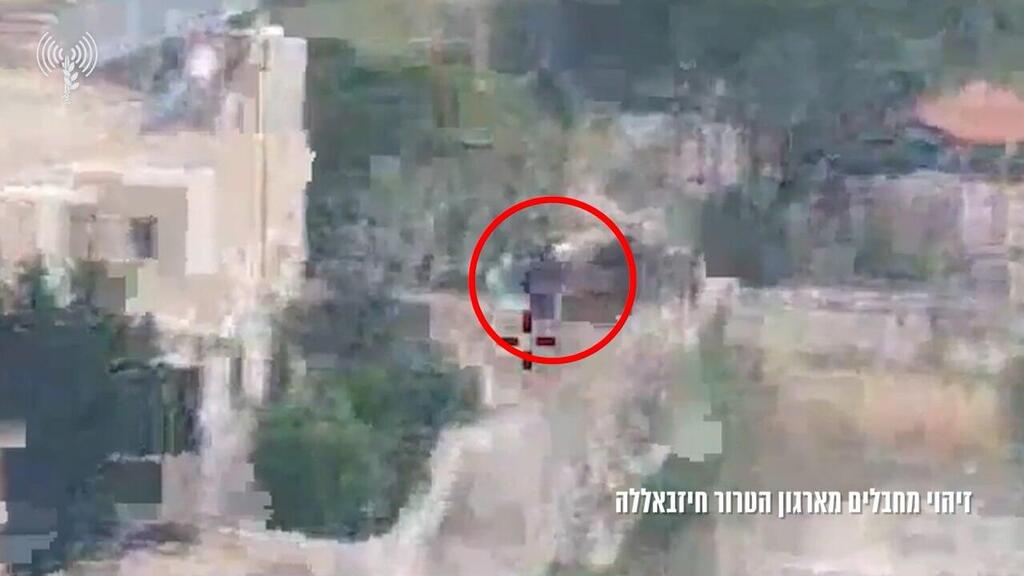
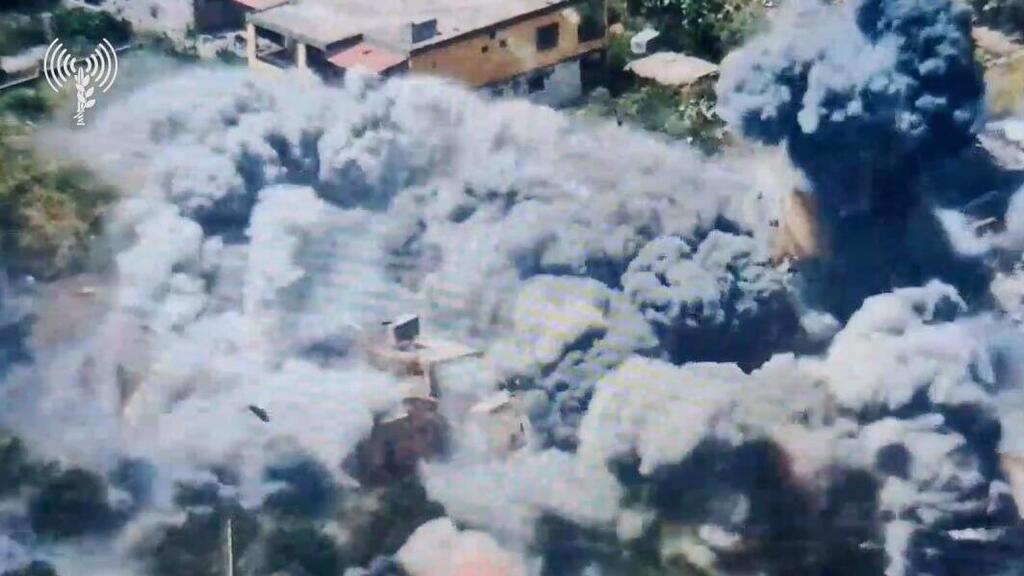
The footage, filmed from the “missile’s eye,” shows troops from the IDF’s Multidimensional Unit striking terrorists from the Shiite terrorist organization.
Footage showing the identification and elimination of four Hezbollah terrorists
(Video: IDF)


At the same time, sirens sounded Sunday afternoon in several communities in the Upper Galilee and Western Galilee over fears of a drone infiltration from Lebanon. No injuries were reported.
The IDF Spokesperson’s Unit said: “Troops from the unit identified four Hezbollah terrorists yesterday entering terrorist infrastructure. Immediately afterward, the troops struck the infrastructure and eliminated the terrorists operating from it. At the same time, troops from the unit also eliminated a Hezbollah terrorist who was operating on a motorcycle nearby.”
The IDF also said the troops identified and struck several observation devices used by Hezbollah to monitor and direct activity against Israeli forces.
Since the ceasefire in Lebanon was declared, the situation on the ground has remained far from quiet. Ten soldiers have been killed, while the IDF has avoided strikes in Beirut, except for one targeted killing in Dahiyeh, in line with a U.S. demand.
(Photo: IDF)
Northern Command is now trying to clarify the key questions facing the front in light of reports coming from Iran: what kind of ceasefire will actually take hold in Lebanon, and what precise operational instructions will be given to the forces that remain in the field.
The hours before a possible formal agreement between the United States and Iran are highly tense. It remains unclear what such a deal will look like and how it will affect the northern arena.
The IDF is sharpening procedures both for dealing with explosive drones and for handling terrorist infrastructure. On one hand, commanders want to “complete” as many operations as possible. On the other, they understand that Hezbollah may also become more daring if it believes everything is nearing an end or a pause.
Either way, Northern Command is reorganizing the area ahead of a halt in fighting, whose nature and rules remain unclear. The decision, IDF officials say, depends directly on the results of the negotiations.
According to Northern Command figures, the number of Hezbollah terrorists eliminated in recent days has crossed 600. The strikes have focused on southern Lebanon, while the IDF has avoided attacks in the capital.
Even before the current negotiations, the IDF carried out a series of operational moves on the ground meant to create better conditions for forces in the event of a maneuver, should fighting with Iran resume and U.S. restrictions on IDF activity in Lebanon be lifted.
But the current reality is dictating a different pace.
IDF forces deployed along the border and up to the yellow line continue to work around the clock to clear the area in southern Lebanon. The goal is to destroy terrorist infrastructure, both above ground and underground.
Security officials estimate that the activity could continue for many more weeks.
“It is definitely hard for us, but it is even harder for Hezbollah,” a senior military official said. “They are losing people every day. They have no motivation to come down to the border, and their infrastructure is shattered.”
“The yellow line is a line, not a wall,” the official added. “If we need to break through it and advance in order to deal with the enemy, it will happen. Everything is dynamic.”