

Alleged Washington DC shooter Rahmanullah Lakanwal, who last week killed a U.S. National Guard soldier in Washington, D.C., and wounded another, underwent a process of radicalization only after his entry to the United States was approved Homeland Security Secretary Kristi Noem revealed Sunday night when asked about Lakanwal’s motive.
Lakanwal, 29, cooperated with U.S. forces fighting the Taliban while in Afghanistan and fled after the terror group seized power again, later resettling in the United States with the approval of American authorities. He is expected to be charged with first-degree murder in the killing of 20-year-old soldier Sarah Beckstrom. The soldier he wounded, Andrew Wolfe, remains hospitalized in serious condition.
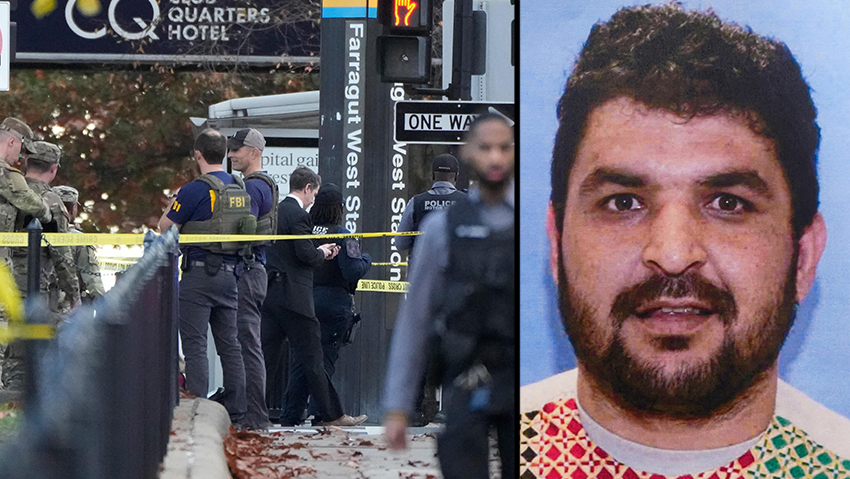
“We believe he went through a process of radicalization since he came here to this country,” Noem said Sunday on NBC’s “Meet the Press.” “We believe it happened through connections within his community.” In terrorism contexts, “radicalization” is generally used to describe those influenced by extremist Islam who begin carrying out violent acts in its name.
Lakanwal entered the United States in 2021, during the massive and chaotic operation carried out by President Joe Biden’s administration as the U.S. military withdrew all its forces from Afghanistan after 20 years of war, while the Taliban stormed Kabul and other cities and took control from the pro-Western government.
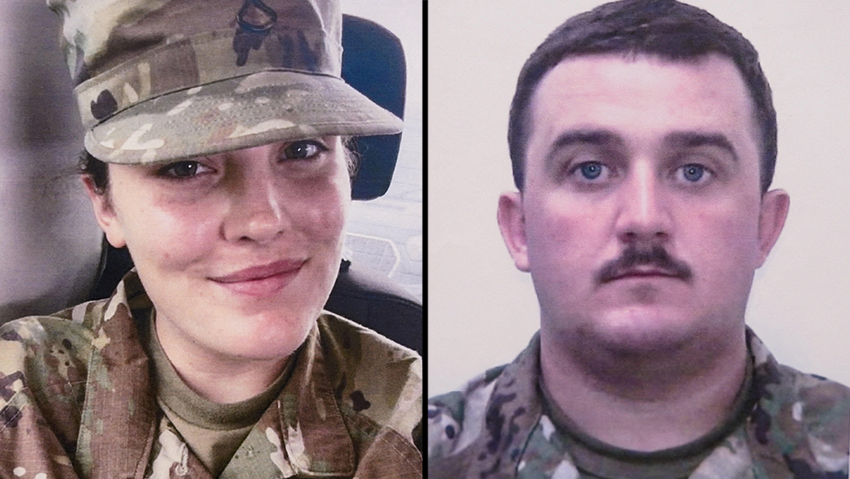
Slain National Guard soldier Sarah Beckstrom and injured soldier Daniel Wolfe
( Photos: Nathan Howard/ Reuters)
Thousands of Afghans who had worked with the United States against the Taliban flooded Kabul’s airport at the time to escape on American aircraft, fearing the Islamist group would use the withdrawal to take revenge on them. U.S. officials confirmed that, before coming to the United States, Lakanwal served in “Unit Zero,” the Afghan “partner force” that fought the Taliban with assistance from the CIA.
In the United States, Lakanwal settled in Washington state. For Wednesday’s attack, on the eve of Thanksgiving, he traveled distance from his home state to the capital, and there, a few blocks from the White House, shot the two American soldiers. President Donald Trump and his allies, on whose watch Lakanwal’s asylum request was approved in April, blamed Biden for allowing him into the country and said the previous administration failed to adequately vet Afghans evacuated in haste to the United States during the Taliban takeover.
Noem repeated those claims Sunday in an interview with ABC. She said Lakanwal may have undergone screening and an approval process after entering the United States, but argued that the process “was not done properly.”
Trump also again blamed the previous administration. "Crooked Joe Biden, Mayorkas (the homeland security secretary in the Biden administration), and so-called “Border Czar” Kamala Harris really screwed our Country by letting anyone and everyone in without any screening or verification!” he wrote on his Truth Social platform.
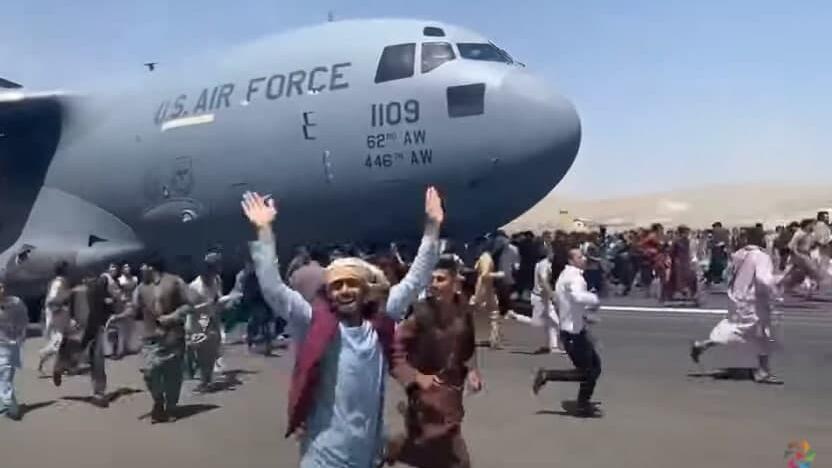
Afghans attempt to leave with US troops from Kabul Airport
Following last week’s attack, the Trump administration suspended all residency visas for Afghan citizens and froze decisions on all pending asylum requests. In recent days, the president disclosed that he is also considering deporting Lakanwal’s family, including his five children, all under 12. Asked about that possibility, he said his team is currently examining it.
'Blood, bodies, the wounded — he couldn’t bear it'
Since the weekend, more and more accounts have surfaced about red flags that should have been raised regarding Lakanwal’s behavior. Reports say he suffered for years from severe mental health problems, including locking himself in a dark room, away from his wife and children, without speaking to them. Acquaintances say he struggled to keep stable employment and would take long solo trips across the country — lasting weeks — to cope with his condition.
According to people who knew him, his mental state at one point deteriorated so badly that members of his community contacted a refugee aid organization out of fear he would take his own life. Documents attached to that appeal around March 2023 said he had ceased functioning as a person and father. That same year, his family faced eviction after months of unpaid rent.

Site of shooting in Washington DC on Wednesday
(Photo: Mark Schiefelbein/AP)
Relatives testified that they often sent his young sons into the dark room where he had shut himself to hand him a phone or pass messages, because he would not respond to anyone else. On one occasion when his wife left him alone with the children for a week to visit relatives, the children were not bathed, their clothes were not changed for the entire week, and they did not eat properly. Their school staff raised concerns about their condition.
Acquaintances say Lakanwal periodically went through bouts of “mania,” during which he suddenly tried to rehabilitate himself and cooperate with welfare officials assisting his family, but these periods were brief, and after a week or two he would relapse. A friend said he struggled to cope with the horrors he witnessed and the violence he carried out during his service in the elite Afghan unit. “When he saw blood, bodies, and the wounded he couldn’t bear it,” a childhood friend told The New York Times.
The unit in which Lakanwal served, “Unit Zero,” was dubbed by many as a “death squad.” It is unclear what role he held there, but its missions are known to have included night raids and covert operations, and they were suspected of involving executions as well.