

Iranian Supreme Leader Ayatollah Ali Khamenei has elevated the country’s state of readiness and ordered the Islamic Revolutionary Guard Corps (IRGC) to suppress nationwide protests that have left dozens dead, the Telegraph reported Saturday, citing unnamed Iranian sources.
According to the report, Iran’s current alert level now exceeds that seen during last year’s 12‑day conflict with Israel, with “underground missile cities” activated to deal with external threats. The report did not provide independent verification of the claim.
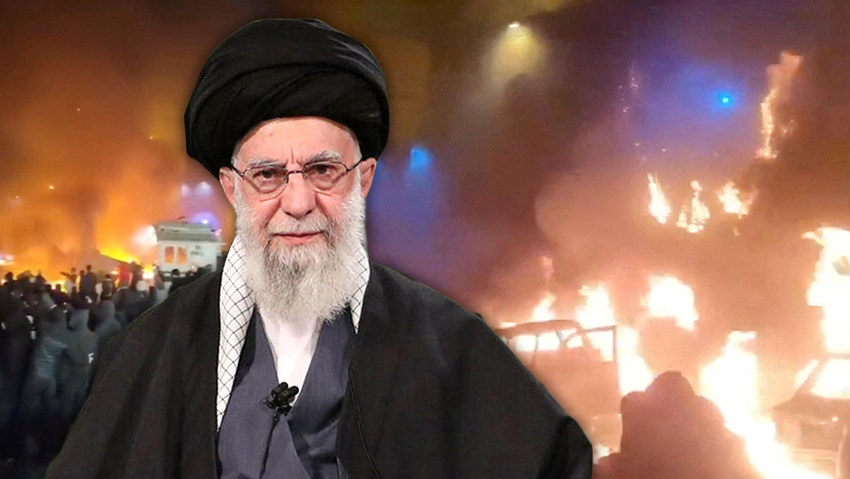
(Photo: Social Media/via REUTERS, AFP/HO/KHAMENEI.IR)
As speculation grows internationally about whether Iran’s security forces will remain loyal to the clerical establishment and crush protests with force, Norway‑based rights group Hengaw said some security personnel have already refused orders to fire on demonstrators. The Telegraph report, citing Hengaw, said Revolutionary Guard units have been “hunting down” members of security forces who declined to follow orders and that some have been detained.
A senior Iranian official told the Telegraph that Khamenei is coordinating with the Revolutionary Guard to quash the unrest rather than with the regular army or police. The official said Khamenei believes the risk of defections among Guard personnel is “almost nonexistent,” whereas other forces have seen defections in the past. “He has placed his fate in the hands of the IRGC,” the official said.
Against a backdrop of U.S. President Donald Trump’s threats to intervene militarily if the regime kills protesters en masse, the Iranian official said Khamenei “will not leave Tehran even if B-52s are flying overhead.”
The New York Times reported Friday that the Revolutionary Guard is preparing to deploy in cities across Iran to help suppress the increasingly widespread demonstrations. On Saturday, the IRGC issued a statement emphasizing a tougher stance. “Protection of the Islamic Revolution’s achievements and maintaining society’s security is a red line,” the statement said. The Guard oversees the Basij militia, a semiofficial paramilitary force that has been used in the past to quell unrest.
The protests began last month as a spontaneous demonstration by Tehran bazaar merchants angered by rampant inflation and a sharp devaluation of the rial, which have made basic necessities unaffordable for many Iranians already weakened by more than 20 years of Western sanctions over Tehran’s nuclear program.
The unrest has steadily grown into a broader challenge to the clerical regime, with chants such as “Death to the dictator,” directed at Khamenei, and “This is the last battle! Pahlavi will return,” referring to exiled prince Reza Pahlavi, whose father, the shah, was ousted in the 1979 Islamic Revolution.
The protests escalated sharply last Thursday after Pahlavi urged people to take to the streets at exactly 8 p.m. that evening. In a sign of the regime’s concern, Iran shut down the internet nationwide that night, and it has remained offline for three days. Rights activists warn the blackout is intended not only to impede protest organization but also to limit the flow of video documenting security forces’ brutal response.
Human Rights Watch and other monitoring groups say at least 51 people have been killed so far in the regime’s efforts to suppress the protests, though they warn the real toll is likely higher. The deaths and internet blackout have drawn increasing international scrutiny, but Tehran has dismissed external criticism of its handling of the unrest.