

European Union leaders have worked to project a united front over the war in Ukraine and the threat posed by Russia, amid fears in European capitals that Moscow could target additional countries if it succeeds in defeating Kyiv. But deep divisions persist within Western Europe over how to confront that threat, according to a report by the Financial Times.
The newspaper reported a significant rift between French President Emmanuel Macron and German Chancellor Friedrich Merz, the two most senior leaders in the EU. The dispute centers on Merz’s proposal to help Ukraine by tapping Russian assets frozen in European banks since Russia’s full-scale invasion of Ukraine in 2022, assets estimated at 210 billion euros.
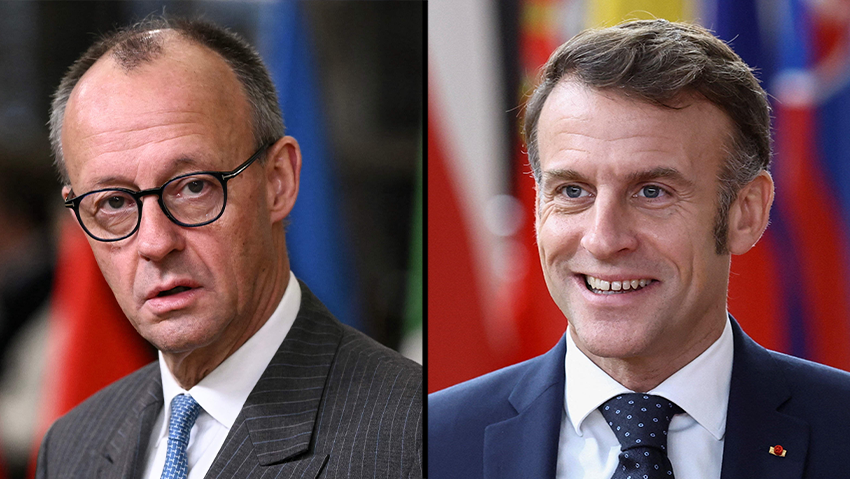
Intense discussions have taken place in Brussels in recent months over whether those funds should be used to finance military and economic aid to Ukraine. Belgium, where most of the assets are held, strongly opposed the plan, citing fears it would face the greatest legal exposure if Moscow follows through on threats to pursue lawsuits.
According to the report, Macron did not publicly oppose Merz’s proposal, but in private his aides raised concerns about its legal feasibility. They also warned that France, grappling with economic strain and high public debt, would struggle to provide guarantees for the plan if the frozen assets had to be returned quickly to Russia, a scenario that could arise if a deal is reached to end the war.
Other European countries, including Italy, also opposed the proposal. The report said Merz had hoped Macron would serve as a key ally in the negotiations, but that did not happen. A senior EU diplomat told the Financial Times there was a strong sense of betrayal. “Macron betrayed Merz, and he knows that he will have to pay for it,” the diplomat was quoted as saying, adding that Macron had little choice but to align himself with Italian Prime Minister Giorgia Meloni, who opposed the plan.
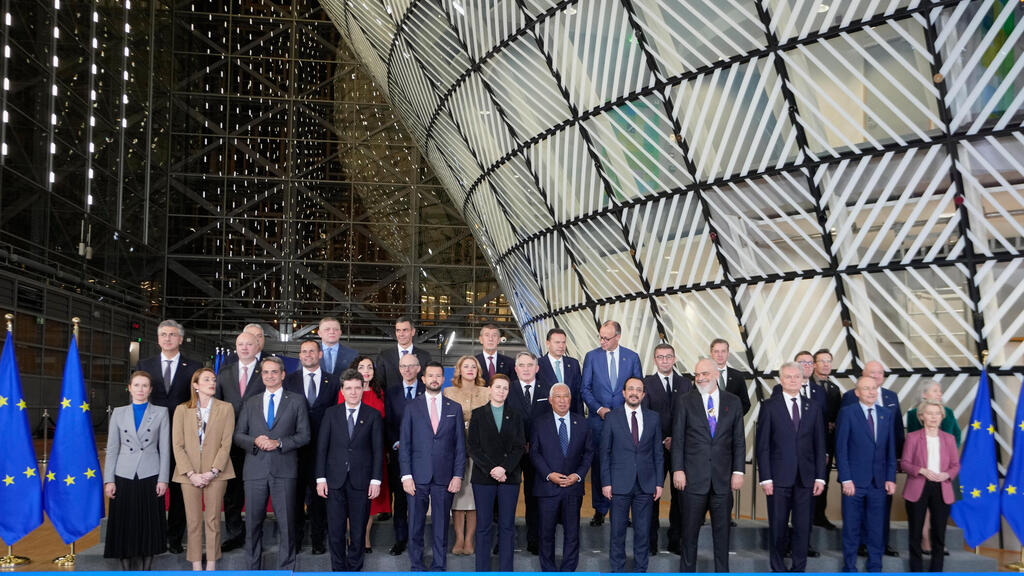
the European Union leaders’ summit in Brussels last week
(Photo: AP/ Virginia Mayo)
As a result of the dispute, European leaders at a summit in Brussels last Thursday reached a compromise, pledging 90 billion euros in loans to Ukraine backed by the EU budget rather than by Russian assets.
The Financial Times reported that tensions between Macron and Merz extend beyond Ukraine policy. Another point of contention is a long-negotiated free trade agreement between the EU and the Mercosur bloc of South American countries. Talks on the deal have dragged on for 25 years. Merz pushed to finalize it this month, but Meloni opposed the move, and Macron backed her, leading to a delay of the vote by several weeks.
The growing rift contrasts with Merz’s hopes of resetting relations between Berlin and Paris, the EU’s two largest economies and traditional drivers of decision-making in the bloc. Merz succeeded Olaf Scholz of the Social Democratic Party, who was widely criticized within the EU for caution and indecision. Since taking office earlier this year, the conservative Merz has pressed for a more assertive response to Russia and launched a major rearmament drive to prepare Germany’s military for a potential conflict.
As part of that agenda, Merz sought to strengthen ties with France. His approach included dropping Germany’s long-standing opposition to nuclear energy, an area where France is a leader, and embracing ideas Macron has promoted for years, such as prioritizing European-made defense systems and adopting a more defensive economic policy, including measures against Chinese metal imports. But Macron has been weakened by a domestic political crisis over the past year, marked by the resignation of multiple prime ministers. That turmoil has left him a political “lame duck,” complicating his ability to commit France to major and costly European initiatives.
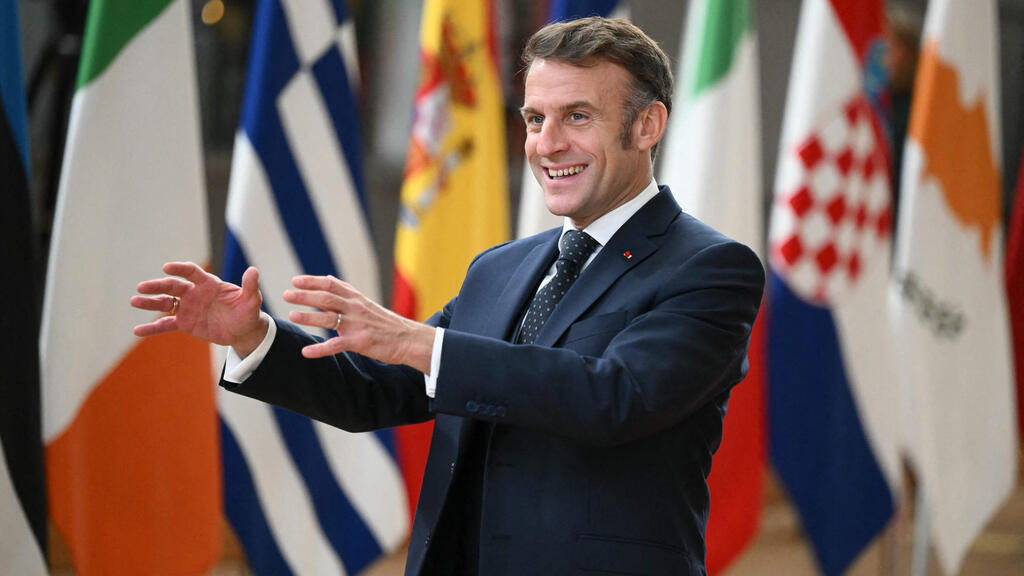
Macron
(Photo: Nicolas Tucat/ AFP)
“There is a complete role reversal between Macron and Merz,” Mujtaba Rahman of political risk consultancy Eurasia Group told the Financial Times. He said that for years the prevailing view in Paris was that German weakness undermined Europe’s ability to act. “Now there is a chancellor who understands geopolitics and wants to do more for Europe. But now it is Paris that cannot deliver its side of the bargain.”
Georgina Wright of the German Marshall Fund, a U.S.-based think tank, told the paper that there is a growing sense in Brussels that French influence is waning. “The growing feeling in Brussels is that France is prioritizing national interests over EU interests,” she said, adding that an old saying that France is “all words and no action” is making a comeback.
An official at the Elysee Palace insisted Macron played a central role in forging the compromise reached at last week’s summit. “France’s objective has always been to give Ukraine a two-year economic horizon,” the official said. “We are open to the proposed economic agreements and are working to find a solution that achieves that goal.”
(Photo: Alexander Nemenov/ Reuters)
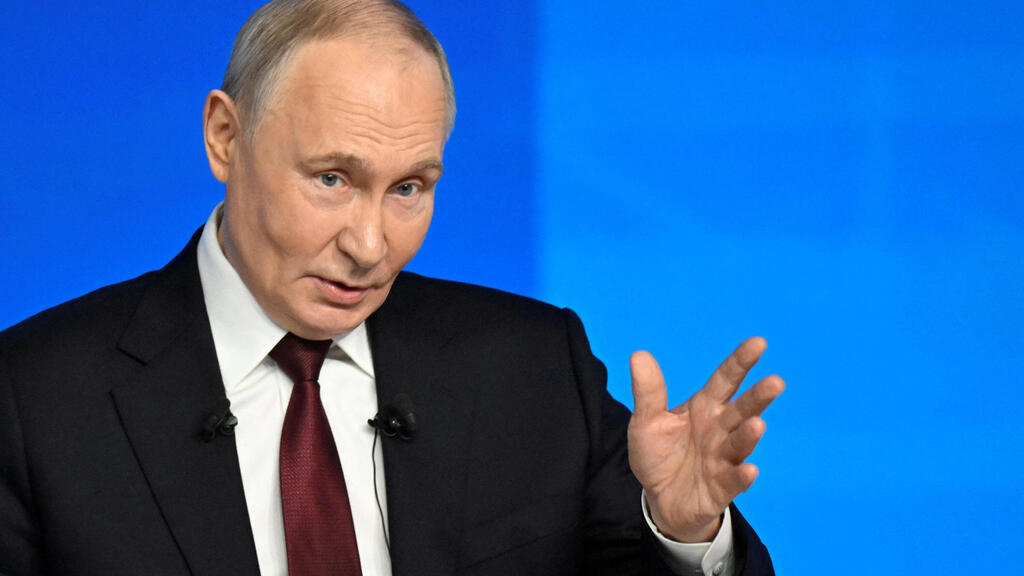
Macron, who has issued a series of hawkish statements toward Moscow during the war but whose country is not among Ukraine’s largest donors compared with Germany or Britain, also signaled openness to direct talks with Russian President Vladimir Putin. After the Kremlin said Tuesday that Putin had “expressed readiness for dialogue” with Macron, the Elysee Palace said it welcomed the public acknowledgment and that a decision on whether to hold such a conversation would be made in the coming days.