

The International Atomic Energy Agency’s 35-nation Board of Governors on Thursday declared during a closed-door meeting in Vienna that Iran was in breach of its non-proliferation obligations for the first time in almost 20 years.
"(The board) Finds that Iran's many failures to uphold its obligations since 2019 to provide the Agency with full and timely cooperation regarding undeclared nuclear material and activities at multiple undeclared locations in Iran ... constitutes non-compliance with its obligations under its Safeguards Agreement with the Agency," the International Atomic Energy Agency board resolution text seen by Reuters said.
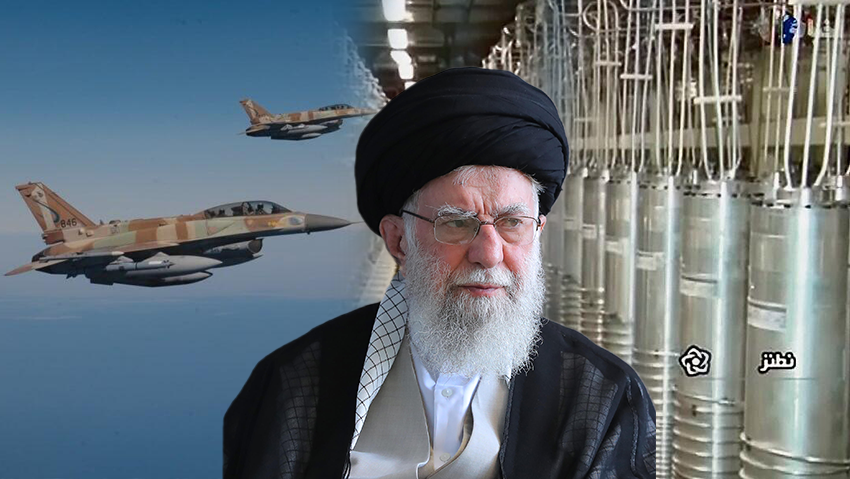
The resolution, led by the United States, France, Britain and Germany, was approved by a vote of 19 in favor, 3 against and 11 abstentions. It includes a renewed call for Tehran to respond “without delay” to outstanding questions in the investigation into radioactive traces discovered at secret nuclear sites.
In response, Iran has announced a series of counter-measures, including plans to open a new uranium enrichment facility and to upgrade centrifuges at its Fordow nuclear site, Iranian state TV reported Thursday. An IAEA official confirmed that Iran had informed the agency of its intention to open a new enrichment site, though no details such as its location were provided.
A senior Iranian official said Tehran “will not abandon its rights to uranium enrichment because of mounting frictions in the region,” dismissing recent allegations as “psychological warfare” ahead of nuclear talks with the United States scheduled Sunday in Muscat. He added that a “friendly” regional country had alerted Tehran over a potential military strike by Israel.
Meanwhile, Iran is warning it will retaliate against any Israeli strike, stressing it will continue enriching uranium amid rising regional tensions.
General Hossein Salami, commander of Iran’s paramilitary Islamic Revolutionary Guards Corps (IRGC), said Iran is prepared for all scenarios, adding that any mistake by adversaries would bring “a lesson for history,” promising a “retaliation stronger and more destructive” than Iran’s previous two direct strikes against Israel, both codenamed Operation True Promise.

Islamic Revolutionary Guards Corps Commander General Hossein Salami
(Photo: AP)
Ismail Qaani, commander of the Quds Force—the IRGC’s extraterritorial operations branch—said assertions of Iranian weakness are “dreams,” adding, “Resistance will only grow stronger the more it is fought.”
A senior security official told Iran’s Press TV that Iran is “at the highest state of readiness” and would “surprise” the U.S. and Israel in the event of an attack.
Mahdi al-Mashat, head of the Supreme Political Council of the Houthi rebels in Yemen, also voiced support, saying the group “stands with Iran in its right to defend its sovereignty, by all legitimate means.”
Iranian President Masoud Pezhakian said Thursday morning the U.S. may threaten sanctions, “but it cannot blockade our country,” and warned, “Our people are steadfast and resolute—they won’t allow the enemy to attack even one centimeter of our territory.”
Despite the escalating rhetoric, Omani Foreign Minister Badr Albusaidi confirmed the sixth round of U.S.–Iran nuclear talks will proceed Sunday in Muscat, contradicting earlier reports that the negotiations might be in jeopardy. Reuters reported American envoy Steve Witkoff is expected to meet Iranian Foreign Minister Abbas Araghchi.
Sky News Arabia sources say the IRGC has launched a new influence campaign in Iraq—working with analysts and think tanks to “defend Iran’s image before the Iraqi public”—while pro-Iranian militias prepare militarily, U.S. officials say.
Meanwhile, amid reports of potential Israeli strikes and Iranian ballistic‐missile counterattacks involving hundreds of projectiles, the Tel Aviv stock market has fallen more than 2% on Thursday morning.

Tel Aviv Stock Exchange
(Photo: Orel Cohen)
A New York Times report indicates that Israel is preparing for an imminent attack on Iranian nuclear installations. An unnamed senior Iranian official said military and government leaders have already met to plan a response involving the launch of hundreds of ballistic missiles. U.S. and European officials, speaking to NBC, suggest the Israeli strike could occur “in the coming days,” likely without U.S. involvement.
Meanwhile, satellite imagery shows an unusual buildup of U.S. military aircraft on the Indian Ocean island of Diego Garcia, including B-52 bombers, KC-135 refueling tankers, F-15 fighter jets and C-5M heavy transport aircraft.
Get the Ynetnews app on your smartphone: Google Play: https://bit.ly/4eJ37pE | Apple App Store: https://bit.ly/3ZL7iNv
Newsweek reported the deployment has expanded since March, partly following President Donald Trump’s directive for a broad military operation against Yemen’s Houthi forces. Even after a ceasefire in May, U.S. assessments suggest that failure to prevent Iran from acquiring nuclear weapons could ignite a military conflict, with Diego Garcia expected to serve as a key base.

Satellite image showing the deployment of US military aircraft at Diego Garcia base in the Indian Ocean

The U.S. Air Force recently boosted its aerial refueling capabilities at the base, replacing earlier B-2 bombers with KC-135 aircraft. The remote island, located more than 2,000 miles (about 3,200 kilometers) from Iran, hosts Air Force, Navy and Space Force units, and is considered a protected strategic point—especially under a renewed agreement with Mauritius ensuring continued American use of the facility. A U.S. Indo-Pacific Command spokesperson previously said that “multi-layered defense systems protect forces and equipment at Diego Garcia.”
The Washington Post reported overnight that the U.S. is on “high alert” for a possible Israeli strike on Iran. CBS News added that American officials have been briefed that Israel is fully prepared to launch an attack. U.S. officials reportedly anticipate that Iran could respond by attacking American assets in neighboring Iraq, prompting Washington to reduce its regional presence.
Al Arabiya’s English-language service reported that, according to U.S. intelligence, pro-Iranian militias operating in Iraq and elsewhere in the region are preparing to attack American interests in the Middle East.
On Wednesday, the U.S. ordered preparations to evacuate some embassy personnel in Iraq and approved the departure of non-essential staff from its embassies in Bahrain and Kuwait. The Washington Post further reported that the State Department has instructed all embassies “within Iranian strike range”—including those in Eastern Europe and North Africa—to convene emergency teams to plan protection measures for staff amid the rising threat environment.