

The IDF is increasing pressure on the political echelon to approve more forceful action in Lebanon.
Ynet reported Monday morning that IDF Chief of Staff Lt. Gen. Eyal Zamir told the Security Cabinet that in order to deal with the drone threat “buildings in Beirut and Tyre must be struck in order to deter” attacks involving drones. A senior Israeli official said Monday evening that “it has been decided to act more broadly in Lebanon in response to the drones.”
Later Monday evening the IDF attacked Hezbollah targets in the Bekaa and several other regional targets, but not in Beirut at this stage.
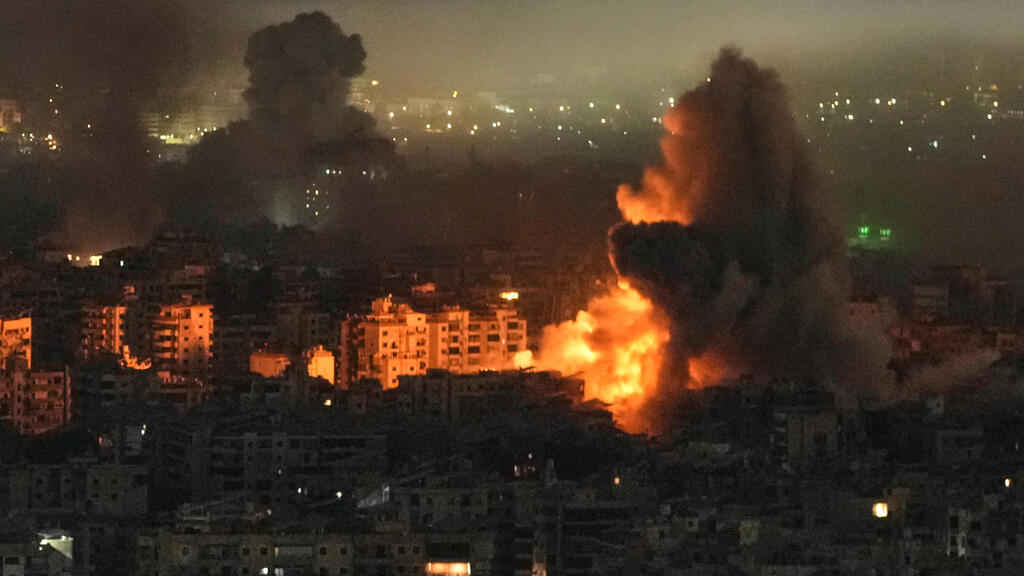
Prime Minister Benjamin Netanyahu released a video Monday evening in which he said: "We are at war with Hezbollah. In just the last few weeks, our heroic fighters have eliminated over 600 terrorists. I want you to know this. But we are not taking our foot off the pedal. On the contrary. We will hit them. They are shooting drones at us. We have a special team working on this, and we will solve this too." Netanyahu addressed the residents of the north and said: "You are showing resilience that inspires all of us. We will increase our strength and hit them head on."
In the absence of defensive solutions to halt the danger of explosives-laden drones, the IDF remains exposed to the threat without any real ability to hurt Hezbollah where it truly matters. According to security officials, the IDF already has prepared plans for the continuation of the campaign and would like to strike the terrorist organization’s drone array, while also targeting senior Hezbollah figures who sit safely in Beirut.
In effect, while the drone threat was once defined by combat forces as a tactical threat, the sequence of incidents and the understanding that it is causing changes in the forces’ operations have turned it into a strategic threat. In recent weeks, Hezbollah has already shifted to “drone attacks.” After gathering intelligence and conducting surveillance, the organization’s terrorists focus their efforts on one area where troops are located and launch several drones at it, sometimes simultaneously and sometimes one after another.
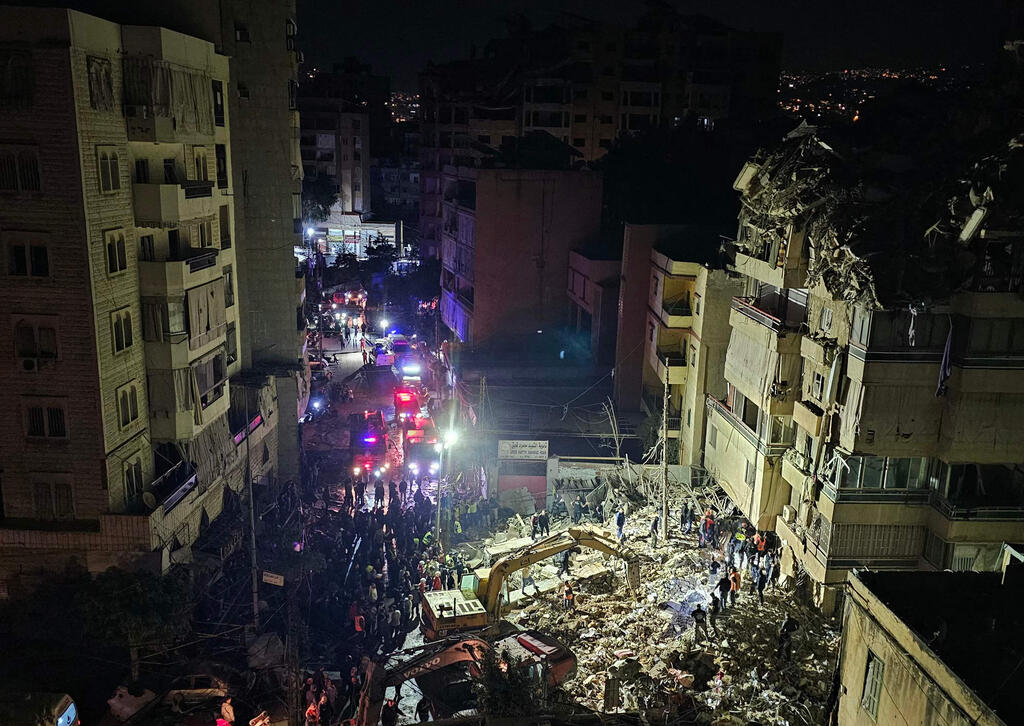
Pressure to increase attacks on Lebanon, particularly Beirut
(Photo: AFP)
As each day passes, Hezbollah is improving its use of explosive drones and is waging a battle of wills against IDF forces operating in the field over the troubling threat.
Recently, several vehicles were taken out of activity, and contractors were instructed that most work would be carried out at night due to concern over the drone threat. As a result, the pace of progress in demolishing structures and clearing the area has slowed. Hezbollah, for its part, launches drones to delay IDF operations and the demolition of villages, which hurts the organization in the eyes of Lebanon’s Shiite public.
A senior American official told Qatari television station Al Jazeera that Israel's hands will not be tied. "Hezbollah has ignored repeated calls for a ceasefire with Israel, including the latest ultimatum. Israel will respond to attacks directed against its forces and civilians. This is not the Biden administration. Hezbollah has launched 1,000 drones and 700 rockets since April 17 to disrupt negotiations between Lebanon and Israel," the official said.
"Hezbollah bears full responsibility for the current escalation by violating the ceasefire since the beginning of March. Hezbollah seeks to deny the Lebanese people the opportunity to achieve peace and reconstruction. The idea of direct negotiations, which could include significant support from the United States, poses an existential threat to Hezbollah.
'The enemy crossed a red line'
After a day of repeated Hezbollah drone attacks on northern communities, heads of local authorities along the confrontation line are holding an urgent discussion with Northern Command chief Maj. Gen. Rafi Milo. They are demanding answers regarding security responses and the continuation of the campaign amid the escalation and the risk to residents’ lives along the Lebanese border.
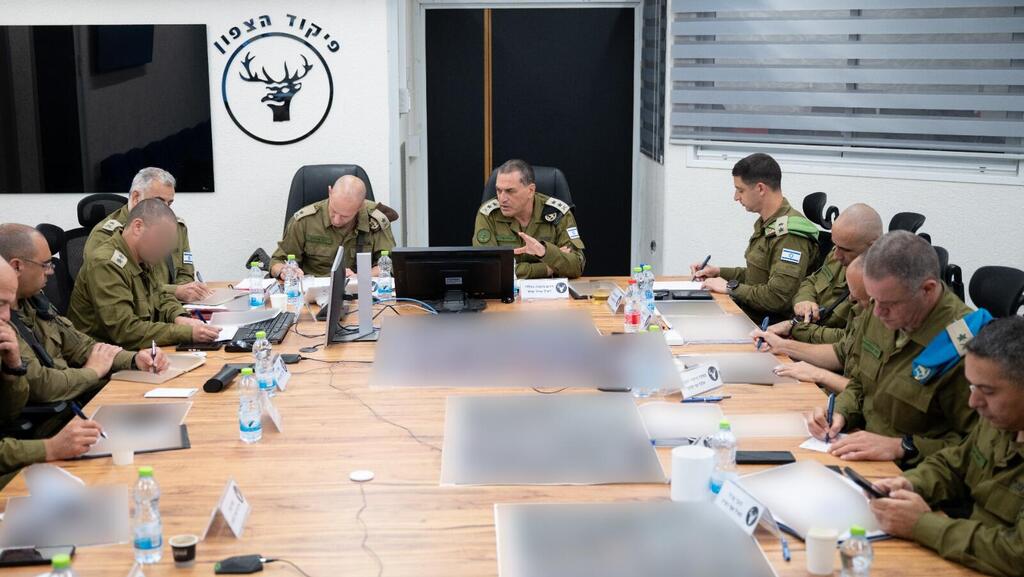
IDF chief of staff Eyal Zamir visits the Northern Command
(Photo: IDF Spokesperson's Unit)
At a ceremony held Monday in Katzrin, Milo said: “In the Lebanon sector, Northern Command is at war. Our forces are fighting deep inside Lebanese territory. They are striking the enemy and destroying enemy infrastructure. Opposite us, the enemy is using standoff fire against our forces deep in the field, along the border and against communities. Our role is to protect civilians. As in Syria, so too in Lebanon, the forces separate the enemy from the communities. Harm to civilians and the civilian sphere is not a reality that can be accepted or treated as routine. We will not contain fire on the home front.
“The Hezbollah terrorist organization has chosen to deliberately worsen the security reality in the north, while directly harming the civilian population. Today, in Metula and Shomera, and along the border, the enemy crossed a serious and unacceptable red line. The IDF and Northern Command will continue to act with determination against every threat in order to defend the State of Israel, the residents of the north and to maintain their security — your security,” he also said.
The ceremony was also attended by 210th Division commander Brig. Gen. Yair Peli, 474th Brigade commander Col. B. and other commanders.
IDF officials are currently pushing to strike Beirut and other locations deep inside Lebanon using the Israeli Air Force, also because of a window of opportunity that could close if another campaign opens against Iran, in which case the air force and Military Intelligence Directorate would be diverted there. At this stage, plans are on the table, but the clock is ticking and they must be carried out soon.
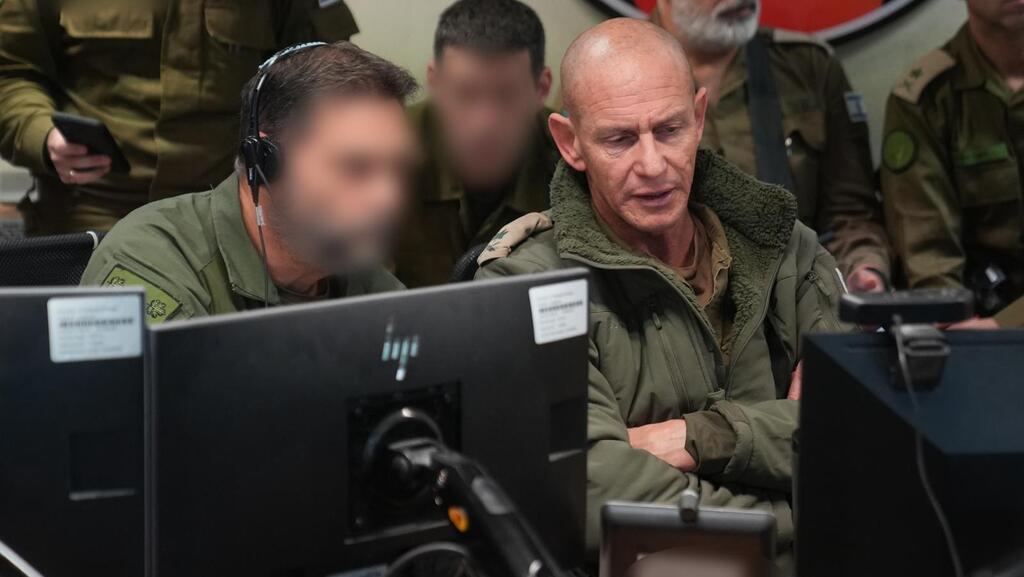
Northern Command Commander, Major General Rafi Milo
(Photo: IDF Spokesperson's Unit)
Hezbollah, for now, is benefiting from a war confined to southern Lebanon, while its people manage it from Beirut, IDF officials explain. At the same time, IDF operations in the village area along the Yellow Line are damaging Hezbollah’s legitimacy.
Milo is effectively aligning himself with the chief of staff’s remarks, as the IDF’s top brass forms a united front vis-à-vis the political echelon, out of a sense that under the current use of firepower, Hezbollah cannot be hit more deeply. Since the start of the so-called ceasefire, 11 soldiers have been killed, and since the start of the current campaign in Lebanon, 24 IDF soldiers have been killed.
Northern Command is working to clear the area and is already carrying out various operations to deepen control through observation and fire over different areas in southern Lebanon and beyond. Forces are clearing underground infrastructure as well as above-ground infrastructure, while constantly contending with the drone threat.
The greatest threat is mainly to the heavy vehicles that enter the area to carry out clearing operations and demolish structures, as well as to move along various routes or extract stuck vehicles. At those moments, the forces become easy targets for Hezbollah’s drone operators.
First published: 21:16, 05.25.26