


The war between Israel and Iran has entered what may be an unprecedented phase in the Middle East: the killing of Supreme Leader Ayatollah Ali Khamenei in a coordinated Israeli-American opening strike, transforming a yearslong shadow conflict into a direct confrontation over the future of the regime in Tehran. The central question is no longer only how many missiles Iran retains, but whether the regime itself will survive.
Operation Roaring Lion began with a surprise daylight strike on the supreme leader’s compound in the heart of Tehran. According to Israel, 30 bunker-buster bombs killed Khamenei along with dozens of senior security and political officials. Among those reported killed were Iran’s chief of staff, the commander of the Revolutionary Guard, the head of military intelligence and senior figures responsible for the military nuclear program.
Gallery
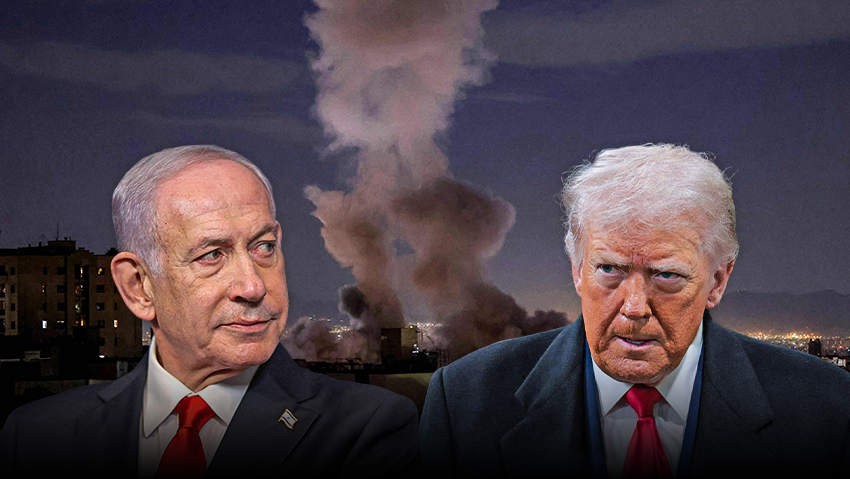
Benjamin Netanyahu and Donald Trump
(Photo: ATTA KENARE / AFP, JOE RAEDLE / AFP, Anna Moneymaker AFP)
The move carries profound strategic significance. Rather than another limited round of strikes aimed at degrading capabilities, Israel signaled a conscious effort to undermine the regime’s very stability. It marks a doctrinal shift: from containing nuclear advancement and rolling back Iranian proxies to attempting to create conditions for the collapse of the leadership in Tehran.
Iran regrouped relatively quickly. Dozens of ballistic missiles were launched toward Israel and other countries in the region, including two fired at Cyprus, where British bases are located. In Israel, 12 people were killed and significant structural damage was reported.
Despite the blow to its senior leadership, Iran’s launch array did not collapse. Although Israel and the United States achieved broad air superiority over Iran and destroyed dozens of launchers and air defense batteries, Iran’s missile stockpile, estimated at 2,500 before the operation, allows it to continue significant fire.
The Israeli Air Force continues strikes in Tehran


U.S. President Donald Trump said the operation was “moving faster than planned” and claimed that dozens of Iranian leaders were eliminated “in one hit.” Referring to Iran’s new leadership, Trump said: “They want to talk, and I have agreed to talk, so I will be talking to them. They should have done it sooner. They should have agreed sooner to what was very practical and easy to do. They waited too long.”
In Israel, officials did not publicly respond to Trump’s comments, which suggest impatience and a preference for a swift conclusion without prolonged entanglement. Foreign Minister Gideon Sa’ar, a member of the inner security cabinet, told ambassadors that the war’s objective is the long-term removal of existential threats to Israel.
“As long as the current regime exists in Iran, that objective cannot be achieved,” Sa’ar said. “The murderous regime in Iran remains committed to Israel’s destruction and has not changed its strategy, not in its pursuit of nuclear weapons, not in its plans to produce massive quantities of long-range ballistic missiles, and not in its use of terrorist proxies surrounding Israel.”
He added that Hezbollah has received more than $1 billion since the last ceasefire, and that Hamas received more funding over the past year than before the war. Iran, he said, also moved key elements of its nuclear and missile production programs deep underground, potentially beyond the reach of Israeli and American air power.
“Together with the brutally suppressed protests inside Iran, this led us to conclude that we must act, and that the time to act is now,” Sa’ar said, noting the decision was unanimously approved by the security cabinet on the recommendation of all Israeli security agencies.

Foreign Minister Gideon Sa’ar
(Photo: REUTERS/Kevin Lamarque)
Trump’s remarks suggest Israel and the United States may not see eye to eye on how the war should end. Trump could press the brakes before all of Israel’s objectives are achieved, possibly settling for a renewed nuclear agreement without insisting on limits to Iran’s ballistic missile program or its regional proxies. Israel, by contrast, appears intent on pressing the accelerator and achieving as much as possible before any halt is imposed.
According to an Israeli source, roughly 2,000 munitions were dropped in about 700 sorties in the first 36 hours of the campaign, amounting to approximately half the total munitions used during the 12-day Operation Rising Lion. While Israel has showcased its operational results, the United States has highlighted its power but has not publicly displayed the full outcomes of its strikes, possibly to avoid the perception that it is fighting on Israel’s behalf.
The stated objective is not to conquer Iran or redraw borders, but to create conditions that would allow the Iranian people to topple the regime themselves. That is the central gamble: there is no certainty that the public will rise. History shows that revolutionary regimes sometimes rally around an external threat, even after suffering severe blows. Iran has sought to regionalize the conflict, striking not only Israel and Cyprus but also six Arab states: Saudi Arabia, Qatar, Kuwait, the United Arab Emirates, Bahrain and Oman.
About 100,000 reservists have been mobilized. Northern Command has been significantly reinforced opposite Lebanon and Syria, Central Command has increased counterterror operations, and forces in the south remain on high alert along the Gaza front. The posture reflects concern over further escalation, including possible involvement by Hezbollah, Shiite militias in Iraq or flare-ups on additional fronts.
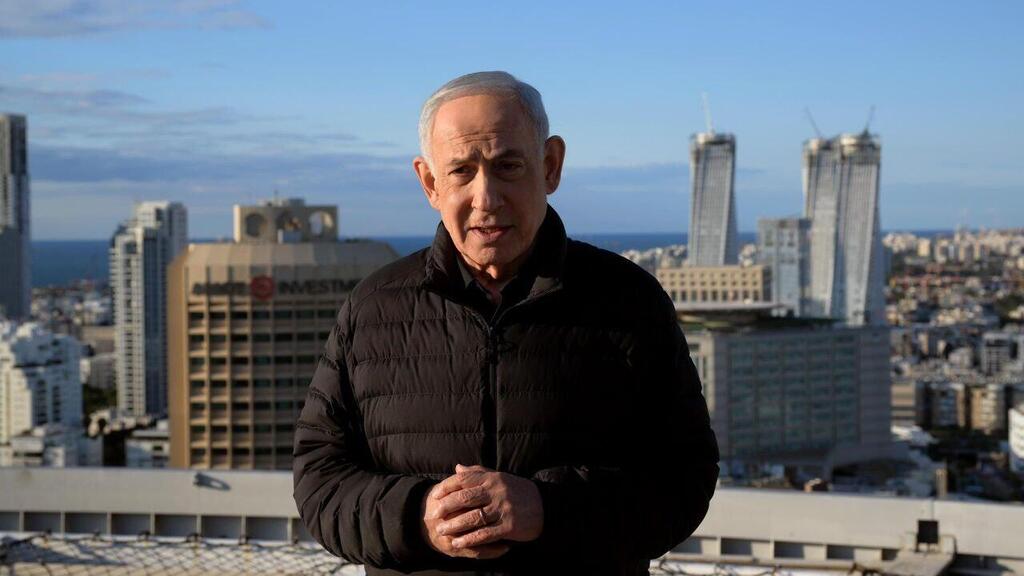
Netanyahu: 'We eliminated the tyrant Khamenei and dozens of senior figures in the oppressive regime'
(Photo: Roi Avraham)
Prime Minister Benjamin Netanyahu declared that this was a move he had awaited “for 40 years,” describing it as a direct strike on the regime in Tehran alongside the United States. Yet alongside the military achievements, the civilian toll is tangible: a dozen dead, hundreds wounded and heavy damage to Israel’s home front.
Where does the war stand? Militarily, Israel and the United States hold air superiority. Most of Iran’s senior security leadership has been eliminated, and command-and-control infrastructure has been severely damaged. But Iran retains significant launch capabilities, and there are no immediate signs of regime collapse in Tehran.
Israel has achieved a historic tactical success in eliminating the supreme leader and decapitating the Iranian security elite. The larger question, however, is political rather than military: Will the blow translate into regime change? If the Iranian public does not rise, the campaign could turn into a prolonged and costly war of attrition.
Prime Minister Netanyahu continues to hold ongoing security consultations with senior defense officials and members of the inner cabinet as the next phase of the confrontation takes shape.