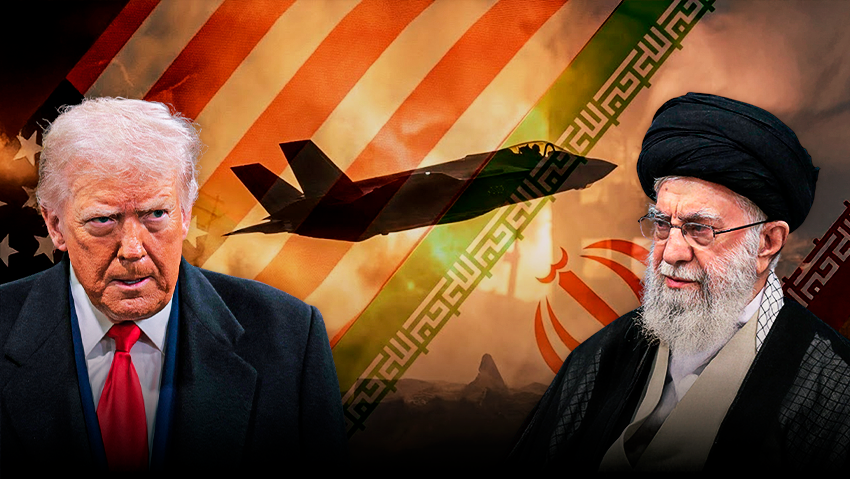
A senior Israeli official confirmed Saturday that Iran’s Supreme Leader Ayatollah Ali Khamenei was killed in the opening strike of Operation Roaring Lion, marking what would be the end of the 86-year-old cleric’s 36-year rule over the Islamic Republic.
Prime Minister Benjamin Netanyahu said earlier in a televised statement that the compound in Tehran where Khamenei had been staying was destroyed and that “it is possible the tyrant is no longer with us.” A short time later, the senior official said Khamenei’s body had been found.
Iranian authorities have not confirmed the claim.
Khamenei, who had long faced health concerns, had reportedly been sheltering in a bunker in Tehran with family members in recent months following earlier Israeli operations.
Born in the northeastern city of Mashhad, Khamenei studied at a Shiite religious seminary in Qom and later taught Islamic studies. Among his teachers was Ruhollah Khomeini, who would go on to lead Iran’s 1979 Islamic Revolution. Because of his political activity against the shah and his hard-line Shiite views, Khamenei was arrested several times in the 1960s and barred from teaching after his release.
He was close to Khomeini during the latter’s exile in France and assisted in the Islamic Revolution. After Khomeini’s return to Iran, Khamenei held senior positions, including deputy defense minister, member of the Revolutionary Council and Khomeini’s representative to the Supreme Defense Council.
In 1981, he survived an assassination attempt when a bomb hidden in a tape recorder exploded during a speech at a mosque in Tehran. The blast left his right arm paralyzed. Later that year, after the killing of the ruling party’s secretary-general, Khamenei was appointed to the post and went on to win election as Iran’s president. He was re-elected in 1985.
As president, Khamenei embraced Khomeini’s fundamentalist worldview, including hostility toward the West and calls for Israel’s destruction. During his tenure, Hezbollah and other militant groups received extensive Iranian support.
After Khomeini’s death in 1989, Khamenei was appointed supreme leader. His selection faced opposition, and tensions later emerged between him and reformist President Mohammad Khatami from 1997 to 2005 over efforts to introduce reforms. Khamenei backed Mahmoud Ahmadinejad’s presidential bid and supported a harsh crackdown on protests following disputed elections.
Over the years, Khamenei tightened his grip on Iran’s governing institutions, suppressing dissent and building what Iranian officials called an “axis of resistance” across the region. During periods of conflict with Israel, he repeatedly issued threats and adjusted strategy in an effort to strengthen deterrence, though Israeli officials say those efforts ultimately failed and led to the elimination of several of his closest associates.
Khamenei drew ideological inspiration from anti-colonial movements and thinkers who sought to purge Iranian society of Western influence. He translated into Persian the works of Sayyid Qutb, an Egyptian Islamist thinker associated with the Muslim Brotherhood. Like many clerics of his era, he was deeply involved in political activism, participating in protests against the shah as a young man.
Before becoming supreme leader, he also briefly served as deputy defense minister and later as Tehran’s Friday prayer leader, a position he retained for decades.
His reported death, if confirmed, would mark a dramatic turning point in Iran’s leadership and in the broader regional confrontation.