

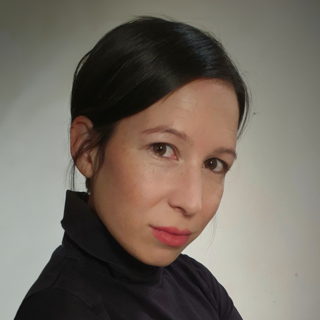
For the last two years Galit Dan falls asleep holding Shualy, the plush fox toy of her eldest daughter Noya, guarding her for the daughter who will never again hug it. Two years in which she misses every day the laughter, the hugs — and also the challenges she faced as a single mother to a courageous, curious young girl on the autisim spectrum.
“Mom, there was a big boom… Oh Mom!” Those were the last words 13‑year‑old Noya wrote to Galit, shortly before she was murdered by terrorists at Kibbutz Nir Oz. A month and a half ago, at the national memorial ceremony for October 7, Galit took the stage and broke a long silence she’d imposed on herself.
“My Noya,” she addressed her beloved daughter, “I had no words then, and even now I have no words to answer you. You know, in the 13 years you lived, raising you required constant mental effort. Maybe that’s why you came out so succinct and so high quality. You wanted everyone to hear about your autism, and that you are proudly autistic. Hear that, my child? Now they’re listening a little.”


Galit Dan, this week at Grovetech, where the Center for the Autistic Experience will be established
(Photo: Tal Shahar)
Two years after her private tragedy, Galit now speaks for the first time about what has become her life’s mission: to make people listen. She did not want to memorialize Noya with a blank scoreboard or a silent monument, but with something living, active and meaningful. She also dislikes the term “in memory of," and prefers “for her light." These days she is working intensively to establish the “Autistic Experience Center” in the Gaza‑border region, in Noya’s name.
The aim of the innovative center, which draws inspiration from initiatives like “Dialogue in the Dark,” is to provide visitors with an interactive, sensory and emotional experience that will allow them to understand up close the world of autistic persons — in the hope that when they emerge, they will treat them with sensitivity, with inclusion and with awareness.
“You cannot become ‘less autistic’,” Galit explains of the idea behind the initiative, “and our role as mothers of autistic children is to help the world accept our children, exactly as they are.”

Noya with her grandmother Carmela
(Photo: Yediot Aharonot archives)
After her death, Noya became known in Israel and abroad also through her great love of the Harry Potter books. A photo of the curly‑haired girl with the winning smile, holding her favorite book and a magic wand, was etched into the hearts of millions.
“Noya always watched me reading,” Galit recalls. “We had bedtime reading rituals and piles of books at home. As a child she loved "Tafilila." When she grew older, she became interested in stories of Greek mythology. She got her first Harry Potter book in 3rd or 4th grade. From there almost nothing else mattered."
“I must admit that personally I didn’t connect so much to those books. I saw the films and to me they always looked scary and dark. When I read the volumes I couldn’t understand how she didn’t get lost in the millions of details and descriptions. I didn’t really understand that world, but I went along with Noya because in her eyes it was wonderful and magnificent. On her bat mitzvah she received the magic wands. In 5th grade she dressed as Hermione (a character from the series).”

Gilat and Noya
(Photo: Yediot Aharonot archives)
After the October 7 massacre, when she was still listed as missing, J.K. Rowling, the author behind the young wizard’s adventures, shared Noya’s photo as Hermione and wrote: “Kidnapping children is a despicable and wholly unjustifiable act. For obvious reasons, this picture has hit home with me.” After it became known that Noya was murdered, Rowling simply wrote: “I have no words.”
“I remember I was very surprised that a person who wrote so many words had no words,” Galit says now. “I wanted her to say something more than ‘I have no words’. I felt that was not enough.”
× × ×
Noya and her grandmother Carmela, aged 79, were among the last to be murdered in the Nir Oz massacre. They were killed around 12:30 p.m., likely by looters, when there was nothing left to loot. Four days later, on October 11, they were found in an embrace in Carmela’s safe‑room in her house. The house had been charred and burned nearly to ashes, but the safe‑room remained intact.
Galit received the notification of their deaths only a week later, on October 18. In the intervening days she gave interviews to every conceivable media outlet, fearing they had been kidnapped, praying and hoping the two were still alive. After the horrifying news reached her, she fell silent, and found it extremely difficult to reopen her personal story.
In her past, Galit was a theaer teacher; today she is a special‑education teacher at Tzafit School in Kibbutz Kfar Menachem, where the evacuated children of Nir Oz study. The speeches she delivered — first at the national memorial ceremony, then at the memorial at Tzafit School — were a kind of coming out, especially in front of her students.
Why did you stay silent for so long?
“I waited for the idea of the center in Noya’s name to mature. Only now am I ready to talk about how I want her to be remembered and what I want to do for her light and honor. Until the living hostages returned, it was hard for me to speak about commemoration. We were still in struggle. Only when they returned and the war stopped did I feel I’d have, as it were, legitimacy to begin to breathe and look ahead to the horizon, which now we’re allowed to consider.”
Galit was born and raised in Kibbutz Nir Oz. Her parents, Carmela and Ori, were among the founders of the kibbutz. She is a sister to Dor and Hadas Kalderon — the mother of Sahar and Erez, who were abducted to Gaza and returned in the first hostages deal. “My first memory from the kibbutz is from age three,” Galit says. “I stand in the middle of a path on Yom Kippur, and suddenly a siren. Then my mother arrives and takes me.”

Nurse Hadas Calderon with her children
(Photo: Courtesy of the family)
And those were the days of the traditional kibbutz, with children’s houses.
“I didn’t like the children’s house. In childhood it wasn’t awful, but as I got older it was hard. All the togetherness, the density, the lack of privacy. My father was a cinema‑operator and artist, so between 4:30 and 7, the hours I was with the parents, he put in a great effort to provide content. When I was 10, we went on a mission with the parents to France, and over my life I went back there several times. My father was the base security coordinator until age 70. He managed all of Operation Protective Edge and the disturbances with a strong hand. He died at 71, I think because of the stress. During the times when families were evacuating the kibbutz, my parents stayed behind.”
She gave birth to Noya alone at age 38 via fertility treatment, while living in Tel Aviv. “The pregnancy and birth of Noya were a very empowering experience,” she recalls. “After the birth my mother came to Tel Aviv to help me. When I decided to have another child — Tamar — I moved back to Nir Oz to be near my parents.”
When Noya was two, Galit began to understand something was different about her beautiful daughter. “She still hadn’t begun to speak, and initially I thought she was hearing impaired. We underwent a battery of tests until first grade, and only then got the final diagnosis that Noya was on the autism spectrum.”
What happens after the diagnosis?
“From a very young age we were in therapies, monitoring and work. In hindsight I know this was the best thing. The earlier you treat a child on the spectrum, the higher the chance of higher functioning. And so it was. She was a very intelligent child.”
How did Noya cope with the security reality at the kibbutz? For example, when did she hear her first “Red Alert”?
“During Operation Protective Edge. She was four. We left the kibbutz for a while outside, then they said there is a ceasefire and we returned. It was a quiet, beautiful day. I decided I’d send Tamar, who was half‑a‑year old, for the first time to the childcare, and I also dropped off Noya. And suddenly a red alert. It was the first time I sat in the safe‑room and heard explosions inside the kibbutz. The whole earth shook. Horror. I called my mom screaming, and all I wanted was to go to the kindergarten, to see that they were okay.”

Noya
(Photo: Courtesy of the family)
Terrifyingly, the rockets fell inside Noya’s kindergarten. “They were just celebrating the third birthday of one of the kids, and Jean Berman, the father of the birthday child, was critically wounded when the kindergarten collapsed on him, together with his partner and his son.”
What a horrible experience for the children
“Later Noya feared every sound, every boom. Not just her — her entire kindergarten. I met some psychologists who told me that all the children in that class ended up in therapy.”
After that event, Galit decided to evacuate from the kibbutz, but later returned.
“I am angry at myself that I continued to live there,” she says now. “Why raise children over a volcano when you know it could explode?”
You didn’t live there alone. The army never told you it was too dangerous. You had safe rooms, the defense means, the army, the fence
“That’s how I thought. But it was my responsibility to understand that it doesn’t make sense to raise children like that. That’s how I feel today. My parents were there and helped me with two young daughters I was raising alone. Noya and Tamar had a very good life there. Both were very independent. Noya used to cycle from place to place and loved the company in the kibbutz and community events. She participated in every party and holiday and had tons of extracurriculars.”
Noya needed routine and structure, and the whole family enlisted and adhered to clear schedules and set activities.
“Noya had internal strengths. At school she loved the teachers and the learning, but socially it wasn’t simple for her, yet she never broke. Only at home. Only then she opened up and said she was alone and didn’t want to go to school, that people treated her badly there.”
And she had her own interests.
“In recent times she began to love anime and everything to do with Japan. She loved a series called "Demon Slayer." To me it’s a very violent series. In the first episode the whole family is murdered.”
Sometimes such content allows children to process fears safely.
“Yes, even in ‘Harry Potter’ there are things that are really scary. These are worlds I wouldn’t have chosen to deal with. Personally I find it hard, I’m a coward. But for Noya, this was her way to cope with reality and fears. She wasn’t a sporty or athletic child, but she insisted on scout club. She was very brave.”
× × ×
Two months before October 7, Galit and her daughters moved to Kibbutz Kissufim, following Galit’s relationship with Yinon Ilan.
“Yinon loved to cook and Noya loved being with him in the kitchen. She was so connected to him. Noya was very happy about the move to Kissufim and very excited to start at Eshkol HaNasi School after a difficult year at her previous school. She was ecstatic,” according to Galit.
On October 6 the family sat down for a dinner together.
“We had dinner with my mother and Hadas, and Noya decided to sleep over at my mother’s. At six‑thirty in the morning it began. We sat in the safe‑room and were afraid to speak. We were afraid to make sounds. Outside we heard the sounds of a mad war. We lived one house away from Shlomo Mantzour (who was kidnapped and murdered in Gaza, age 85.). In hindsight, from our house they stormed and waves of soldiers came to assist.”
And all that time Noya wasn’t with you.
“I didn’t dare try to contact her, we were in terror. Then the power went out and there was no communication. We were isolated. We understood more or less what was happening in Nir Oz, but I couldn’t bear the horror. I didn’t move. I didn’t breathe; at 8:00 a.m. the terrorists entered our home.”
A nightmare.
“What do you do? Tamar told me ‘Mom, call the police.’ And I said to her ‘Tamar, the army will come soon, the army will come soon.’ And in my heart I thought, where is the air force? To this day I can’t really explain what happened there. Around our house was a killing field.”
At some point Galit managed to contact her mother Carmela.
“She wrote ‘We’re in the safe‑room, everything’s okay.’ Then she wrote that they looted the entire house and that she will take a photo so we can see. I wrote back: ‘Don’t you dare leave.’”
“After we were evacuated from Kissufim, I called Hadas, my sister, for the first time. And she said to me: ‘Galit—they murdered, they burned them, they abducted.’ I couldn’t understand what she was telling me. We boarded the bus that evacuated us to the Dead Sea and Hadas told me: ‘I don’t know where my children are, where Ofer [Kalderon, her ex‑husband, who was also abducted and later released] is.’ We arrived at the Dead Sea in the morning, then we started trying to figure out what was going on. We realized we had to set up a command post, act fast. Within a second media swarmed. I was interviewed by 10 broadcast channels a day, in English and French.”

Harry Potter books author JK Rowling
(Photo: Charles Sykes/AP)
For many days afterwards Galit did not know the fate of her daughter and mother.
“At first I was sure they had been abducted. After we were informed they had been murdered I did my own investigation and reached the soldier who found them in the house, in the safe‑room, hugging. The house was burned to ashes, but the safe‑room was only slightly scorched and blackened.”
After her world collapsed on her, Galit struggled to join the fight her sister waged to bring back her children.
“The gap between the dead child and the living children was just too large,” she says.
And then hostages began returning home.
“Every event of a hostage returning is hard. I don’t attend the funerals in Nir Oz. I went to the kibbutz a few times. The first time I went to see the house and try to understand what happened. The second time I went with the soldier who found Noya and my mother. The third time we held a farewell ceremony at the house because initially we were told they were going to demolish it. And every time I arrive there it just breaks me totally. For me that place is Treblinka.”
× × ×
The idea to create the center was born in the early days after October 7.
“People from Alumot Or [a social organization supporting schools for students with autism] came to me and said: ‘Galit, whatever you want, we’re with you.’ I think they imagined I would want some memorial sign for Noya. At first I told them I wasn’t yet capable of thinking; later I realized I don’t want to use the words “in her memory” or “remembrance,” because it’s much more than that.
“Then I realized I want to create a place that explains the autistic experience. I used always to say: ‘I have an autistic daughter; I want you to notice her. She is more sensitive, social situations are harder for her.’ Wherever she went, I went earlier. I would tell them and not wait to be discovered. And then I would give them tips: you must explain things beforehand, tell what is going happen. And understand that the reaction you see now may be about something that happened ten minutes ago. You have to help her organize, because for her everything is a little more complicated.”
You did not try to change Noya for the world, you asked the world to notice her.
“Because she cannot change, nor should she. If you have a child with diabetes or a child with sesame allergy — he will not change. A child on the spectrum cannot become less autistic. That will always be, and in every autistic it manifests somewhat differently. My role as mother is to help the world accept her. Because after you’ve gone through all the hurdles — you got a child who is curious and all she wants is to say what she has to say, to hear and laugh, to participate and to be challenged.”

Gilat: 'I see more centers like this in Israel and around the world'
(Photo: Tal Shahar)
The “Autistic Experience Center” in memory of Noya Dan is now being brought to life with the help of “Alumot Or," in cooperation with the Eshkol Regional Council. It will take place within the walls of “GrovTech”, a technology centre that Noya especially loved, a place where she studied astronomy and even cooking.
The center is planned as an interactive space that will allow visitors to experience up close the unique world of people on the autism spectrum — not through theoretical explanation but through sensory and emotional immersion. It will include an experiential track simulating how autistic individuals process environmental stimuli, alongside educational and social‑understanding stations, technology innovation elements and learning content. Professionals are leading the planning of content and experience, alongside a steering committee comprised of autistic individuals themselves.
Have you based it on similar centers in Israel or abroad?
“We researched and did not find a similar center trying to explain the autistic experience. It is very unique. What will happen in ‘Grove Tech’ in my mind is a pilot. In my mind’s eye I see more centers like this in Israel and around the world. I envision information programs that convey the feeling and experience, in order to raise awareness about the subject and about people with special capabilities.”
Noya’s love of “Harry Potter” also will receive its due place. “J.K. Rowling herself and Universal Studios have both expressed great interest in the project, and we are in dialogue with them about equipping the center with ‘Harry Potter’ accessories.”
These days, Galit is studying for a master’s degree in bibliotherapy (therapy through words, stories, expression and creation), and is debating whether to specialize in autism (“because I am a spoken autistic.”). The autistic experience, in her eyes, is an opportunity to educate for tolerance, acceptance and compassion of the other as they are.
“The phrase I’ve been saying lately is that history placed me here. I don’t have the right to be silent. The truth is that I’m not so eager to expose myself. Every time I break again when I talk about Noya. But I do want to talk about my private uprising war, and about how you get out of it. To live with loss is like living with an incurable disease. It’s always there, but you can live with it.”
Galit’s poignant words at the memorial ceremony drew much resonance. During U.S. President Donald Trump’s visit to Israel, opposition leader Yair Lapid referenced them in his speech. “Galit said there a sentence that moved us all,” Lapid said in the Knesset, “‘We do not want revenge, we want repair.’ Today that repair begins.”
“I think Yair Lapid connected with the words because Noya was autistic and he also has an autistic daughter,” Galit says now. “In the center there will be a message of acceptance, of compassion for the other as the other. I would like the by‑product of the horror I experienced to be education for tolerance. If such a terrible thing already happened, then let it have value, let it have meaning. One can learn from Noya, from the courage with which she lived. There is huge polarization in the people, but if we plant a small garden of seeds of compassion, acceptance and tolerance, maybe more gardens will bloom. Maybe.”
Do you think Israel can become such a place?
“If I did not believe there is a chance, perhaps I would have gotten up and left. I believe in change. If I did not believe in change I wouldn’t be involved in education. One of my favorite plays is Oedipus Rex. Do you remember Oedipus’s speech at the beginning? ‘Citizens of Thebes, there is a plague here. I don’t know who is at fault in this terrible plague, but there is a terrible plague here, and I will find the guilty and I will punish him.’ Sounds familiar? There’s everything there — ego, arrogance, eye‑closing. And what is beautiful is that in the end he takes responsibility. So yes, I believe there is hope.”