


Israel is continuing to facilitate medical evacuations of Palestinians from Gaza, but Western nations critical of its policies have been slow to offer refuge or treatment for patients, an Israeli defense official said Thursday.
“While criticism of Israel continues to intensify, the world’s countries are in no rush to accept patients from Gaza,” the official said, speaking on condition of anonymity to discuss sensitive operations. “Israel does not restrict these evacuations—on the contrary, it enables them regularly. But the initiative must come from the international community.”
Gallery
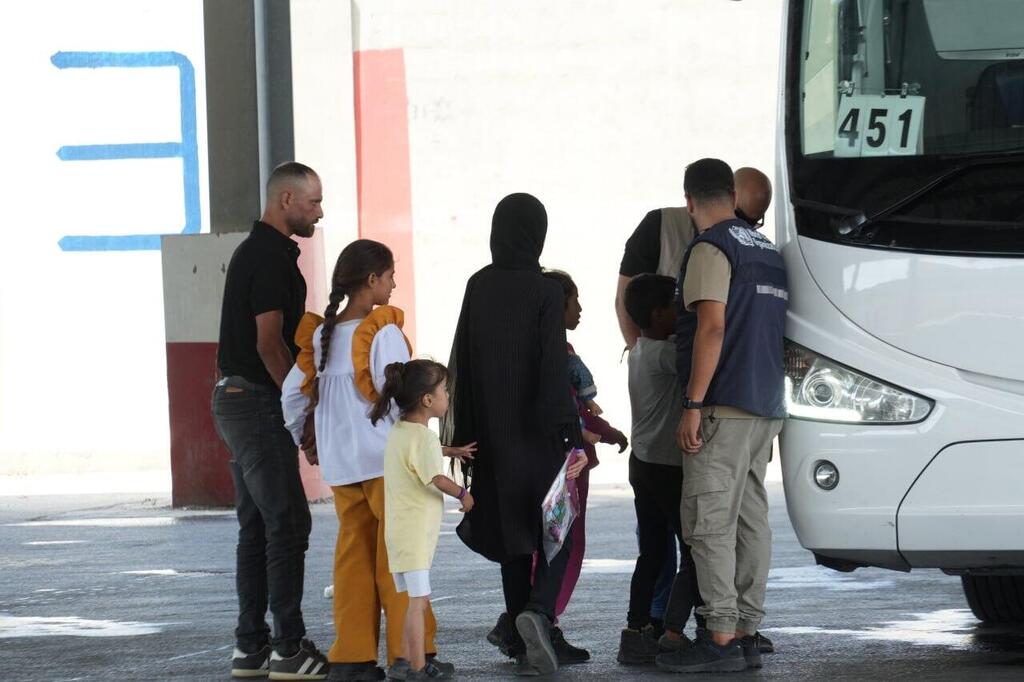
Gazans are crossing through the Kerem Shalom crossing to receive medical treatment
(Photo: Tomer Shonam Halevi)
His comments followed a coordinated evacuation on Wednesday, in which approximately 180 patients and their escorts were transferred to European Union countries. About 50 individuals were flown out through Ramon Airport in southern Israel, while the rest crossed into Jordan via the Allenby Bridge. The evacuation was arranged by Israel’s Coordinator of Government Activities in the Territories (COGAT), the European Union and the World Health Organization.
Among those evacuated was the Sarsawi family from Gaza, who were referred to France for treatment for their son Salameh, a young boy suffering from cancer. In a rare move, French authorities allowed all five family members—both parents and their three children—to travel together. Most countries typically allow only one or two escorts per patient.
“It was a great relief for us to be allowed to leave,” said Elham Sarsawi, Salameh’s mother. “But we wonder, will we return to Gaza?”
Her husband, Mahna, had planned to begin a job in Israel on Oct. 8, the day after the Hamas-led attack that triggered the ongoing war. “I was full of hope,” he said. “But after Oct. 7, everything changed.” He described conditions in Gaza as nearly unlivable and said the family hopes to remain in France as refugees.
He also criticized the distribution of humanitarian aid in Gaza, saying that only individuals affiliated with Hamas or its governing systems receive assistance. “Ordinary people like us get nothing,” he said. “I need 50 shekels a day just to buy bread. One pita costs 10 shekels. We can’t survive. All the leadership’s talk is nonsense.”
Evacuations amid aid efforts
With the Rafah border crossing closed, Israel developed a system to transfer patients in serious condition to third countries willing to receive them. Patients are screened for security and leave Gaza through the Kerem Shalom crossing before continuing through either Ramon Airport or the Allenby Bridge.
A parallel mechanism exists for residents with dual citizenship or valid visas. Since the program began, more than 3,700 Gazans—mostly patients and escorts—have exited through Israel to third countries.
The Israeli military says that since March it has significantly eased exit approvals, with most requests now accepted. Weekly evacuations take place, involving dozens to hundreds of people. Host countries include the United Arab Emirates, Jordan, Egypt, the United States, Canada, and several European Union members such as France, Italy, Spain, Germany, the United Kingdom, the Netherlands and Norway.
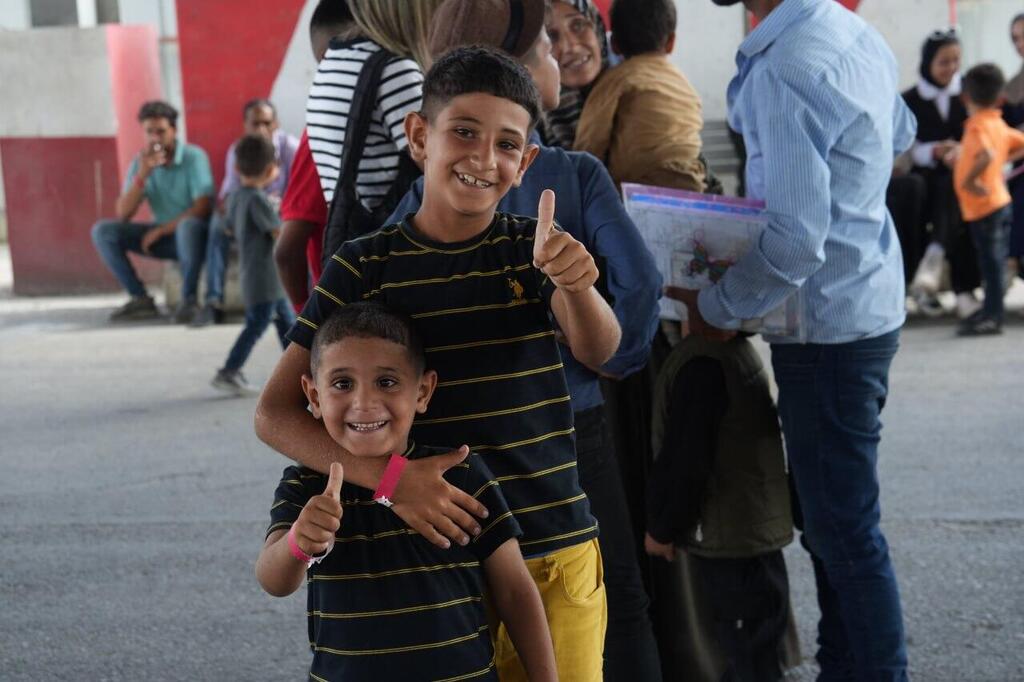
Gazans are crossing through the Kerem Shalom crossing to receive medical treatment
(Photo: Tomer Shonam Halevi)
Omar Khairi, a candy shop owner from Khan Younis, left Gaza with his 2-year-old son, who suffered a serious leg injury from shrapnel. “He may never walk again unless treated abroad,” Khairi said. “He’s just a baby.” His wife, who is eight months pregnant, and their other two children remain in Gaza.
“I live in a tent and receive no aid,” he said. “Only looters and thieves get anything.” Referring to Hamas leaders living abroad, he added, “What kind of resilience are they selling? Let them come live in Gaza.”
Others expressed similar frustrations. Walid al-Bass, a father from the Al-Maghazi refugee camp whose children were injured in an airstrike, said he received proper food, water and medical care at the Kerem Shalom crossing. “The leadership sits full-bellied, and we suffer in silence,” he said.
In another case, Ruwayda, a grandmother from Rafah, accompanied her 10-year-old granddaughter Malak to Norway for heart treatment unavailable in Gaza. “They only allowed one escort, so I went in place of her mother,” she said. “We’ll return home when the crossings reopen.”
Aid flow and Western response
Israel says it is actively working to accelerate humanitarian aid shipments into Gaza. At Kerem Shalom, convoys of aid trucks—loaded with food, medical supplies and other essentials—enter the territory daily.
This effort, Israeli officials say, contradicts claims by Hamas that Israel is strangling the territory. “Israel is not limiting aid—in fact, we are trying to speed up its delivery,” the defense official said.
Despite this, Israel says Western countries have made only limited contributions to the humanitarian effort. On Wednesday, just 34 patients and 98 escorts departed through the Allenby Bridge and Ramon Airport combined. Spain accepted 13 patients, Jordan 21. Norway received eight patients, and France four.
The official said the numbers highlight a gap between international rhetoric and actual action. “While Israel is promoting solutions and enabling the exit of wounded individuals, some countries that champion humanitarian outrage are doing very little to ease suffering in Gaza,” the official said. “If there is genuine concern for civilian welfare, it should be reflected in deeds—not just criticism.”