

Israel is considering imposing strict new restrictions on civilian drone use amid growing concerns that first-person view (FPV) attack drones could be launched from neighboring countries or the West Bank during the ongoing escalation with Iran, Israeli officials told ynet on Saturday.
A senior Israeli official said the proposal was discussed extensively by the Security Cabinet, with officials hoping that restricting drone activity would make it easier for security forces to identify and respond to potential threats.
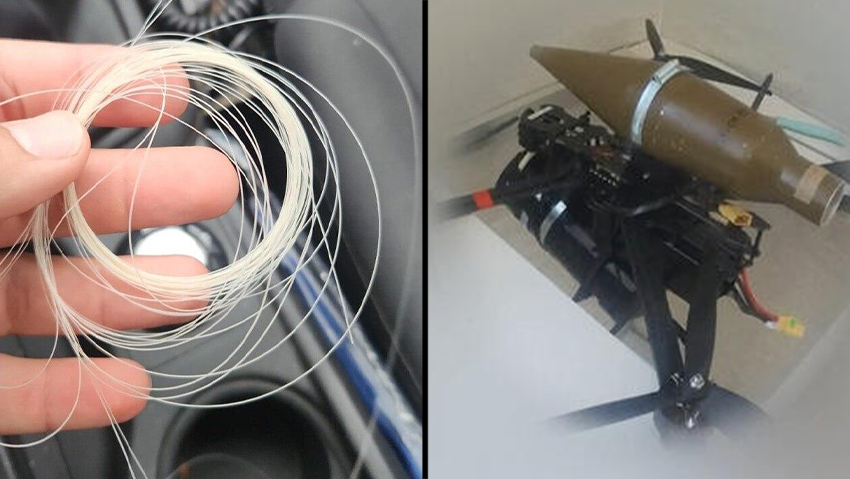
Security officials stressed that there is currently no intelligence indicating that FPV attack drones, particularly fiber-optic-guided models, are operating in the West Bank.
"This is a very serious threat for which we do not have a solution," one official said. "It has to be said honestly — this is a very serious threat."
Officials said they are particularly concerned about scenarios in which drones could target senior government officials or key state institutions.
The discussion comes as FPV drones have become an increasingly prominent weapon in conflicts across the region. Earlier Saturday, the IDF said it killed a Hezbollah cell in southern Lebanon that had been operating FPV drones near the Blue Line, the UN-demarcated border between Israel and Lebanon.
According to the military, the operatives launched a drone toward Israeli forces near the town of Kfar Tebnit before being struck by an Israeli Air Force aircraft.
Last month, officials warned that Iran was attempting to expand the use of FPV drones into the West Bank, replicating tactics employed by Hezbollah in Lebanon. Security officials said at the time they had no indication such drones were active in the territory but had adopted a preventive policy of confiscating any drones found there.
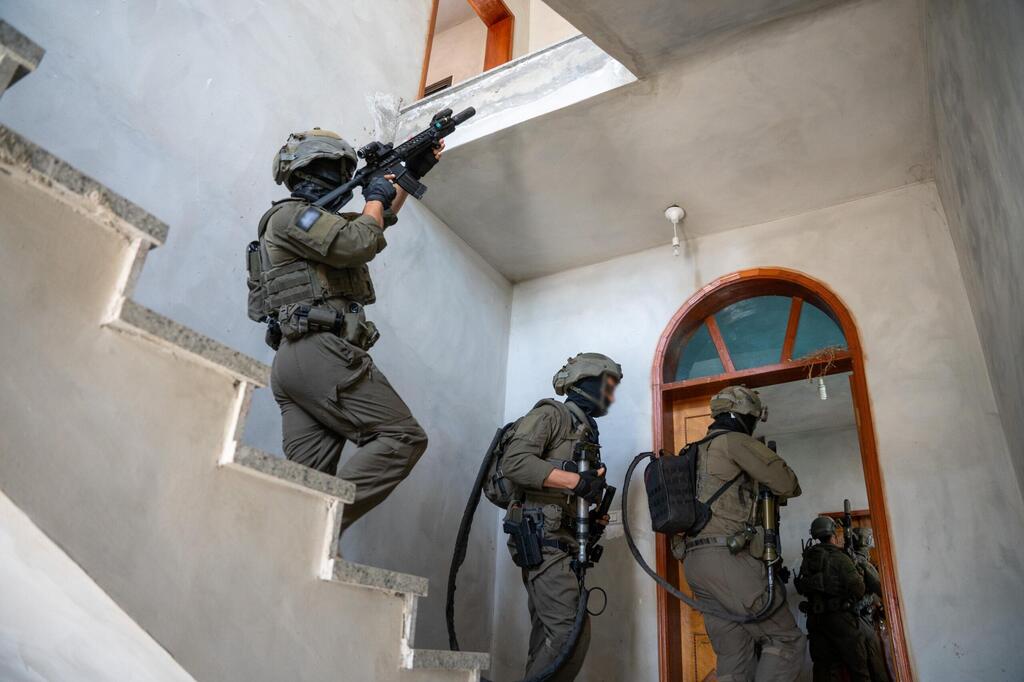
IDF forces operating in the West Bank
(Photo: IDF)
FPV drones are piloted through a live video feed transmitted from an onboard camera, allowing operators to steer them directly into targets with high precision while carrying explosive payloads weighing several kilograms.
The fiber-optic versions, increasingly used by Hezbollah and widely deployed in the Russia-Ukraine war, are connected to their operators by a thin fiber-optic cable that can extend for dozens of kilometers. Because they do not rely on radio signals, they are largely immune to electronic jamming, making them significantly more difficult to counter than conventional drones.
IDF officials have increasingly emphasized the threat posed by such systems to troops operating in the West Bank.
Under a military order issued in 2017 governing dual-use materials, the IDF is authorized to confiscate equipment that could be used for terrorist activity, including civilian drones.
According to security officials, about 400 drones have been seized across the West Bank since the beginning of the year.
Military officials said that, particularly since Hamas' Oct. 7, 2023, attack on southern Israel, security forces have shifted from responding to hostile intent to denying potentially dangerous capabilities, leading to the confiscation of drones regardless of whether there is evidence they were intended for terror use.
Officials say the prospect of FPV drones being launched from the West Bank poses a particular security concern because of the territory's proximity to major Israeli population centers. Unlike rockets, FPV drones can be guided with precision over relatively short distances, raising fears they could be used to target senior officials. Several Cabinet ministers and members of Knesset live in West Bank settlements, some located near Palestinian communities.