


The security establishment believes Iran is intensifying efforts to rebuild terror networks in the West Bank, taking advantage of the ceasefire with the United States and shifting regional dynamics after the war.
Before Oct. 7, most external direction of terror activity in the West Bank came from the Gaza Strip, led by Hamas and Palestinian Islamic Jihad with Iranian backing, alongside smaller local cells and occasional groups affiliated with ISIS. But Israeli military operations in Gaza and the West Bank, as well as strikes against Iran in 2025 and 2026, have made it harder for Tehran to move money and smuggle weapons into the territory.
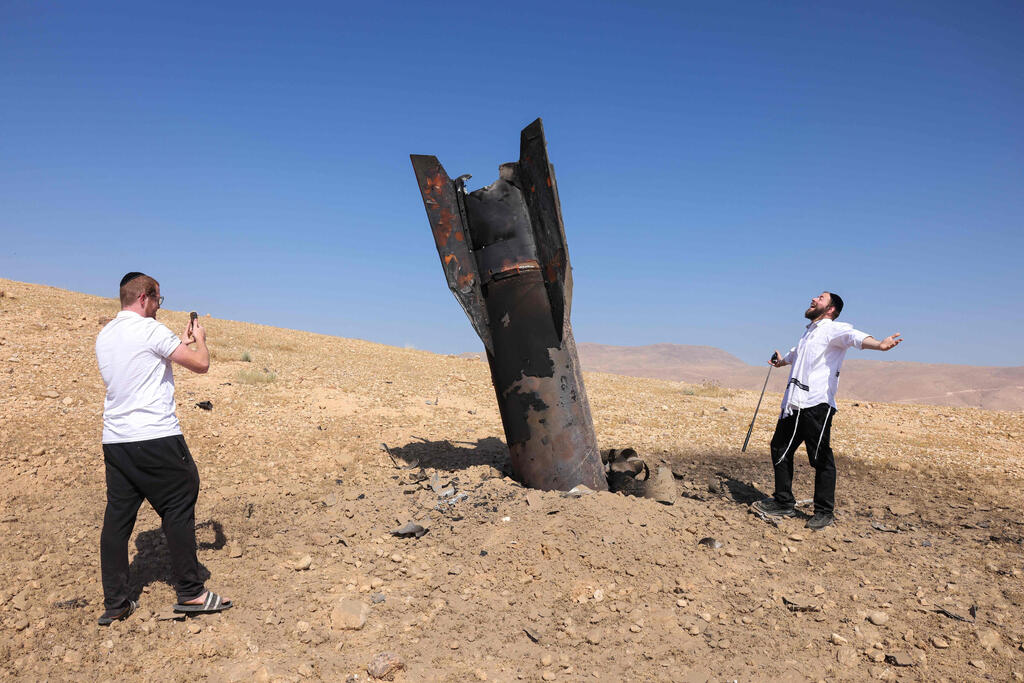
Israeli officials now fear that, after the U.S.-Iran ceasefire and amid a possible closing of the Lebanon front, Tehran has identified the West Bank as its main theater for promoting attacks. A significant portion of the direction, officials say, is being carried out from Turkey.
Earlier this week, the Shin Bet security agency said it had foiled dozens of attacks over the past year directed by Hamas operatives in Turkey. The agency said the operatives have used their presence in Turkey to run an extensive terror network, including recruiting attackers, meeting with West Bank operatives and transferring money and weapons.
Security officials say Iran’s methods rely on three main channels: digital financing through cryptocurrency to bypass traditional enforcement systems; overland smuggling of weapons through Israel’s eastern border, sometimes using couriers; and remote training of attackers, including the transfer of technical knowledge.
Some Israeli security analysts describe Iran’s shift of resources to the West Bank as a strategic move aimed at exploiting the link between Lebanon and Iran in ongoing negotiations.
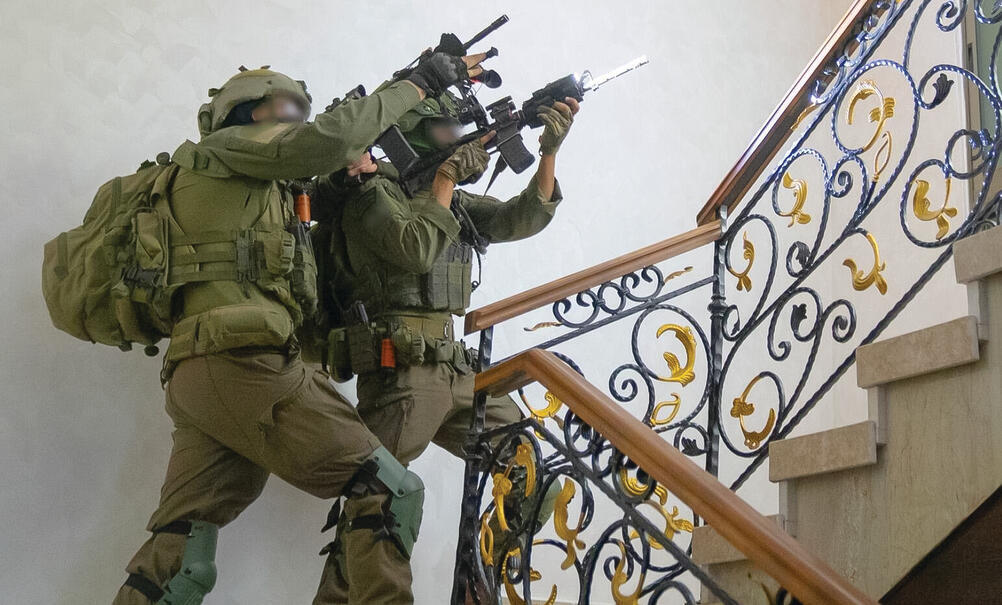
IDF forces operating in the West Bank
(Photo: IDF)
To counter Iranian efforts, the IDF Central Command and West Bank Division have been waging a focused campaign against terror financing and the spread of dual-use materials — civilian materials that can be used to manufacture weapons. In recent raids across the West Bank, Israeli forces seized large quantities of agricultural fertilizer.
Another growing concern is the possible spread of weaponized first-person-view (FPV) drones, similar to those used extensively in the war in Ukraine, to the West Bank. Such drones have caused significant damage to Israeli forces in Lebanon. Security officials say the working assumption is that there are not yet active FPV strike drones in the West Bank, but as a preventive measure, the IDF is confiscating any drone found in the area.
Israeli officials say the main drivers of terror activity on the ground are former security prisoners. Following recent hostage-release deals in Gaza, hundreds of released prisoners returned to the West Bank, some after nearly 30 years in prison. The Shin Bet and IDF are closely monitoring their activities, conducting home visits and issuing regular warnings to prevent the formation of new terror cells, especially in Nablus, Tulkarm, Hebron and Ramallah.
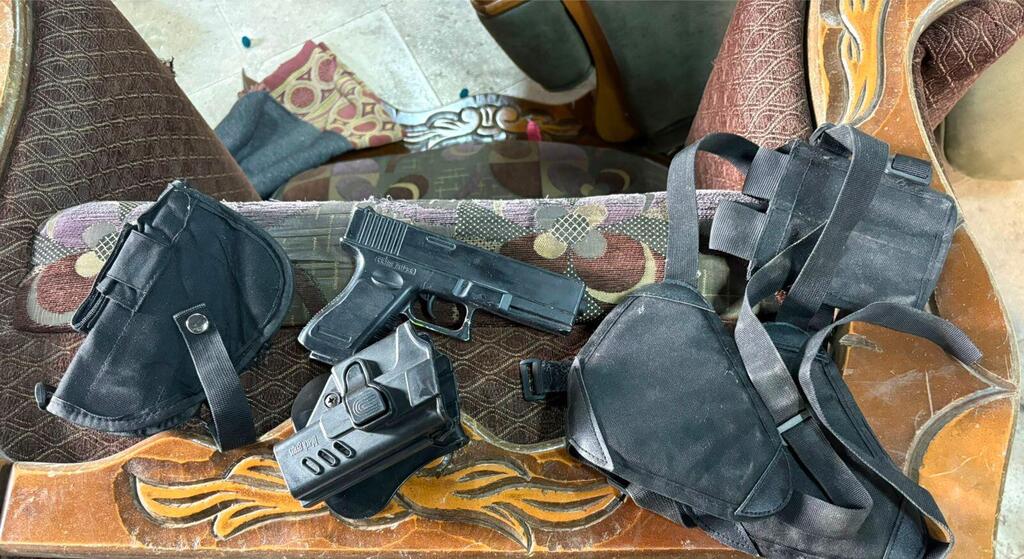
Weapons seized by Israeli forces in the West Bank
(Photo: IDF)
As part of the economic campaign, the IDF and Shin Bet have shifted to seizing assets of equivalent value. “When a former Hamas operative under surveillance suddenly buys a luxury vehicle worth hundreds of thousands of shekels, we quickly check the source of the money and immediately seize the vehicle,” a security official said. “There is activity simmering below the surface.”
Although the feared scenario of a broad, violent outbreak across the West Bank has not materialized, the territory is viewed as highly volatile. The main concern among senior IDF officials is a targeted infiltration by terrorists through the seam line — the boundary between Israel and the West Bank — to carry out a high-profile attack, which could inspire copycat lone-wolf attackers and trigger a wider escalation.
For that reason, much of the West Bank Division’s operational and engineering effort is now focused on securing the seam line between Israel and the West Bank.
Meanwhile, the IDF is expected to reinforce the area next month with two additional battalions that will deploy to the northern West Bank, following settlers’ efforts to reestablish the former settlement of Kadim, which was evacuated under Israel’s 2005 disengagement law.
“The General Staff is very concerned about what is happening in Judea and Samaria and is investing significant attention in the sector, understanding that any isolated incident could lead to an extreme conflagration on the ground,” a senior security official said, using the biblical name for the West Bank.