


Eilat Port, long regarded as a strategic southern anchor, is facing the most severe crisis in its history after more than two years of disruption to Red Sea shipping routes, attacks on commercial vessels and prolonged geopolitical uncertainty that have nearly shut it down.
Each morning, port workers arrive to empty docks, ready for ships that never come. Revenue that once totaled about 240 million shekels a year has fallen to almost zero, while state assistance has amounted to just 15 million shekels, according to port officials.
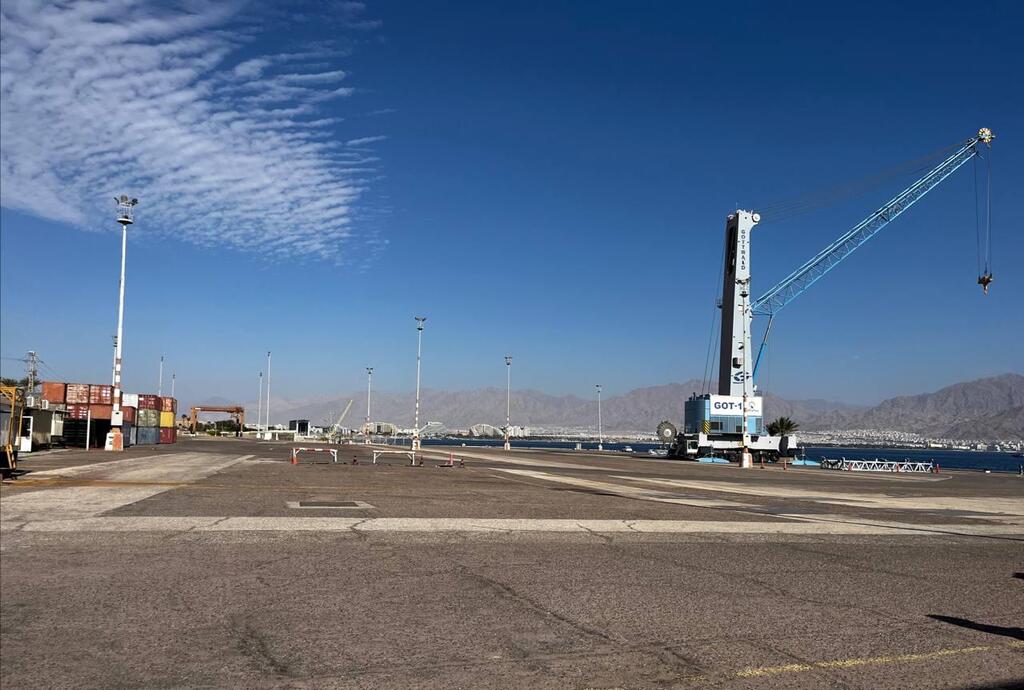
The crisis has intensified after the Finance and Transportation ministries informed the port’s operators, the Nakash Group, that the government does not plan to extend their operating concession, citing failure to meet required conditions. Port management says it will challenge the decision and is calling on the state to “come to its senses.”
Port activity came to a halt in November 2023 after Houthi forces seized a vessel en route to Eilat. Shipping companies including NYK and ZIM subsequently stopped sending ships to the port. The shutdown followed a record year in 2023, when about 150,000 vehicles passed through the port by October, with another 15,000 expected before year’s end.
Until Oct. 7, officials had spoken of Eilat Port assisting Haifa and Ashdod ports amid security threats. The unexpected involvement of the Houthis upended those plans and effectively paralyzed the southern port.
“We thought the situation would last a month or two and that the state would step in,” said Batya Zafrani, the port’s chief financial officer. “After three months, we had to start thinking about the workers. We explored sending them temporarily to other ports, but that didn’t work. In the end, we received 15 million shekels — enough for about two months, and that was it.”
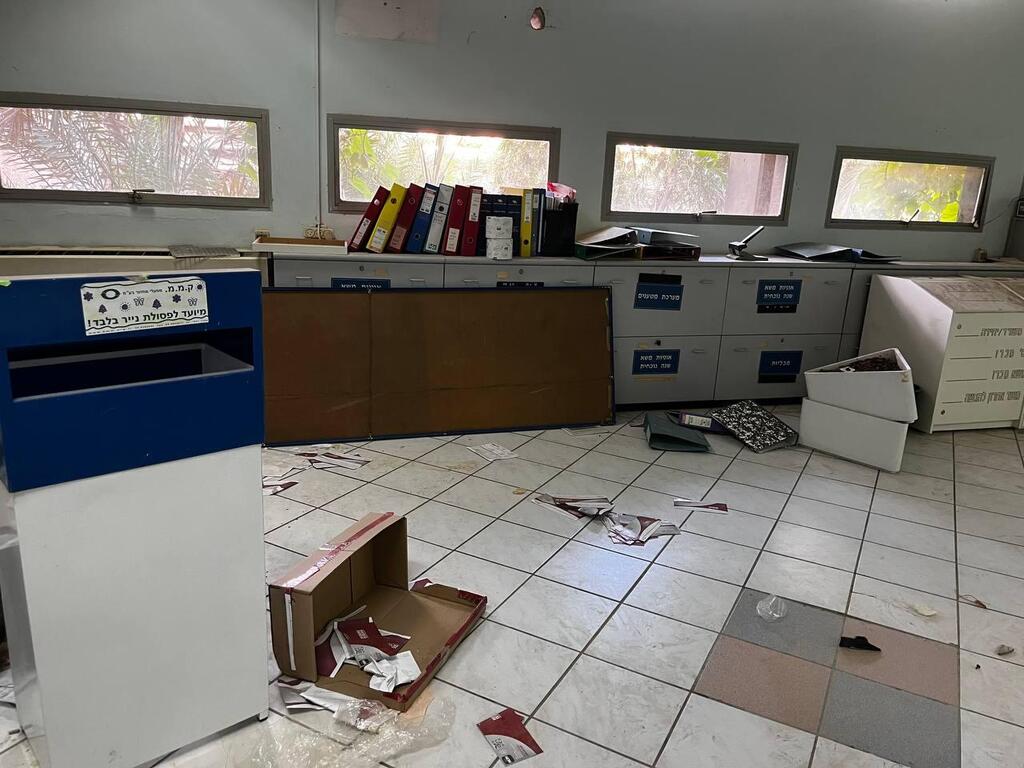
(Photo: Sivan Hilaie)
Avi Hormero, chairman of Eilat Port and CEO of the Nakash Group, sharply criticized the government’s handling of the crisis.
“The government has abandoned Eilat Port,” he said. “The Transportation Ministry is trying, but the rest of the government doesn’t care. Just like Kiryat Shmona was forgotten, we were forgotten. It’s absurd that a group of terrorists decides whether we have a southern port. We don’t control the Red Sea — the state does.”
Beyond the strategic implications, the prolonged shutdown has consumer consequences. Over the years, Eilat Port became the main gateway for vehicle imports from East Asia, including Chinese brands that now lead local sales charts. Since operations stopped, imports have been diverted to Haifa and Ashdod, creating congestion, storage problems and logistical delays that ultimately raise costs for consumers.
An emergency discussion held Monday in the Knesset Finance Committee revealed that a government plan presented two months ago — including subsidies for car carriers and promotion of an import directive — was never implemented. Government representatives said the plan was frozen after the decision not to extend the port’s concession, even before professional discussions began.
Port CEO Gideon Golber told the committee that “since November, there has not been a single discussion that even approached implementation of the plan,” while Finance Committee Chairman MK Hanoch Milwidsky accused government ministries of “contempt and complete inaction.”

(Photo: Sivan Hilaie)
The committee demanded that the state immediately present one of two options: enforce an import directive requiring companies to route a defined quota through Eilat, or provide direct financial support for the next three months. Port officials say that just one or two ships a month would allow the port to survive and continue paying workers and maintaining operations.
A hearing is scheduled for Wednesday at the Finance and Transportation ministries, after which officials will decide whether to extend the operating concession for another decade or issue a new tender. Port owners and executives plan to present professional opinions arguing that responsibility for the crisis lies not with management but with the security and economic realities since the war and what they describe as years of state neglect.
One of the main arguments raised by the ministries against extending the concession is that the port handles almost no container traffic and relies mainly on vehicle imports. Port officials counter that global shipping has changed dramatically, with modern mega-ships unable to dock at Eilat due to depth and infrastructure limits. Using smaller vessels, they argue, creates double handling costs at intermediary ports, making operations uncompetitive. They also cite high overland transport costs, distance from central markets and a lack of hinterland space for a modern container terminal.
“These are not management failures,” the port said in a position paper. “They are structural conditions disconnected from global market forces.”
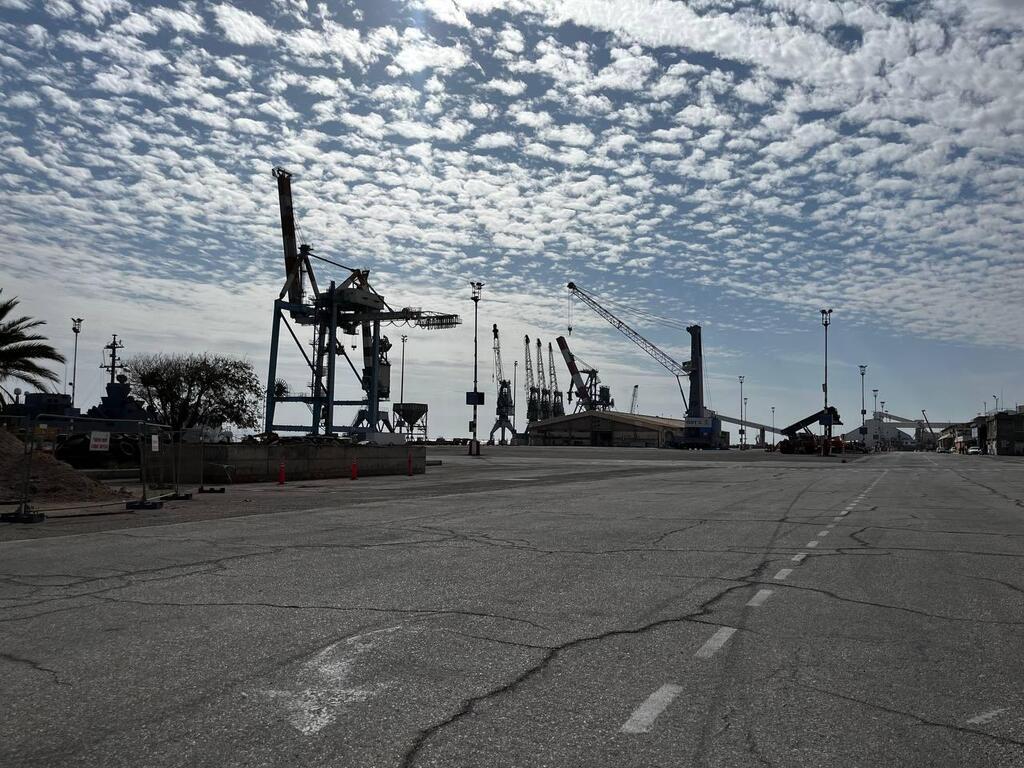
(Photo: Sivan Hilaie)
Despite the crisis, port management says it remains ready to resume operations at short notice.
“We were stunned by the decision not to extend the concession,” Golber said. “We continued paying salaries even when revenues were almost nonexistent, but without an import directive, we won’t survive another three months. There’s a limit to how much the owners can absorb losses of tens of millions of shekels.”
He said maintaining operational readiness is critical. “Training a port worker takes years. If I don’t keep them active and the equipment running, the day a ship arrives there will be no one to work it. A ship gives 72 hours’ notice — we have to be ready within minutes.”
Golber said the port could rebound quickly if international conditions allow shipping to resume. “Even if that happens in three months, we can lift off immediately,” he said. “We invested here, upgraded infrastructure and received no complaints from 2014 until two years ago. Sixteen companies competed for this port — and only we truly believed in it. We still do.”
At the upcoming hearing, port officials will seek to prevent a new tender. They say Eilat Port still has a future if it receives limited political or economic backing to weather the current period.
“We don’t see a scenario where the concession isn’t extended,” Golber said. “We met all the conditions. We know how to run this port better than anyone. We just need room to breathe so that when the Red Sea calms, we can restore the port to where it belongs.”