

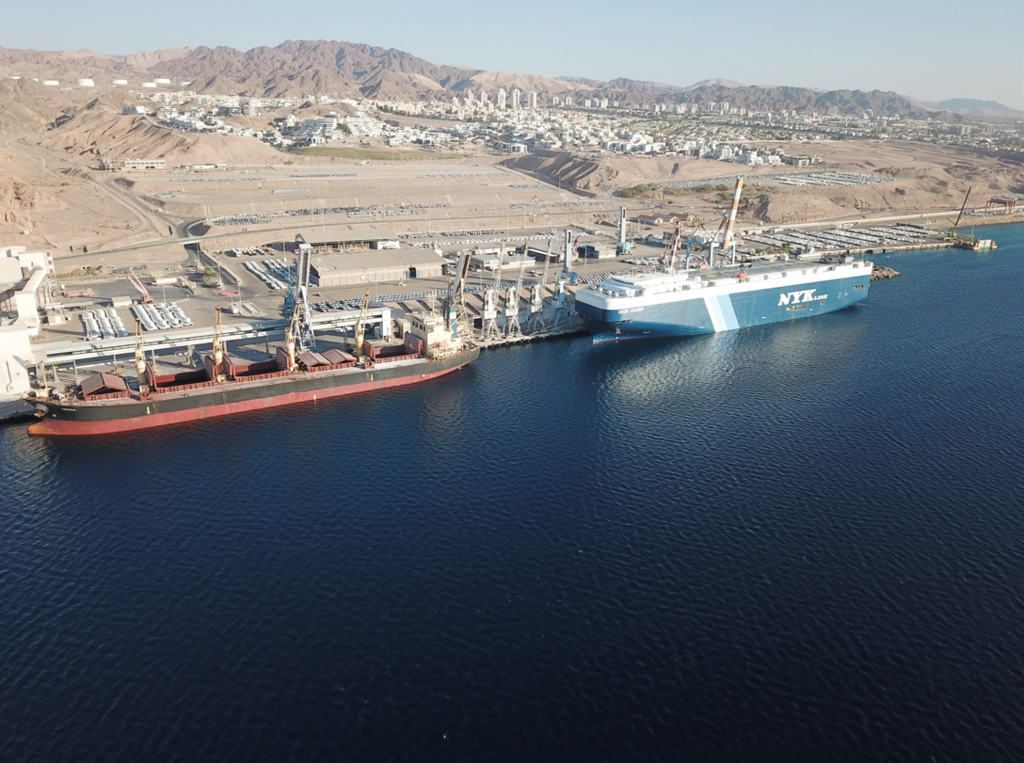
Despite the ceasefire and declarations that the war in Gaza has ended, operations at Eilat Port have yet to resume, with the continued threat from Yemen’s Houthi rebels keeping maritime traffic at a standstill.
While the Houthis have declared that they will not fire at Israel as long as the agreement with Hamas holds, they did not commit to stopping the attacks on vessels passing through the Suez Canal.
They previously warned that any shipping company using the shipping route without their approval would find its vessels targeted anywhere in the world, even outside the Middle East.
Due to the threat to the canal, Eilat Port, owned by the Nakash brothers and managed by the shipping company Papo Maritime Ltd., has been almost completely shut down since November 2023, with revenues plunging 80 percent.
Without a declaration from the Houthis that they would cease attacks on ships, international shipping companies are refusing to transit the Suez Canal or call at Eilat or Arab states.
Ynet's sister publication Calcalist has learned that port officials reached out to the U.S. Embassy asking to include the Suez Canal issue in the agreement signed under the auspices of President Donald Trump.
They also approached the Shipping Authority, requesting the enlistment of international factors to help remove the Houthi threat to the critical maritime route.
The Eilat Port officials are also moving ahead with talks with Egypt, which controls the Suez Canal. They hope Cairo will lobby Arab states and the United States to apply pressure on the Houthis, convincing them to lift the blockade of the canal.
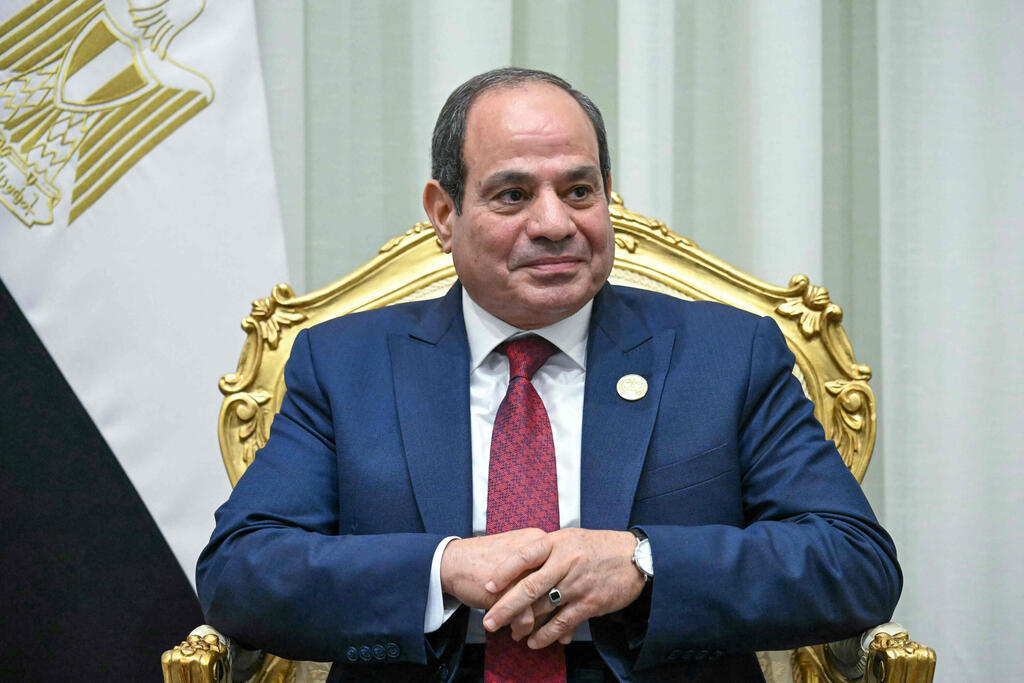
Egyptian President Abdel Fattah El-Sisi. 'Houthi control of the Suez canal harms also Egypt'
(Photo: SAUL LOEB / AFP)
They understand that Houthi control of the canal harms not only Israel but also Egypt, which collects transit fees, and hope to find a partner in Cairo to address the problem.
Since early 2024, European vessels have abstained from using the Suez Canal. Only Russian and Iranian vessels have been permitted to transit, under the understanding that they do not carry cargo to Israel. Chinese vessels occasionally succeed in passing through the canal by reflagging or paying extra, accepting the risk.
The Suez Canal generated about $8 billion in revenue for Egypt in 2022 and rose to $10.25 billion in 2023, but revenues fell sharply to just $3.99 billion in 2024.
According to Arab sources last summer, Egypt lost about 60 percent of its canal‑derived income between 2024 and 2025, a loss of nearly one‑third of Egypt’s annual state budget before the Gaza war.
The canal long served as a major and stable source of income for Egypt. The International Monetary Fund warned that the drop in income from the canal poses a significant fiscal challenge for Egypt and urged the government to rebalance the budget and reduce its reliance on foreign‑currency income.
The recommendation prompted Egyptian reforms, including improving tax‑collection systems and reducing subsidies on fuel, electricity and food. In addition, Egypt received billions of dollars in support from Gulf states, in part to offset the loss of Suez Canal income.
As a result, by the end of 2024, Egypt posted a budget surplus of about $13 billion, but only after deciding to record a surplus before interest payments on its large debt as a tool for economic stabilization during a time of emergency.
These moves improved Egypt’s standing and created a positive image but do not amount to a dramatic success. Egypt still grapples with inflation, high debt and the Houthi threat to one of its key revenue sources.
Officials at the Eilat Port hope that pressure from Egypt on Arab states will lead to pressuring the Houthis to halt their attacks on commercial shipping and allow vessels to reach Eilat.
Since the crisis began, the Israeli government has transferred NIS 15 million to Eilat Port, part of which was used to pay debts to the state and municipal property taxes to the city of Eilat.
The Histadrut (Israel's General Federation of Labor) also made loans available through its assistance fund. But the port seeks to return to full operations and post profits, not just survive.