

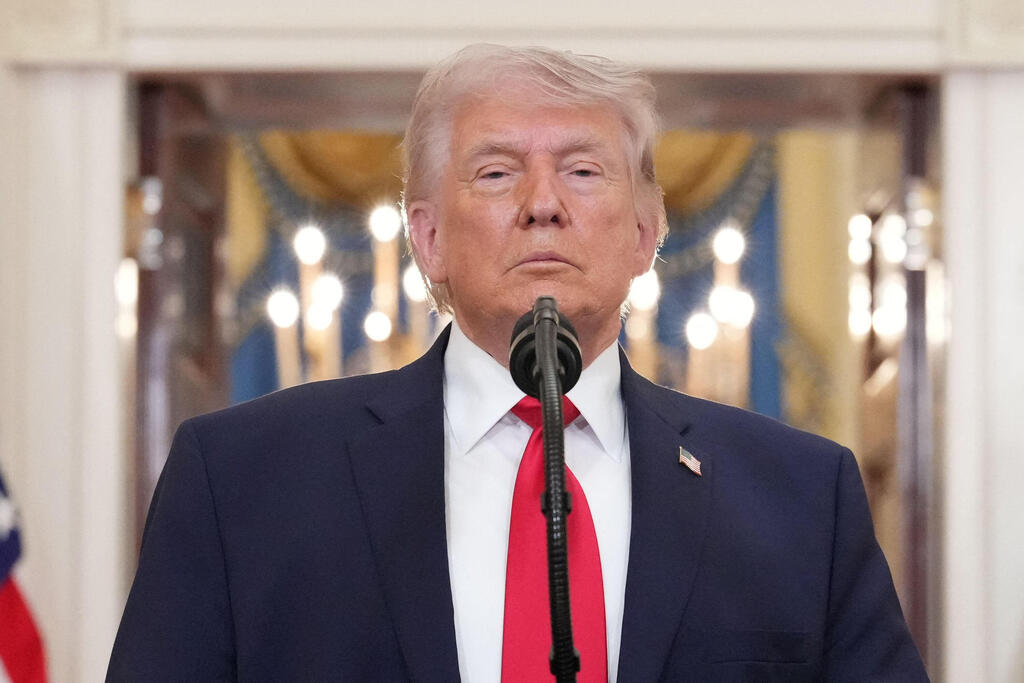
U.S. President Donald Trump said Sunday that Iran has until Tuesday evening to reopen the Strait of Hormuz or face sweeping U.S. attacks on its power plants and bridges, setting the clearest deadline yet in his escalating threats against Tehran.
In an interview with The Wall Street Journal, Trump said that if Iran did not act by Tuesday evening, “they won’t have any power plants and they won’t have any bridges standing,” he told the newspaper.
He later posted on Truth Social: “Tuesday, 8:00 P.M. Eastern Time!” — apparently referring to the deadline for compliance. That would be 3 a.m. in Israel between Tuesday and Wednesday.
Trump said Iran would lose “every power plant and every other plant they have in the whole country” if it kept the strategic waterway closed, according to the Journal.
Asked when he thought the war would end, he said he would announce that “pretty soon,” adding that the United States was “in a position that’s very strong” and that rebuilding Iran could take 20 years “if they’re lucky, if they have a country.”
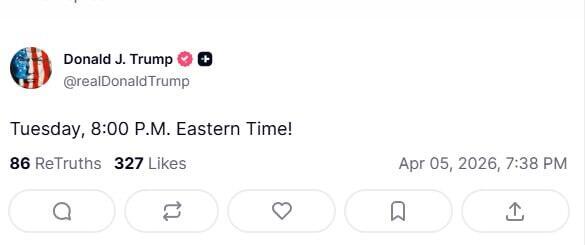
Trump posts his deadline for Iran on Truth Social
(Photo: screengrab)
Asked whether he was concerned that civilians in Iran could suffer if civilian infrastructure were struck, Trump said no, according to the Journal, arguing that Iranians “want us to do it” because they are “living in hell.”
Reuters reported that his comments came as legal and humanitarian questions mounted over threats to attack power plants and bridges not clearly tied to military use. Under international law, civilian infrastructure can generally be targeted only if it makes an effective contribution to military action and harm to civilians is minimized.
Earlier Sunday, Trump had used especially coarse language in a Truth Social post warning Iran to reopen the strait or face attacks on its infrastructure.
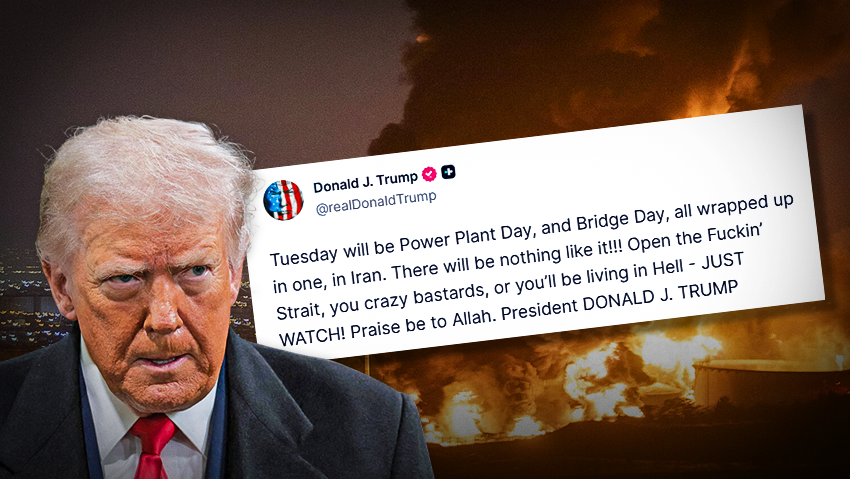
(Photo: Anna Moneymaker / AFP, Stringer / Getty Images)
“Tuesday will be Power Plant Day, and Bridge Day, all wrapped up in one, in Iran," he wrote. "There will be nothing like it!!! Open the f***ing Strait, you crazy bastards, or you’ll be living in Hell — JUST WATCH! Praise be to Allah.”
He later told Fox News that he believed an agreement could still be reached quickly and said negotiations were underway, but added that if no deal emerged he was considering “blow[ing] everything up” and “tak[ing] the oil.”
The stakes are high because roughly one-fifth of the world’s oil supply passes through the Strait of Hormuz. Its closure has helped push oil prices higher.
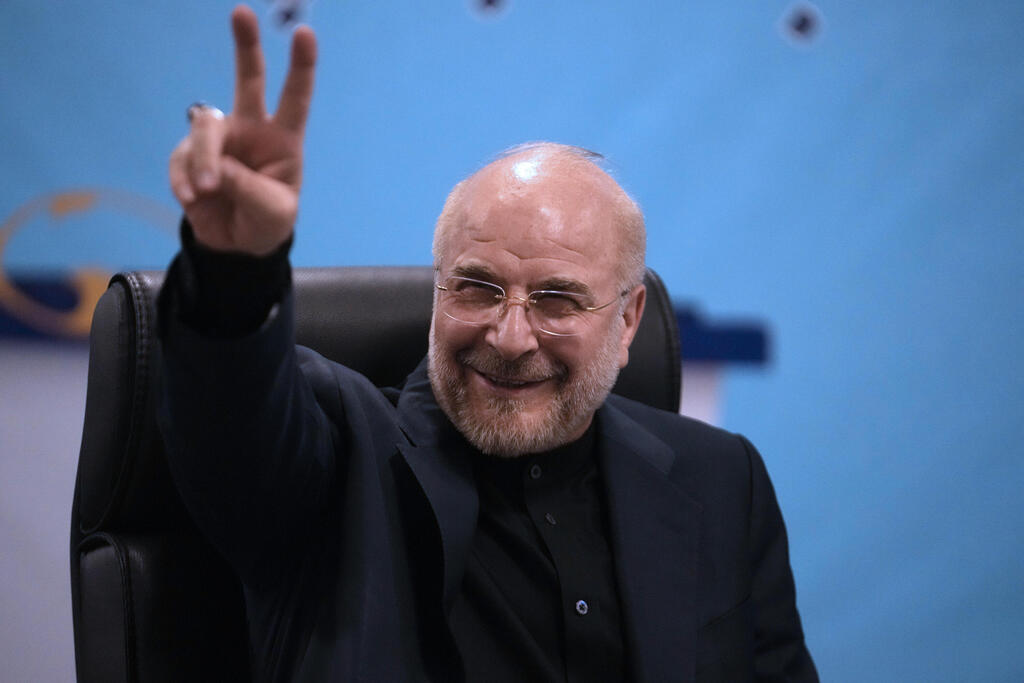
Iranian Parliament Speaker Mohammad Bagher Ghalibaf
(Photo: AP / Vahid Salemi)
Iranian officials pushed back sharply. Parliament Speaker Mohammad Bagher Ghalibaf, who is widely seen as one of the most powerful figures in Iran after the killing of the previous leadership, accused Trump of dragging the United States “to hell” and said the region would burn if Washington kept following what he called Prime Minister Benjamin Netanyahu’s orders.
Another senior Iranian official, Mohsen Rezaei, said Trump’s repeated threats reflected desperation and anger and would sink him deeper into war with Iran.