

The leaders of Lebanon, France and Jordan will meet in Paris on Thursday as part of a renewed effort to secure international support for Lebanon’s cash-strapped military and prepare for the security challenges facing the country’s south. Lebanese President Joseph Aoun, French President Emmanuel Macron and Jordan’s King Abdullah II are due to open a preparatory meeting for an international conference aimed at supporting the Lebanese Armed Forces and Internal Security Forces.
The broader donor conference had originally been scheduled for February with France, Saudi Arabia and the United States playing leading roles, but it was postponed after the outbreak of the Iran war and renewed fighting between Israel and Hezbollah. Thursday’s talks are intended to lay the groundwork for reviving that effort.
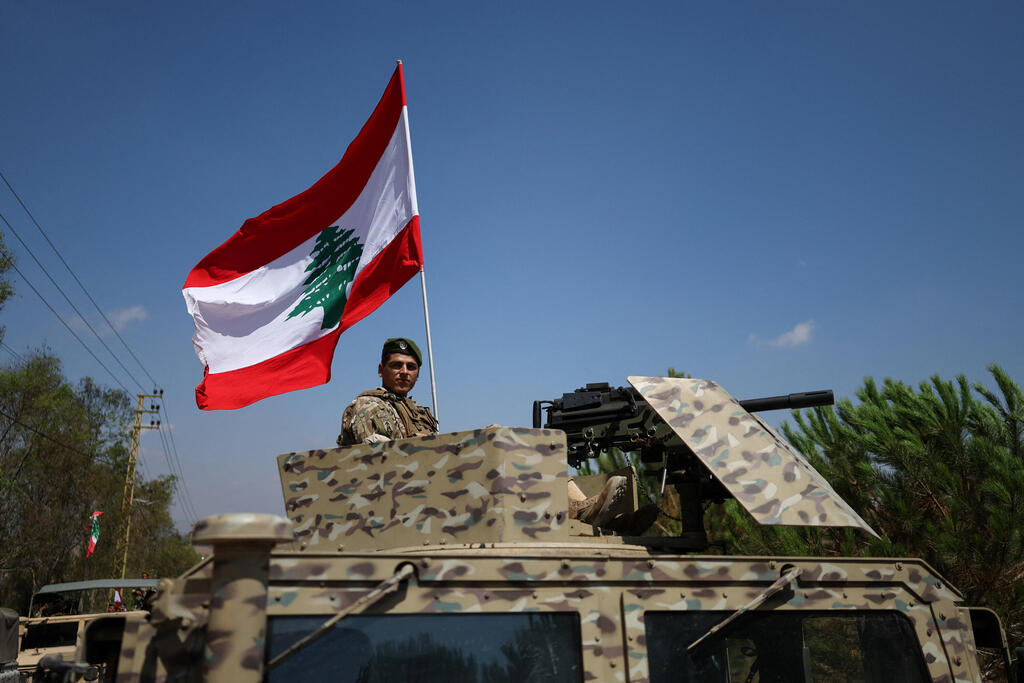
Lebanese Army soldier near Zawtar al-Gharbiyeh
(Photo: REUTERS/Zohra Bensemra)
The Lebanese military is under growing pressure as it tries to expand the state’s authority in the south while Hezbollah continues to resist calls to surrender its weapons. Israel also maintains forces in southern Lebanon following the latest round of fighting. A framework announced by the Lebanese and Israeli governments in June called for a gradual Israeli withdrawal, deployment of the Lebanese army and the disarmament of Hezbollah, but implementation has stalled.
Lebanese officials have repeatedly argued that the army needs more equipment, training and resources if it is to assume a larger security role. Macron’s invitation to Aoun said international backing was needed to meet the army’s operational, logistical, training and capacity-building needs according to priorities set by the Lebanese military itself.
The Paris meeting will also address arrangements for southern Lebanon after the mandate of the United Nations Interim Force in Lebanon expires. The Security Council extended UNIFIL’s mandate for a final time through Dec. 31, 2026, after which the mission is due to begin an orderly withdrawal. The United Nations is already examining options for a possible international presence after UNIFIL’s departure.
Hezbollah emerged significantly weakened from the war that ended in November 2024. Lebanon subsequently elected Aoun as president and Nawaf Salam as prime minister, with the new leadership committing to bringing weapons under state control and disarming non-state armed groups, including Hezbollah. Israel and the United States have criticized Beirut for failing to move more forcefully against the group.
Lebanese leaders, however, have been wary of ordering a direct military confrontation with Hezbollah, fearing such a move could trigger internal violence. The government has instead argued that strengthening the army is essential both to asserting state authority and to persuading Hezbollah’s supporters that the military can provide security.
That task is complicated by years of financial collapse. Lebanon’s military has long depended heavily on foreign donors, including the United States, United Kingdom, France and Italy, and the country’s economic crisis since 2019 has severely eroded soldiers’ salaries and benefits. Some personnel left the armed forces or took second jobs as inflation surged and government finances deteriorated.
Saudi Arabia once pledged $3 billion to equip the Lebanese army with French weapons, but suspended the program in 2016 as Hezbollah’s political influence expanded and relations between Riyadh and Beirut worsened. Thursday’s gathering is the latest attempt to rebuild a broader international coalition around the Lebanese military as Beirut prepares for a potentially very different security order in the south.