

Syria’s new authorities announced Wednesday that they had arrested a former military officer specializing in chemical weapons who is accused of overseeing the production of sarin-filled bombs used against civilians under ousted President Bashar Assad.
Since taking power in 2024, the country’s new Islamist-led authorities have arrested several former regime officials and begun prosecuting figures accused of crimes committed during Assad’s rule.
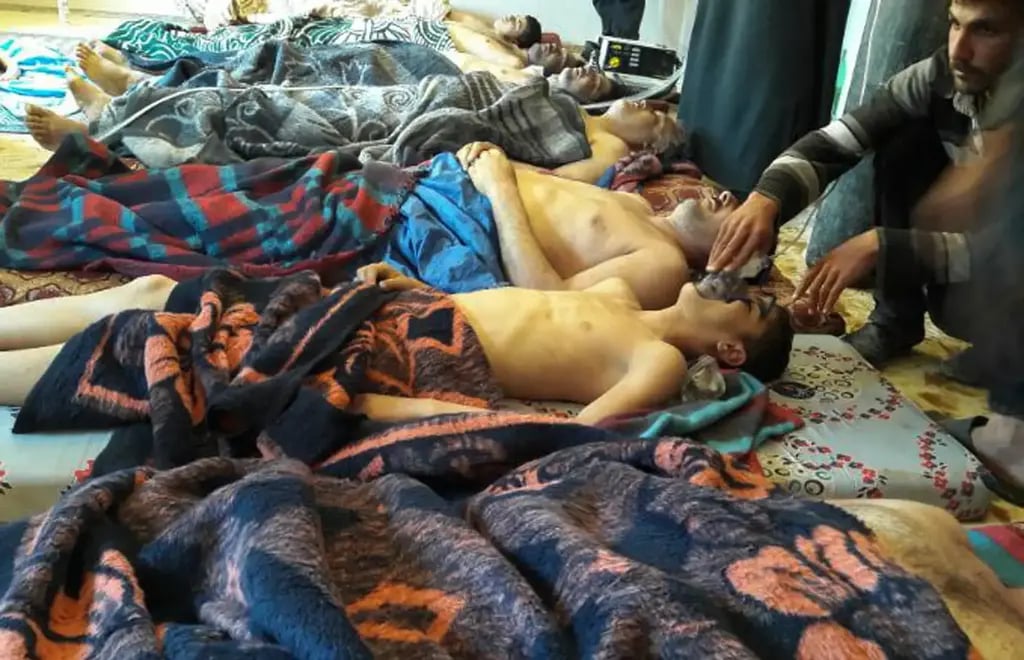
Victims of a sarin attack in Khan Sheikhoun, Syria in 2016
(Photo: AP)
The Interior Ministry said in a statement that security forces had arrested Col. Ahmad Habib Ali, whom it described as a chemical weapons specialist.
Ali previously served as director of Syria’s Scientific Studies and Research Center and was responsible for sarin gas warehouses and chemical production within Unit 417, the ministry said. The unit was one of the main facilities used to store and maintain chemical weapons near Damascus.
According to the ministry, Ali was among the officers who supervised the production of around 20 bombs filled with sarin gas, each weighing approximately 250 kilograms.
The bombs were allegedly used in attacks against Syrian towns and villages in 2013 and 2017.
Assad’s forces were repeatedly accused of carrying out chemical weapons attacks during the Syrian civil war. The deadliest took place in Eastern Ghouta, on the outskirts of Damascus, on Aug. 21, 2013.
The attack killed 1,429 people, according to the U.S. government and human rights organizations.
Following the Ghouta attack, Syria joined the Organization for the Prohibition of Chemical Weapons and agreed to disclose and surrender its toxic weapons stockpiles for destruction.
The agreement came under pressure from Russia and the United States, which had threatened military strikes against the Assad regime.
Between 2014 and 2017, investigators from the OPCW and the United Nations concluded that the Assad regime had carried out four attacks using sarin, a highly toxic nerve agent, and chlorine gas against opposition-held communities in northern and northwestern Syria.
Ali’s arrest came less than a week after the OPCW restored Syria’s voting rights, which had been suspended in 2021 after the organization determined that sarin and chlorine had been used against the Syrian population.
Since Assad’s fall, authorities in Damascus have announced the arrest of dozens of people linked to the former regime.
A first court hearing in the trial of Assad and several senior members of his inner circle was held on April 26. Only one defendant was present in the courtroom.