

Iran’s paramilitary Islamic Revolutionary Guard Corps launched ground force drills along the country’s southern coast Tuesday, state media reported, as Tehran seeks to project strength amid mounting tensions with the United States and assessments in Washington of a possible strike on the Islamic Republic.
Footage aired by Iranian outlets appeared to show missile and drone launches in coastal areas as well as amphibious landings. The semiofficial Fars news agency said the exercise “practically demonstrated the use of modern combat technologies and the implementation of advanced tactics to confront current threats.” It said the drills included the use of a new missile system at varying ranges, described as highly accurate and equipped with an improved warhead, as well as practice defending Iran’s coasts and islands.
A missile launch in footage released by Iranian media, purportedly from drills conducted by the Revolutionary Guard along Iran’s southern coast


The maneuvers came as the United States continued to concentrate forces in the region. Two additional U.S. military refueling aircraft landed Tuesday at Ben Gurion Airport in Israel, bringing the total to four over two days.
White House press secretary Karoline Leavitt told reporters that U.S. President Donald Trump’s "first option is always diplomacy, but as he has shown, he is willing to use the lethal force of the United States military if necessary.”
Gallery
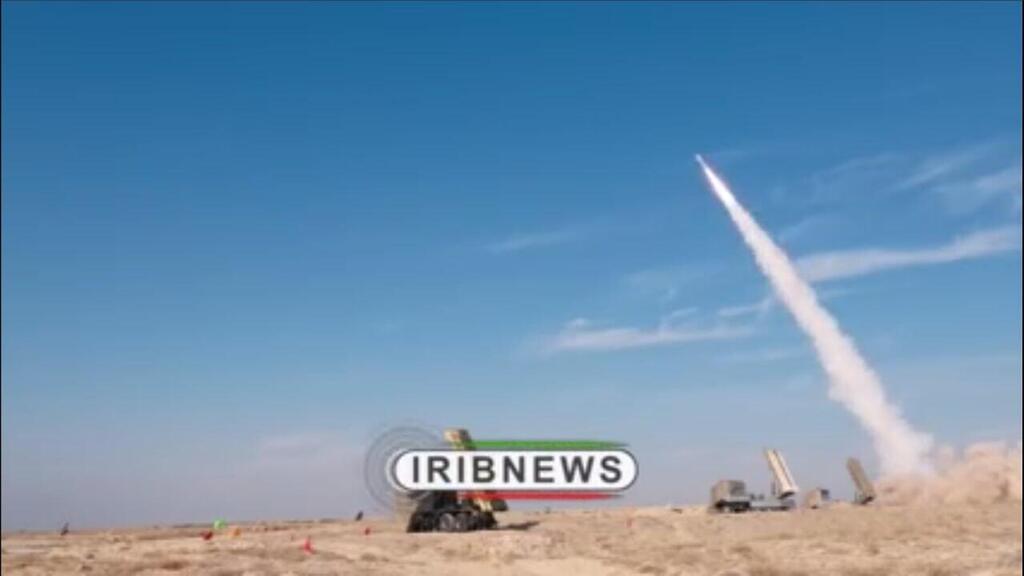
A missile launch in footage released by Iranian media, purportedly from drills conducted by the Revolutionary Guard along Iran’s southern coast
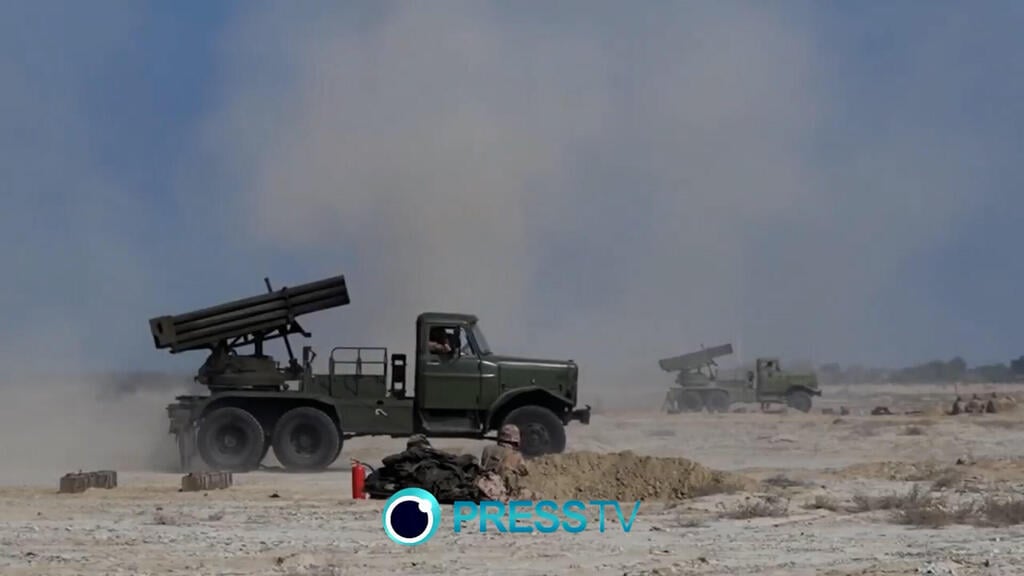
איראן תיעוד לכאורה מ תרגיל של משמרות המהפכה בחופיה הדרומים של המדינה
Meanwhile, Reuters reported Tuesday that Iran is nearing completion of a deal to purchase Chinese-made CM-302 anti-ship cruise missiles, citing six people familiar with the negotiations between Tehran and Beijing. The missile has a reported range of up to 290 kilometers (180 miles) and can carry a 250-kilogram (550-pound) warhead.
China markets the CM-302 as an advanced anti-ship missile capable of striking destroyers and aircraft carriers. It is designed to evade interception by flying at high speed and low altitude and can be launched from ships, aircraft or ground vehicles.
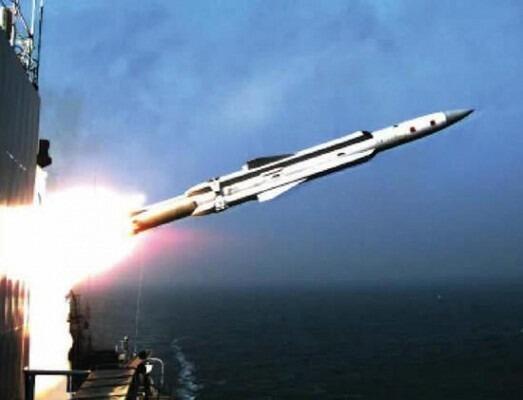
An illustration of the Chinese CM-302 missile. Beijing claims it is 'the world’s best anti-ship missile'
Separately, the Financial Times reported this week that Iran and Russia reached a 500 million euro ($540 million) agreement in December under which Moscow would supply thousands of advanced shoulder-fired surface-to-air missiles to help rebuild Iran’s air defenses. According to the report, Russia agreed to deliver 500 Verba launchers and 2,500 9M336 missiles between 2027 and 2029. The missiles are primarily intended to target helicopters and drones and can intercept cruise missiles but are less effective against advanced fighter jets.
Iran is currently under a renewed international arms embargo following the reimposition of sanctions last September after the expiration of relief granted under the 2015 nuclear deal. In recent years, Tehran has strengthened ties with both Moscow and Beijing. The United States has accused Chinese entities of supplying Iran with chemical precursors used in ballistic missile fuel production, allegations Beijing has denied.
Basij members attack anti-regime protesters at a Tehran university
Domestically, student protests against Iran’s government entered a fourth consecutive day Tuesday. Though relatively small, the demonstrations come a month after a sweeping crackdown on nationwide unrest triggered by economic grievances and fueled by anger over the government’s response.
Human rights organizations say they have verified the deaths of about 7,000 people in the crackdown, though estimates vary and the figures cannot be independently confirmed. Trump has publicly estimated the death toll at 32,000. During the height of the protests, he voiced support for demonstrators and warned Iranian authorities against executing detainees.
On Tuesday, Reuters reported that an Iranian court had sentenced a protester, identified as Mohammad Abbasi, to death on charges of “enmity against God,” citing a source close to his family. Iran’s judiciary has not publicly confirmed the sentence. If upheld, it would mark the first known death sentence handed down to a participant in last month’s unrest.
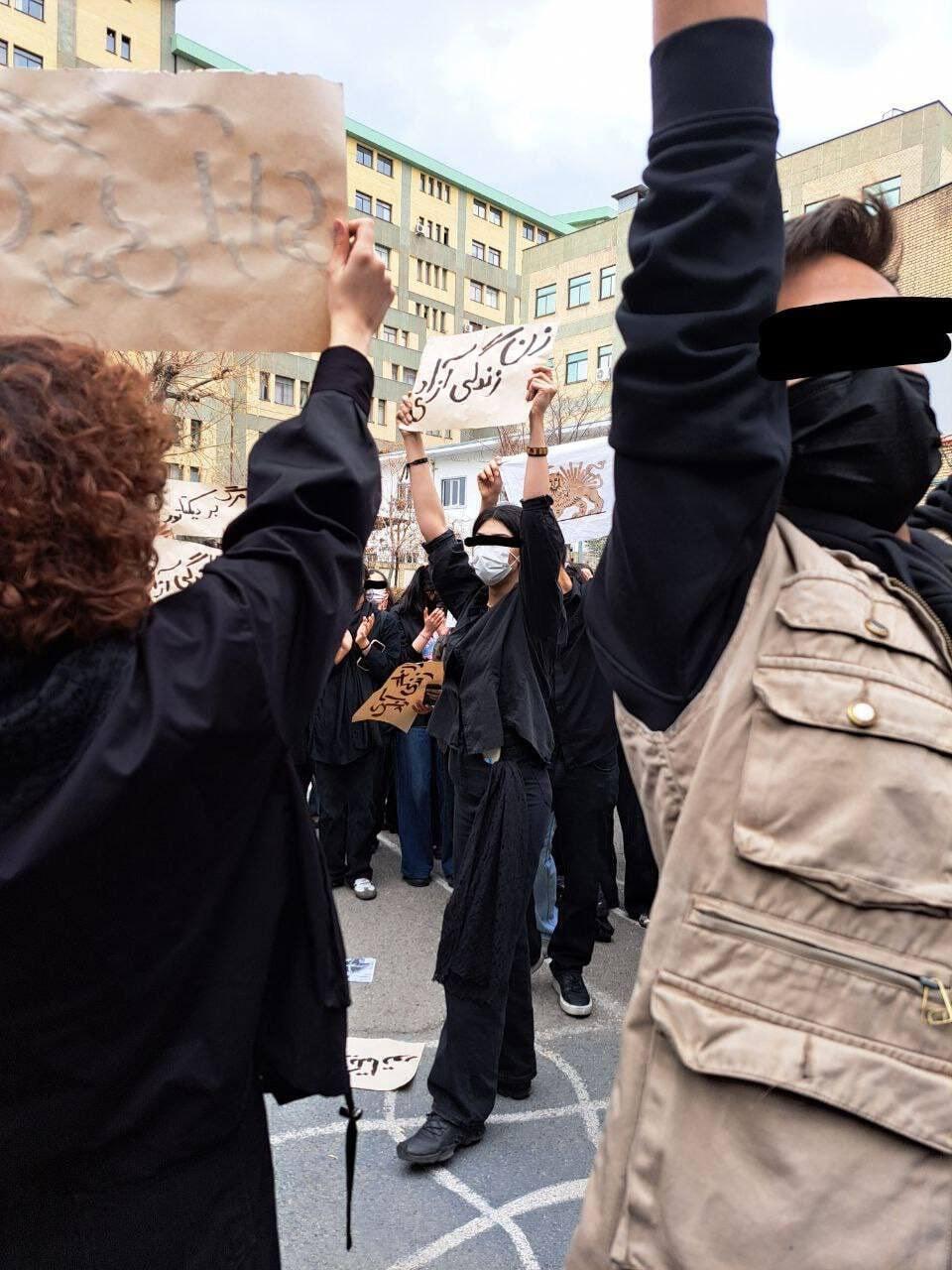
Women protest Tuesday at the University of Tehran for the Arts; the sign bears the 2022 hijab protest slogan: 'Woman, Life, Freedom'
Student demonstrations were reported at several universities in Tehran, coinciding with 40-day memorial observances for those killed in the crackdown, a significant mourning milestone in Shiite tradition. Iran International, a Persian-language satellite channel critical of Tehran’s leadership, reported that protesters at the University of Tehran chanted “Khamenei is a murderer,” referring to Supreme Leader Ayatollah Ali Khamenei.
At Iran University of Science and Technology, some demonstrators chanted “This is the final battle, Pahlavi will return,” invoking Reza Pahlavi, the son of Iran’s late shah who was overthrown in the 1979 Islamic Revolution. Videos circulated online appeared to show clashes between groups of young people on campus. Iran International reported that members of the Basij, a volunteer militia affiliated with the Revolutionary Guard, assaulted student protesters and that security forces used tear gas at another university in the capital.
Government spokeswoman Fatemeh Mohajerani said students have the right to protest but must respect what she described as “red lines.”
“Holy sites and flags are red lines that must not be crossed, even at the height of anger,” she said. “The correct path is effective dialogue and rationality, not anger and aggression.”