


The IDF has frozen a controversial procedure used to review the continued service of reservists recognized by the Defense Ministry with significant psychiatric disabilities, including post-traumatic stress disorder, and introduced a revised process intended to provide greater medical confidentiality and broader appeal rights.
The decision was made Thursday during a meeting led by Deputy Chief of Staff Maj. Gen. Tamir Yadai, a year after Ynet first revealed that the military was examining whether reservists with substantial emotional disabilities should remain in service.
Gallery
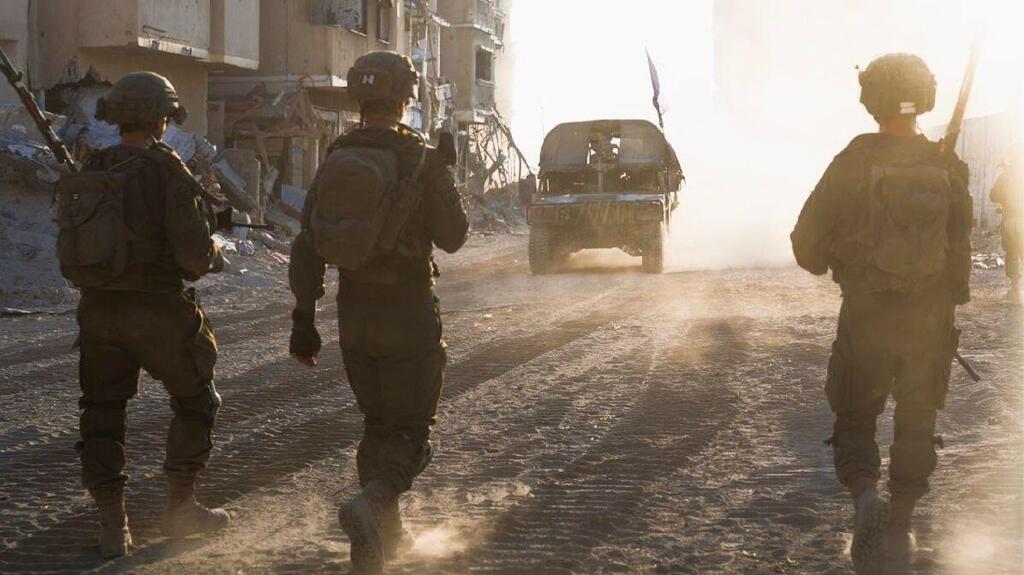
IDF froze a controversial review process for reservists with significant psychiatric disabilities and introduced a revised system with stronger privacy safeguards and expanded appeal rights
(Photo: IDF)
Under the original procedure, reservists recognized by the Defense Ministry’s Rehabilitation Department with psychiatric disability ratings above 30% could be removed from active reserve rosters while their fitness for continued service was reviewed.
The military has now ordered an immediate freeze on those removals and established a new mechanism for assessing each case.
Earlier this week, Brig. Gen. Amir Vadmani, chief of staff of the IDF Personnel Directorate, acknowledged during a Knesset hearing that the original procedure had breached medical confidentiality by allowing information about a reservist’s mental condition to pass from the Rehabilitation Department to military command and medical channels.
Under the revised policy, sensitive medical information will be transferred only to authorized medical personnel. Reservists will also receive four months to appeal a decision, replacing the three-day appeal window provided under the original procedure.
More than 2,200 reservists flagged
Under the new mechanism, once the IDF’s internal system receives an indication that a reservist has been recognized with a psychiatric disability rating of between 30% and 50%, an authorized medical representative will contact the individual.
The representative will explain the revised policy, present the right to appeal and provide bureaucratic guidance and assistance.
The IDF says it aims to ensure that reservists receive support from their units without exposing their medical information to commanders or administrative staff.
IDF forces in Lebanon
(Photo: IDF)
To challenge a decision on continued service, the reservist must submit a personal letter addressing the diagnosis, treatment history, disability rating and reserve role.
The individual may also be required to provide an updated psychiatric opinion or medical committee protocol, an assessment from a commander or employer regarding general functioning, and a family physician’s letter listing background diagnoses and medication.
Reservists who have received treatment from a psychologist or social worker must also submit a letter from that professional.
The documents will be uploaded through a secure link or delivered physically to an authorized official.
At the end of the appeal process, an authorized clinician will determine whether the reservist may continue serving or must be removed from the reserve roster.
A document obtained by Ynet shows that more than 2,200 reservists have been flagged in the system as having psychiatric disability ratings above 30%. More than 60 of them hold the rank of lieutenant colonel or above.
‘Now everyone knows’
Despite the IDF’s attempt to present the revised process as more protective, some reservists say the updated policy still compromises their privacy.
One of them is Oren, a pseudonym, who has served for 20 years as a reservist in an elite unit. He is recognized as having a 60% disability, including 40% on psychiatric grounds.
He was called up immediately after the outbreak of Operation Lion’s Roar. One day after reporting for duty, he was informed that his service had been frozen. That removal has now been suspended.
Oren said a message circulated this week among personnel officers making clear that those whose service had been frozen were people dealing with psychiatric disabilities.
“Good and important news: Anyone whose service was frozen because of psychiatric disability percentages has had the freeze lifted until their status is regulated,” the message read.
Oren said the announcement itself effectively disclosed the reason those reservists had been removed.
“Part of the reason this procedure was stopped was because of the violation of medical confidentiality involving everyone recognized by the Rehabilitation Department,” he said. “But the messages sent after the procedure was stopped also violate confidentiality. Anyone who did not know why he had been removed now knows.”
Oren said no one in his unit should know that he is recognized by the Rehabilitation Department.
“That is something only I and my therapist should know,” he said. “There are even people in my family who do not know.”
He said the process had left him feeling exposed and labeled inside a unit in which he had served for decades.
“Why should I have to return to my IDF unit and suddenly have people looking at me and thinking, ‘You are a disabled veteran, you are recognized for psychiatric reasons’?” he said.
“What is this labeling? It is horrifying. It is as if they took me, put me in front of an entire division, and now everyone knows I am recognized for PTSD. It is as if they stripped me in front of my battalion.”
‘Repeated humiliations’
Oren also described the shame that often accompanies the process of seeking recognition for a psychiatric disability and the difficulties veterans face when dealing with the Rehabilitation Department.
“Going through a medical committee at the Rehabilitation Department is not easy,” he said. “It is no surprise that laws concerning people with PTSD and the One Soul reform are now moving through the Knesset. They came after repeated humiliations by the Rehabilitation Department.”
“Now they have taken this and said, ‘Fine, let us humiliate you in the IDF as well,’ and that is what is happening.”
He said two officers, one a colonel and the other a lieutenant colonel, called him in tears after their soldiers learned that their service had been frozen because they were recognized as having psychiatric disabilities.
Oren also questioned whether the revised procedure complies with the law, arguing that information is still being transferred from the Rehabilitation Department to the IDF without the patient’s consent.
He cited a legal provision governing the transfer of information between medical professionals, which he said requires patient approval.
“It is written in black and white,” he said.
Oren alleged that the policy could discourage soldiers from seeking official recognition for PTSD because they fear losing their reserve roles.
“There is a very large group of people who stopped the recognition process because they want to continue serving in their unit,” he said.
For many wounded reservists, he said, returning to military service is itself part of rehabilitation.
“Reserve duty is not the Shin Bet or Mossad. It is the IDF, the people’s army,” he said. “It gives you a sense of capability. Even after you are physically or emotionally wounded, being able to return to service tells you that you can recover and still do things.”
He warned that lowering a reservist’s medical profile to 21 can carry consequences beyond military service.
“It is one thing to remove someone from service,” he said. “Why damage his civilian life as well?”
IDF: Medical privacy is a supreme value
A military official, responding to criticism over the way reservists were informed, said the IDF regretted specific cases in which soldiers had been harmed by the manner in which messages were conveyed.
“That is also why the policy was changed,” the official said. “Medical confidentiality and preserving the dignity of those serving are supreme values in the IDF.”
The IDF said in a formal response that the revised policy followed a broad staff review completed under the deputy chief of staff.
“The updated policy creates an orderly procedure adapted to the relevant characteristics and more sensitive to concerns raised by reservists suffering from combat-related conditions,” the military said.
“Under the new process, documents will be presented to an authorized medical level in order to assess the reservists’ fitness for continued service and thereby immediately cancel the existing suspension.”
“The IDF deeply values the contribution of its reservists and will continue to act appropriately on their behalf.”