

A hostage poster, stained with mud from a third winter in Gaza, folds in on itself at the southern position of the outpost. The position is manned by reservists from the Alexandroni Brigade, on a 70-meter-high ridge separating a base and Kibbutz Nahal Oz from the eastern neighborhoods of Gaza City, Shijaiyah and Daraj Tuffah. On the large poster, which faces east toward the soldiers rather than toward Gaza beyond the embankment, are the bloodied face of surveillance soldier Naama Levy from the moments of her abduction on October 7.
Inside the fortified position, a reservist sits on a raised chair. A former Golani Brigade soldier, the war is also beginning to feel distant to him. He carried out the ground maneuver during his mandatory service, mainly with the Bislamach Brigade, the IDF’s infantry training formation. “I fought not far from here, in Jabaliya,” he says. “We’re doing guard shifts here, 2-6, sometimes 2-4. It’s grinding. The houses across from us look empty and abandoned, but that’s just for show — Hamas is there, watching.”
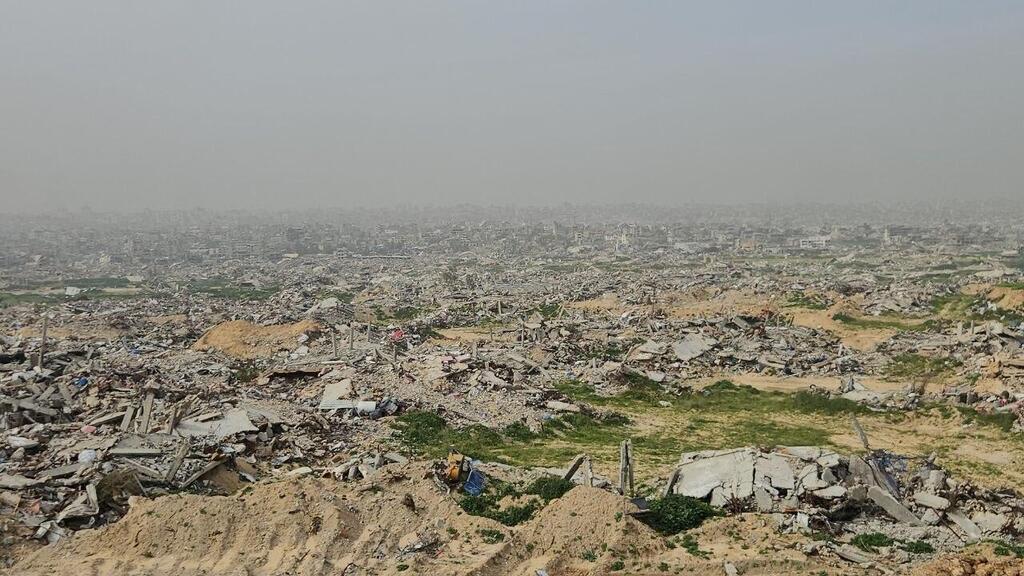
He grips a MAG machine gun, its barrel protruding through a firing slit overlooking the ruins, as far as the Yellow Line — the agreed buffer line inside Gaza. Yesterday afternoon (Monday) was hazy and hot, and the humidity from the sea was strongly felt at the outpost, even though the coast is about 7 to 8 kilometers away, with neighborhoods such as Zeitoun and Sheikh Ajlin in between.
Most of the humidity is absorbed by the deputy brigade commander, Lt. Col. S., and the battalion commander, Lt. Col. Y. Both wear tight hoods over their sweating faces in mid-February to spare reporters the need to blur their identities. Although the war ended three and a half months ago, the military still fears soldiers could be identified abroad and arrested on suspicion of war crimes.
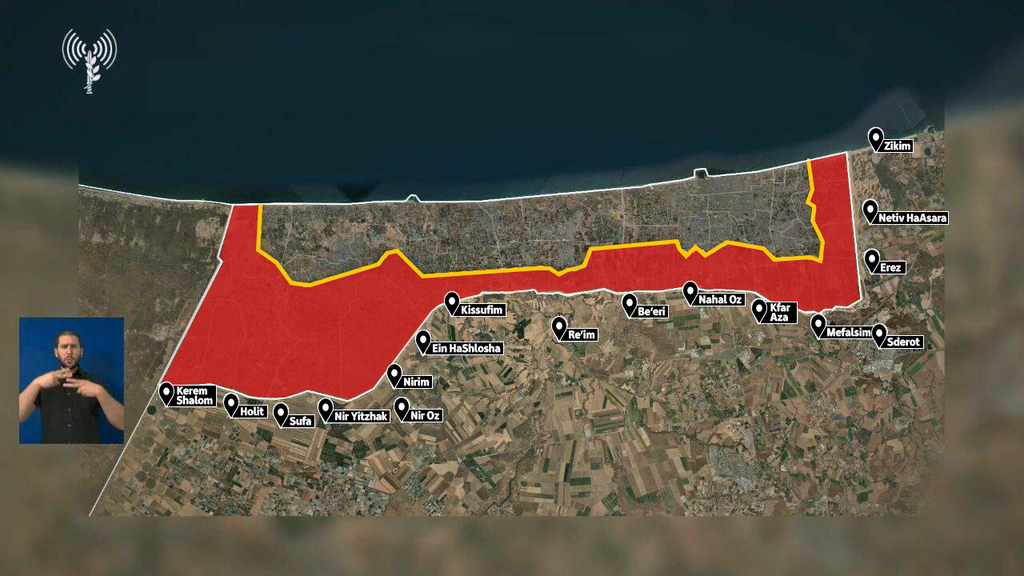
The Gaza yellow line
(Photo: IDF)
“This is only an interim stage; the war is not over,” the deputy commander says. His battalion commander, who has been here less than a month — on his sixth deployment since the war began, most of them in the north, where the brigade is normally stationed — says what was previously hard to say aloud: “In my battalion’s sector, we flattened all the structures. Everything is on the ground, as you see at the foot of the outpost. In fact, the Yellow Line starts where the flat area ends, and the first line of buildings is opposite us, even if those buildings are badly damaged.”
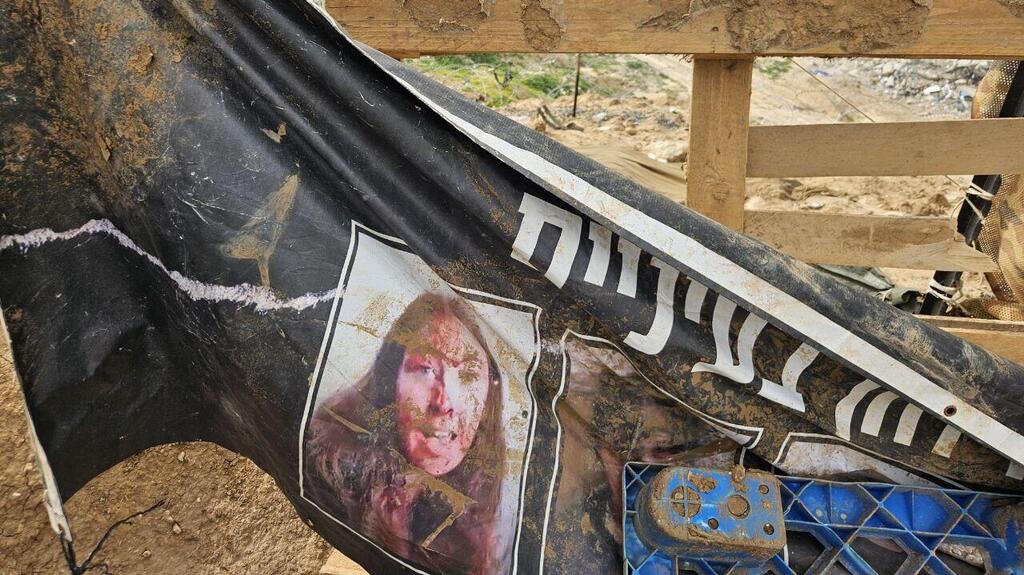
Naama Levy on the poster at the outpost
(Photo: Yoav Zitun)
Suddenly, small-arms fire is heard from an IDF position north of us, breaking the silence of the ceasefire. No one is alarmed. The deputy commander explains it is probably a drill, or fire carried out from time to time at suspicious points to “wake up the area.” Hours later, it emerges that once again a militant sent by Hamas toward the Yellow Line was identified and killed in a neighboring sector. By evening, the IDF will have responded to this violation with an attempted targeted killing of a terror operative in an apartment deep inside Gaza City.
“On Friday they sent an operative here with an ax, and we eliminated him as well,” the deputy commander says. “Last week they fired from close range and seriously wounded one of our company commanders who was securing work on the barrier. We responded quickly and eliminated them. “The biggest challenges for us as commanders are erosion and the need to maintain operational alertness among the fighters,” he adds. “If we identify an unarmed observer in their territory, or armed operatives deep inside areas we identify, we won’t fire. That’s the agreement.”
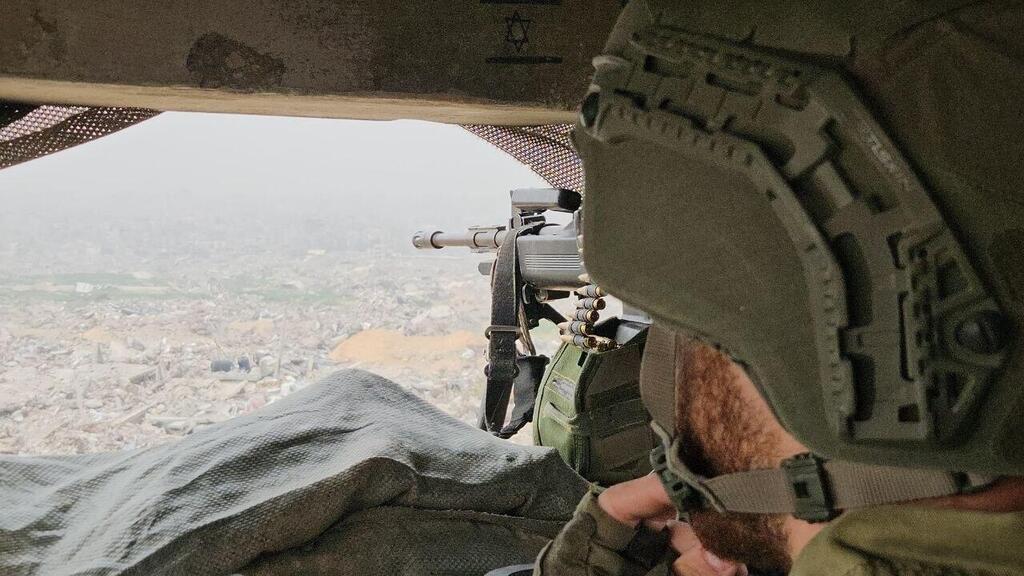
The MAG machine-gun position and the humidity in mid-February
(Photo: Yoav Zitun)
The battalion’s soldiers are busy fortifying the Yellow Line in the sector. The yellow concrete blocks marking it are not visible from the IDF outpost, not because of yesterday’s gray visibility. The rubble and the 40-meter ridge between the Shijaiyah and Zeitoun neighborhoods blur the line of sight to the markers the IDF has deployed, but the military is not relying on that alone.
These days, the forces are engaged in a major engineering operation to reinforce the Yellow Line with a long, deep trench being dug along its length, similar to the “New East” project established about a year ago in the buffer zone on the Syrian Golan, which the IDF took without a fight.
The trench is being dug by IDF bulldozers along the Yellow Line, with an additional earthen embankment above it adding several meters of height. The goal is to disrupt, and ultimately prevent, vehicle crossings that Hamas might use to launch an assault toward Israel.
The officers say the trench is meant to block motorcycle crossings as well, not only pickup trucks like the notorious Nukhba vehicles used on the day of the massacre. “Hamas was like Hezbollah’s Radwan invasion force, and then it was badly hit and pulled back,” the deputy commander says. “But it’s still there and hasn’t abandoned its intentions. That’s why we’re preparing for it — both engineering-wise and in locating tunnels, which don’t end here.”