

Three years after the war began, the psychological damage suffered by many Israeli children has not faded. A child should not have to wonder whether home is safe, whether their parents can protect them or whether the state will keep them secure. Yet after October 7, mental health professionals say many children and teenagers were forced to confront exactly those questions.
Experts are now identifying another dimension of the trauma: a breakdown of trust in the people and institutions that were supposed to protect them. The frustration and confusion created by that crisis can emerge in many forms, professionals say, including verbal and physical violence, vandalism, anxiety and challenges to the authority of parents and teachers.
Prof. Asher Ben-Arieh, a researcher specializing in child welfare and rights and chairman of Ofek, the Hebrew University’s National Center for Innovation in Resilience, Trauma and Children’s and Families’ Mental Health, said the events created a form of trauma whose full characteristics are still not understood.
"A different kind of trauma was created, some of whose characteristics we still do not understand," he said. "One of the most prominent is the dimension of betrayal. Children were harmed precisely in the place that was supposed to be safest for them, while their parents, through no fault of their own, were unable to protect them."
Ben-Arieh said that may be only the beginning of what researchers will eventually discover.
"If we compare what happened to other forms of prolonged trauma, whether sexual, physical or emotional, in which children are repeatedly harmed over years by someone who was supposed to guard and protect them, or in which those protectors fail in their role, there is a certain similarity to what happened on October 7," he said.
"We are seeing similar consequences among teenagers, including violence, difficulties at school, depression, anxiety and more."
Still, Ben-Arieh stressed that much remains unknown about the psychological impact of October 7. "The element of betrayal is only one aspect that characterizes it, and from that we can begin pulling at a thread in our attempts at treatment and rehabilitation," he said. "But it will take many more years to understand what we went through and how it should be treated."
Ofek was established following the October 7 massacre and is now seeking to translate those insights into new rehabilitation models through programs it operates in schools.
Noa Petrushka-Afek, a doctoral student in social work at the Hebrew University and director of Ofek, said the center was founded on the understanding that the trauma created by October 7 and the war was different from previous crises.
"The feeling of betrayal is only one element," she said. "Children and teenagers are suffering from the consequences and the symptoms that accompany it."
She said the crisis of trust can be seen in relationships with state institutions, families and other authority figures.
"We are seeing vandalism and violence on an unusual scale among teenagers, and even protection rackets," Petrushka-Afek said. "All of these are expressions of distrust and resistance to the system. They don’t want treatment, they don’t trust adults and they don’t talk to adults about what happened to them."
She said new responses must be built by listening directly to those who were affected, constantly testing approaches against reality and being willing to change course when existing tools fail.
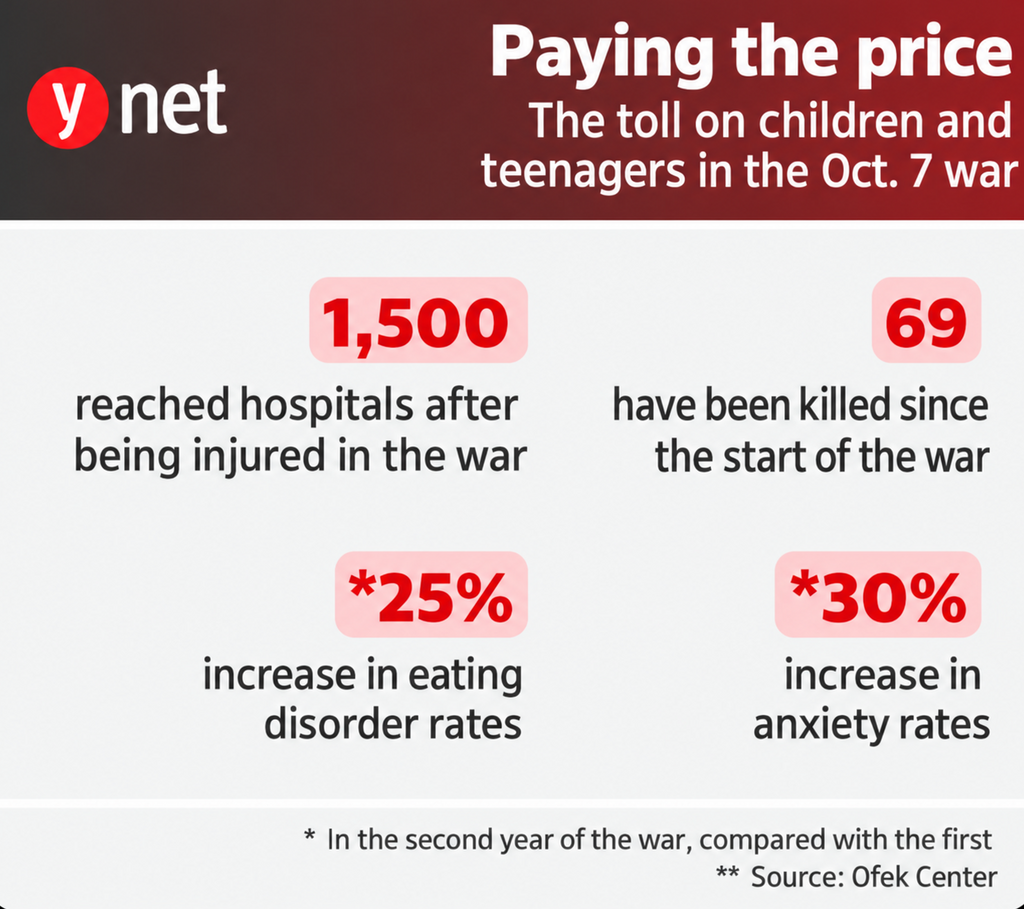
According to Ofek, 69 children have been killed since the beginning of the war and more than 1,500 have been hospitalized because of war-related injuries.
The center said that during the second year of the war, the number of teenagers diagnosed with anxiety rose by about one-third compared with the previous year, while diagnoses of eating disorders increased by roughly one-quarter.
About 275,000 children also grew up during this period with a mother or father serving for extended periods in the military reserves, according to the center.
Educational psychologist Yona Burstein, chairwoman of the Israel Psychological Association and a representative of a forum of organizations supporting public psychological services, said the war had created new forms of trauma, including one rooted in the loss of trust and the collapse of a basic sense of safety.
"In different crises, we guided parents to create a sense of protection and calm," she said. "When a child receives a calm message, what is happening outside does not affect them in the same way."
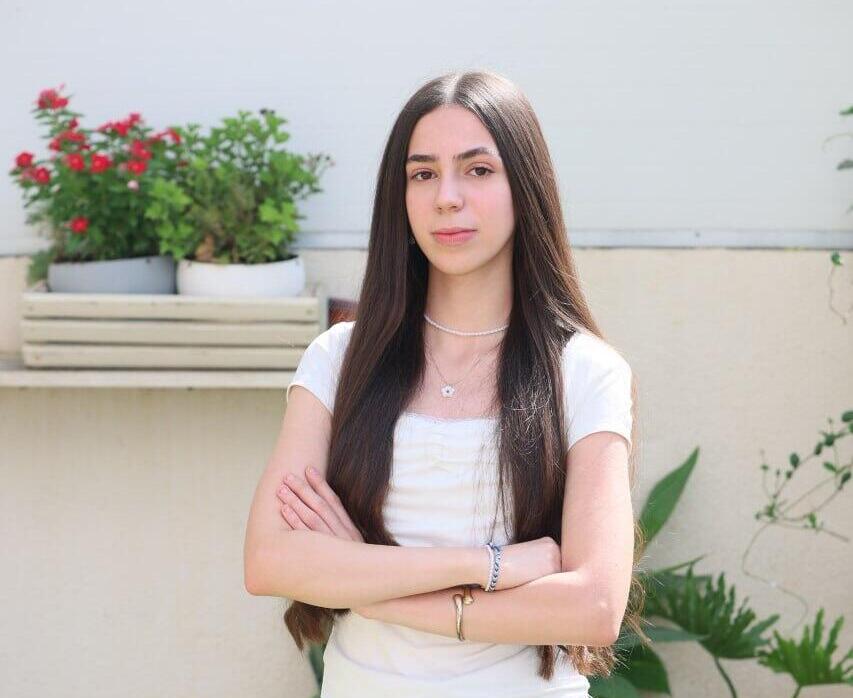
‘The war may be over, but we’re still coping.’ Talia Ben Baruch
(Photo: Omri Stein)
Young people themselves describe the consequences in similar terms. Rotem Getreide, a 12th-grade student and chairman of a student council, said the situation had emotionally destabilized many teenagers.
"There is a feeling of confusion, that at any moment something is about to happen," he said. "Vandalism and violence come from distress and helplessness, and there really are young people who find it difficult to trust others."
Lian Hajaj, 16, chairwoman of the student and youth council in Ofakim, said teenagers had been forced to deal with experiences far beyond what should be expected at their age.
"We found ourselves dealing with things that teenagers our age should not have to deal with," she said. "So many friends are dealing with anxiety and fear. What they define for us as a ‘return to routine’ does not really feel like routine."
Talia Ben Baruch, 17, of Beit She’an, who chairs the student and youth council in Israel’s Northern District, said the end of the war had not ended its psychological impact.
"The war may have ended, but we, the youth of the north, are still dealing with what it left behind: anxiety, sleepless nights, disconnection and prolonged loneliness," she said. "I watched friends from communities along the confrontation line lose their homes and move from one temporary framework to another."
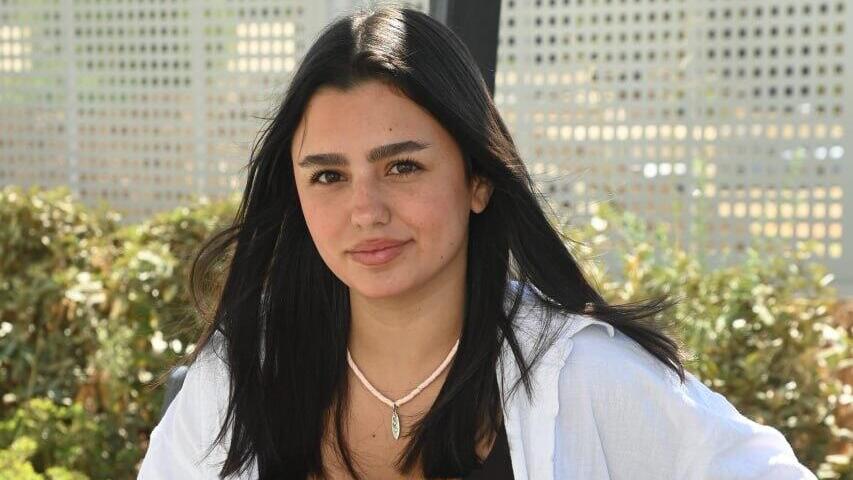
‘What they call a ‘return to routine’ doesn’t really feel that way.’ Lian Hajaj
(Photo: Herzel Yosef)
The Education Ministry said it did not have the center’s findings but stressed that since October 7, professionals from its psychological and counseling services had been providing ongoing support to students and educational staff.
The ministry said focused support had been provided to students and families directly affected by the war, while counseling hours and educational psychology services had been expanded.
It added that new tools had been developed to identify distress and provide appropriate responses, alongside dedicated training for professionals.
"The education system continues to monitor the changing needs of children and teenagers and adapt the support provided to them, with the goal of strengthening resilience, belonging and continuity," the ministry said.