

Tehran on Thursday released what it said was the first batch of documents obtained by its intelligence services, claiming they include a vast amount of sensitive strategic information related to Israel and its nuclear facilities.
According to the semi-official Fars News Agency, the documents allegedly prove that Rafael Grossi, head of the International Atomic Energy Agency (IAEA), fully cooperated with Israel and “followed its orders.” However, the documents published so far do not appear to deal directly with Grossi or Israel’s nuclear program.
Gallery
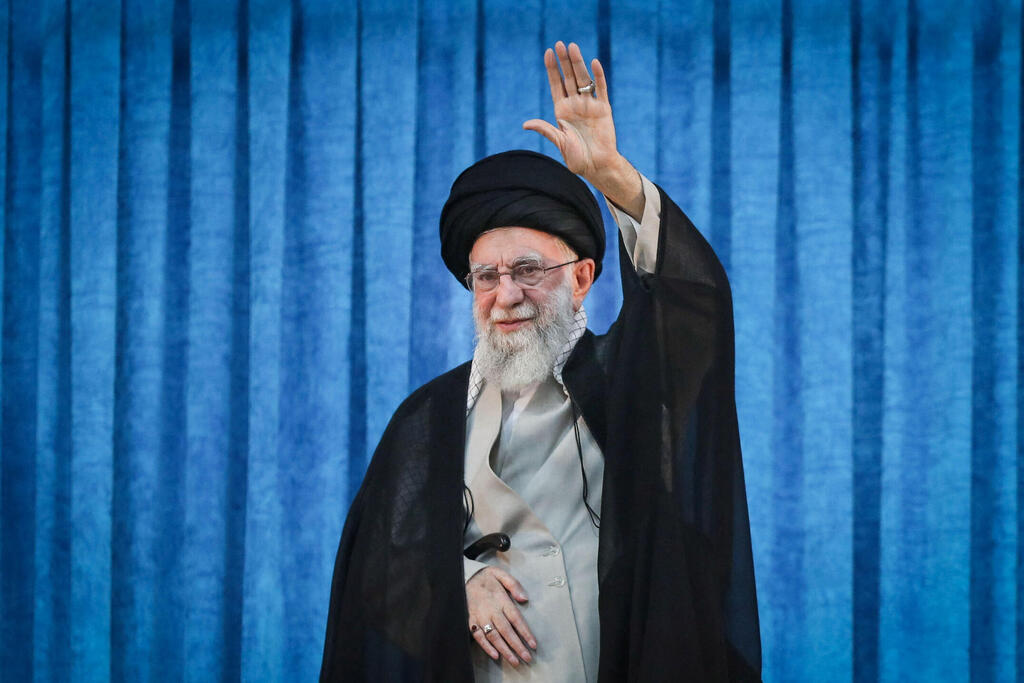
Ali Khamenei), Iran's Supreme Leader
(Photo: Office of the Iranian Supreme Leader/WANA (West Asia News Agency)/Reuters)
Since Iran’s initial announcement over the weekend, various officials in the Islamic Republic have praised the operation, but only now have any documents been released.
In a statement earlier this week, Iran’s Intelligence Ministry said: “The Ministry of Intelligence informs the Iranian people that a blow has been struck against the Zionist regime through an unprecedented intelligence operation. The operation obtained important and classified documents in a dynamic and secure operational environment. It recently concluded with the successful transfer of a vast quantity of documents to Iran. These documents are diverse in subject and of strategic, practical, research and scientific value. They include information on illegal and secret nuclear programs, including sites, research, and communications with American and European institutions.”
Intelligence Minister Esmail Khatib promised that Iran would soon reveal how the documents came into its possession.

The documents released by Iran
Sources in Iran speaking to Fars claimed the operation exposed confidential documents showing “complete coordination between the IAEA and Israel.” According to these sources, classified Iranian communications with the IAEA, including sensitive information, were secretly passed to Israel. “The IAEA has become a tool serving Israel’s interests,” they said.
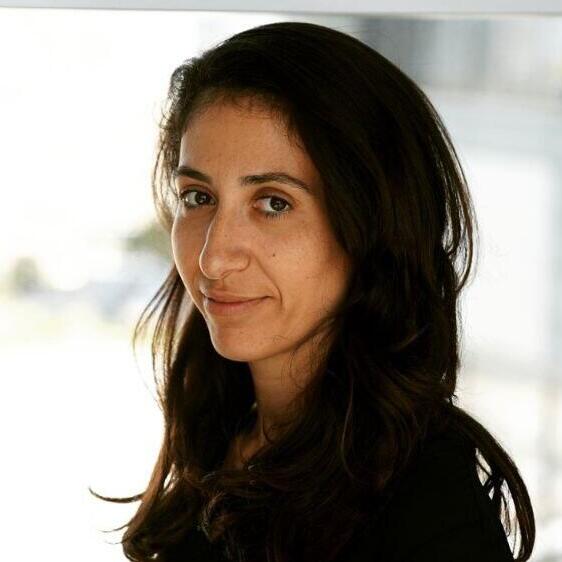
One of the documents released appears to be a planning memo for an academic panel discussion at the University of Washington, involving Merav Zafary-Odiz, Israel’s former envoy to the IAEA. The document includes her correspondence with U.S.-Iranian academic Ariane Tabatabai. In late 2024, the Pentagon denied that Tabatabai had leaked intelligence related to Israeli preparations for a possible strike on Iran. Her name and photo appear on an invitation to the November 17, 2020, event, which was attached to the released emails.

Rafael Grossi
(Photo: Reuters/Leonhard Foeger)
In one of the emails sent to Zafary-Odiz, the panel’s possible topic was described as “The Future of Nuclear Proliferation in the Middle East,” with Tabatabai possibly discussing whether a new Iranian government might shift its nuclear policy. Zafary-Odiz would speak on Israel’s approach to different proliferation scenarios in the region, the IAEA’s role, or both. The email states: “This way we can avoid directly addressing Israel’s nuclear program and other topics you’re restricted from discussing.”
Get the Ynetnews app on your smartphone: Google Play: https://bit.ly/4eJ37pE | Apple App Store: https://bit.ly/3ZL7iNv
In another email, Zafary-Odiz wrote: “I must say I’m uncomfortable sitting on a panel where an academic will talk about Israel’s nuclear program (based on open sources? books by researchers with no access to original materials?) while I, a representative of the Atomic Energy Commission, ignore it. I also don’t see a logical link between the Iran nuclear deal and the history of Israel’s nuclear program.” In further correspondence, the two discuss the idea of an all-women panel, with Zafary-Odiz suggesting topics and dates.
Iran's 'psychological warfare'
Despite Iranian claims of a major intelligence breach and an “unprecedented intelligence success,” the documents released so far are largely limited to personal academic correspondence involving Israel’s former IAEA representative—and do not contain explosive information about Israel’s nuclear capabilities.
Beni Sabti, a researcher at the Iran Program at Israel’s Institute for National Security Studies (INSS), commented on the documents, saying: “This is typical Iranian behavior—they engage in psychological warfare. Now they’ve also announced a major military drill ‘to attack the enemy.’ It’s part of Iran’s traditional approach: pulling something out to brag about so the enemy backs down. Whenever they’re threatened, they launch a drill. There’s a long tradition of such behavior in Iran. Even historically, before battles, armies wouldn’t immediately clash—they’d send out ‘war singers’ to threaten each other for hours, hoping one side would be deterred. That tradition still lives on, even among neighbors or family.”