

He immigrated to Israel, served in the IDF and became one of its fiercest critics: Russian historian Artyom Kirpichenok, who according to reports in Russia was arrested at Ben Gurion Airport on suspicion of spying for Iran, still holds Israeli citizenship, which he received when he immigrated in the early 1990s. He was educated in Israel and studied at the Hebrew University, but later returned to Russia and began preaching against the existence of the Jewish state.
The Russian opposition news site Meduza reported over the weekend on Kirpichenok’s arrest, claiming that he was taken by the Shin Bet. The newspaper Izvestia reported that he had visited Iran several times despite being an Israeli citizen. In 2018, he made a visit lasting about two weeks and described it extensively on social media. According to the reports, a group of activists formed to campaign for his release claims that Kirpichenok received an invitation to come to Israel to lecture at a conference and now believes it was a trap.
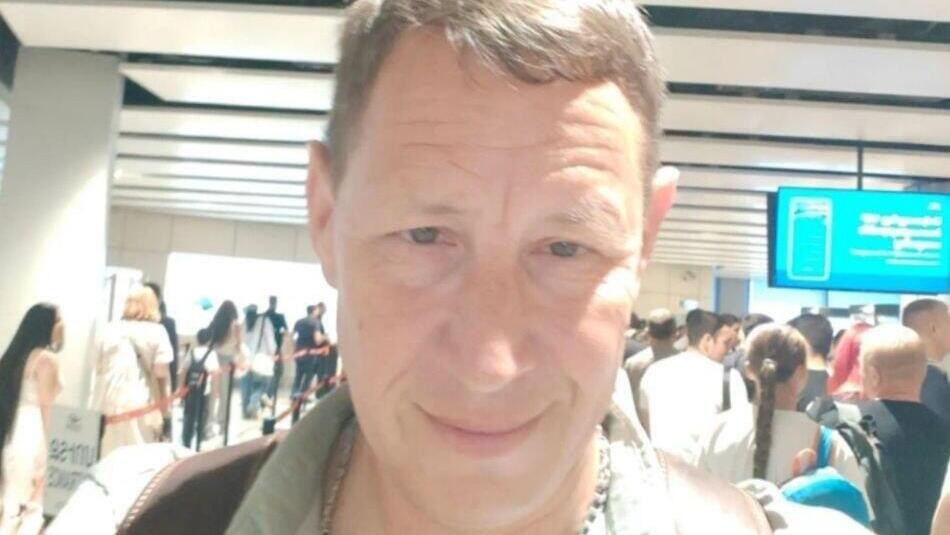
Kirpichenok, 51, was born in St. Petersburg, then known as Leningrad. He has described himself as a former activist in left-wing organizations in Israel and returned to Russia in the mid-2000s. In his academic work, he published a series of books sharply critical of Israel and Zionism and today heads a research institute focused on issues relating to the Arab world and Central Asia. After the October 7 massacre, he justified Hamas’ actions.
In his 2019 book, “The People’s History of Israel,” Kirpichenok agreed with the claim that Israeli policy in the West Bank constitutes apartheid. He echoed the argument and, when addressing Israel’s right to exist, wrote: “Before the Zionists, the two religions [Christianity and Islam] were the only ones that fought for control of the Holy Land. The Jewish Talmudic tradition strictly forbids this and requires peacefully waiting for the miraculous arrival of the Messiah. That is exactly why most Orthodox Jews viewed Zionism as satanic heresy, and the most traditional still think so.”
He published his book “Israel — The Road to Catastrophe” after the massacre, arguing among other things that the communities near the Gaza border were nothing more than “settlements” and that Palestinians “were employed there under conditions of slavery.”
“Now they got the opportunity to settle accounts with their former employers. In fact, the plot of H.G. Wells’ book ‘The Time Machine’ was realized here, when workers who lived underground seized the privileged and threw them into the abyss,” he wrote.
He also claimed: “Israeli public diplomacy emphasized the humanitarian aspect of the Hamas raid, which was supposed to present Israel as the victim. But today even the Israeli press is forced to admit that many Israeli civilians were victims of indiscriminate fire by Israeli tanks and helicopters. The propaganda failure was compounded by many ‘fakes’ that were easily disproved, about 40 children who were beheaded or a child burned in a microwave.”
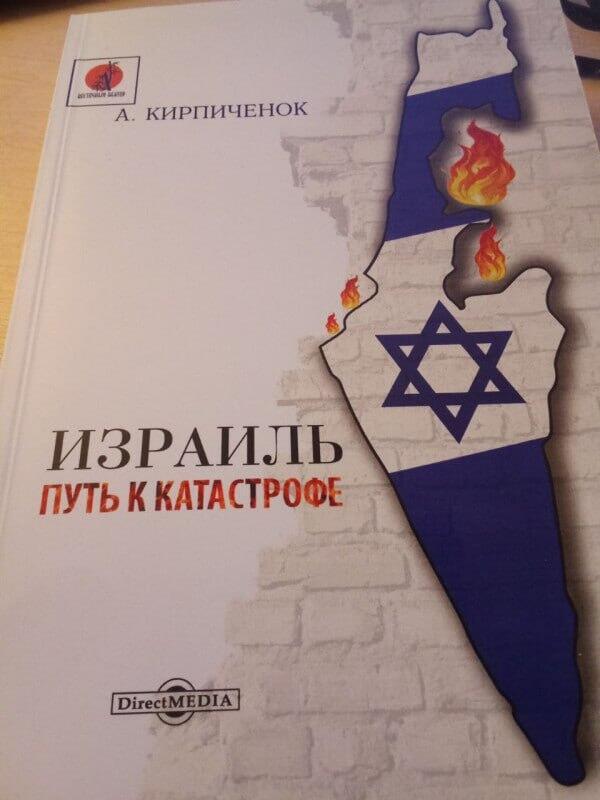
Kirpichenok's new book, 'Israel — The Road to Catastrophe'
Kirpichenok also spoke against Israel at an event marking the first presentation of his book. He said then that “the establishment of Israel is a tragedy not only for the Palestinian people, but also for the Jewish people.”
He directed some of his remarks at immigrants from the former Soviet Union who, like him, chose to move to Israel but remained there: “They are second- and third-rate people. Only half of their children receive a matriculation certificate. The same thing happens with Jews from Morocco and Romania, who were wealthy and influential people in their countries.”
Alongside his academic work, Kirpichenok also had a presence in the Russian media landscape. He frequently wrote columns for the Turkish outlet TRT, which was also published in Russian, and often promoted his views on the Middle East conflict.
During one of his visits to Iran, he was filmed for a documentary about his life story, released under the title “Garden of Bitter Memories,” in which he described his disappointment after immigrating to Israel. In the film, he speaks about himself and shares photographs from his IDF service.
In one of his appearances in Russia, he spoke publicly about the struggle against Israel. “Many people want to emigrate from it. We need to create a dialogue with these people,” he said.
He added: “We do not have the resources and we do not have Hebrew-language channels. There are only small websites operated by Jordan and Syria. We need larger media outlets for dialogue with them.”