


Maj. Gen. (res.) Nitzan Alon, the former head of the IDF’s Hostages and Missing Persons Command and a former commander of Central Command, warned that there has been a “significant erosion” in IDF values among some soldiers and commanders.
“There is a significant erosion in IDF values among some of the soldiers and commanders. It is impossible not to notice it,” Alon said at the opening conference of the 2026 class of LEAD, an Israeli nonprofit leadership development program.
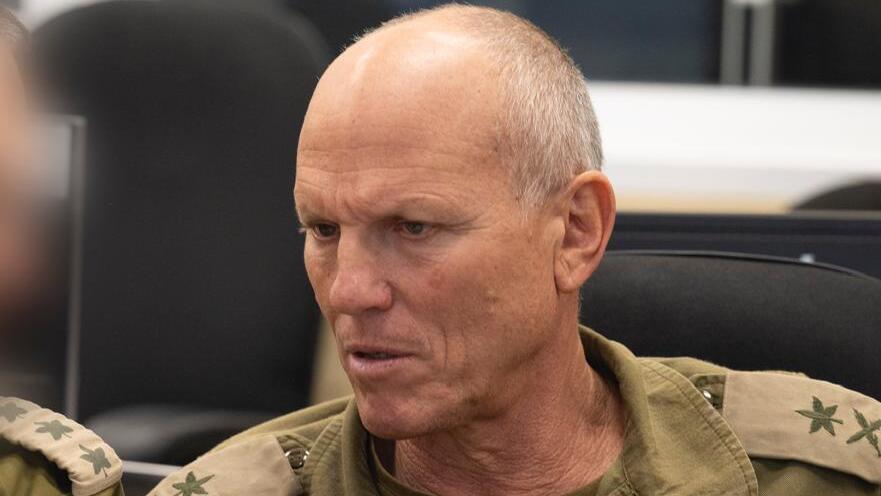
Maj. Gen. (res.) Nitzan Alon
(Photo: IDF)
Speaking to teenagers against the backdrop of recent events in the West Bank, Alon said the erosion was partly the result of a long and continuing war, but not only that.
“It is also connected to the arguments within Israeli society over what values should lead us,” he said.
Alon added that there have been cases in which soldiers have behaved improperly in the West Bank, as well as incidents in which troops stood by while illegal and immoral acts were carried out.
“There are incidents in which soldiers do not behave properly in the West Bank,” he said. “There are cases in which they stand by in the face of illegal and immoral acts, and sometimes even cooperate.”
He placed responsibility squarely on IDF commanders.
“The responsibility lies with the commanders in the army. The responsibility, first of all, is to see these things and not ignore them,” he said. “If the State of Israel wants to exist for generations, we must preserve our values. It is not only because of what the world will say, but so that we ourselves can look in the mirror.”
Alon was also asked about the failures surrounding the October 7 Hamas attack.
“In my view, the political leadership bears responsibility for the overall conception regarding Hamas in Gaza,” he said. “All of the advance intelligence, together with the information from the IDF lookouts and the warning signs that appeared during the night, should have been treated as a real warning and action should have been taken.”
“That is the essence of the failure, both at the intelligence level and at the military level,” he added.
Alon made the remarks during a discussion with teenagers participating in the LEAD program, which identifies young people with leadership potential. The nonprofit organization has operated for more than 25 years with the stated goal of developing Israel’s next generation of leaders.
Shahar Gross, 17, one of the participants, said afterward that the conversation showed that leadership also means speaking directly and listening.
“He didn’t come to lecture us, but to have an open and honest conversation,” Gross said. “As teenagers who want to be the leaders of the future, it was important for us not to be afraid to ask difficult questions.”
“I left the conversation understanding that a good leader needs to know not only how to lead, but also how to listen and deal with difficult questions.”