


A debate over how to officially commemorate the Oct. 7 attack sparked anger Wednesday in the Knesset Education, Culture and Sports Committee, after a representative of the Prime Minister’s Office proposed removing the word “massacre” from the title of a memorial bill.
The committee convened to discuss legislation establishing a national day of remembrance and a state memorial authority for the Oct. 7 attack, which took place on Simchat Torah.
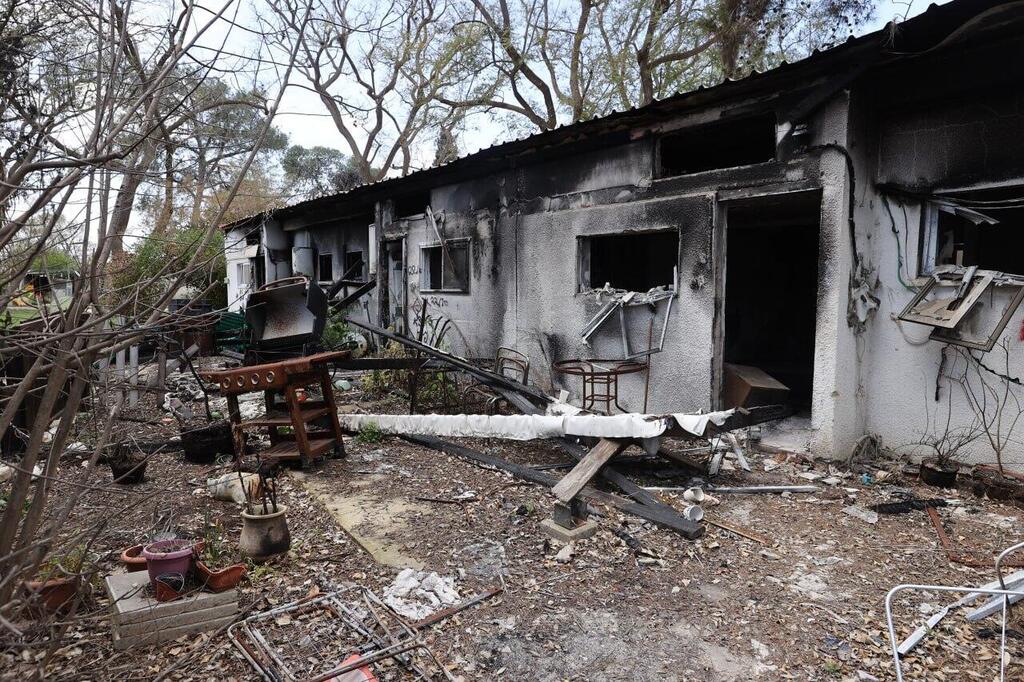
Yoel Elbaz, representing the Prime Minister’s Office, said the term “massacre” should not appear in the law’s title.
“We went through extensive strategy discussions and decided to use the term ‘events,’ because it was not only a massacre,” Elbaz said. He noted that the word appears later in the proposed text and argued that what would ultimately shape public memory is the activity of the planned memorial authority. He compared the naming to the 1929 riots, known in Hebrew as “Meoraot Tarpat,” rather than the “Tarpat massacre,” saying that “memory builds resilience.”
Acting committee chair MK Yosef Taieb pushed back. “We all know today that there was a massacre,” he said. “My concern is whether our children and grandchildren will know that.”
Taieb added that in a previous discussion with representatives of kibbutz communities and the head of the Eshkol Regional Council, the committee had accepted their recommendation to include both “massacre” and “heroism” in the bill’s title.
“I try to hear all opinions and bring a law that will be agreed upon as broadly as possible,” he said. “There will be no whitewashing.”
Hila Avir, whose brother Lotan was killed at the Nova music festival, criticized the Prime Minister’s Office involvement in shaping the legislation.
“It makes no sense that the Prime Minister’s Office is managing this when it is preventing the investigation,” she said. “Are you letting the cat guard the cream? We waited two and a half years and we will wait a little longer until there is a proper law that suits everyone.”
For now, the word “massacre” has been removed from the bill’s title, though Taieb said the issue would be revisited before a final vote.
The date of the memorial day was also debated. Bereaved parents insisted that Oct. 7 itself should be designated as the official day of remembrance. Taieb noted that the state memorial day for the Yom Kippur War is not marked on Yom Kippur itself but the day after, explaining that the bill sets the memorial on the 24th of Tishrei in the Hebrew calendar.
During the session, the committee approved merging a private members’ bill with a government-backed proposal on commemorating the events of Simchat Torah, Oct. 7.
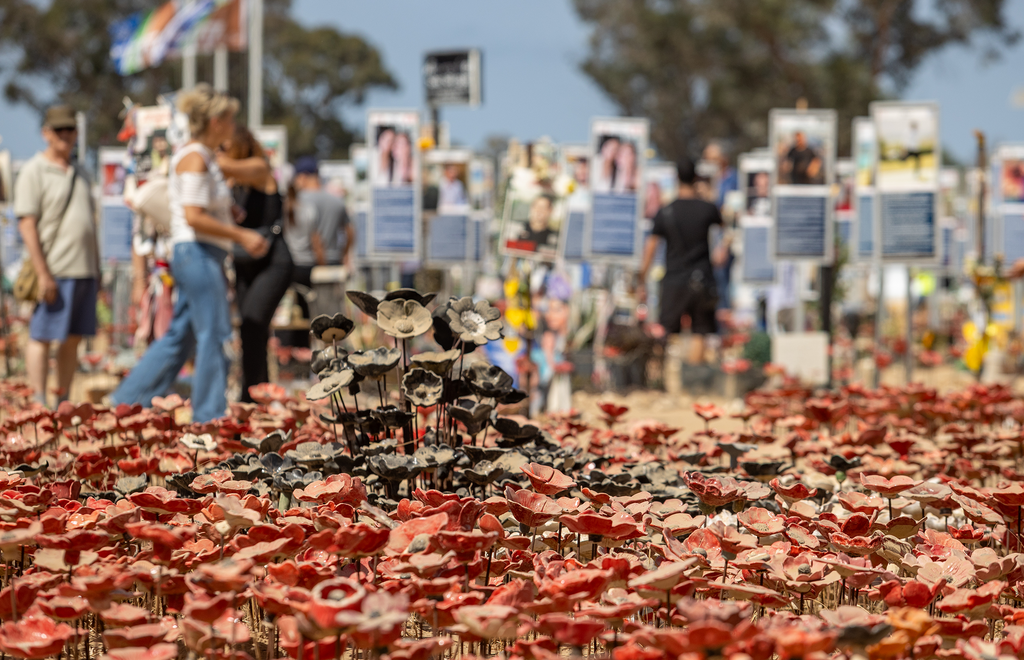
(Photo: Ido Erez)
The private bill, signed by more than 80 Knesset members, calls for an annual state memorial day on the 24th of Tishrei to honor those killed and recognize the heroism of civilians and members of the security and rescue forces who risked their lives. It would include a state ceremony, a special Knesset session, flags lowered to half-staff at public institutions and military bases and educational activities in schools. Media outlets would also mark the day in their programming.
The legislation also proposes establishing a memorial authority in the western Negev, including a commemorative site, museum and archive to be built within four years. The authority would document the events of Oct. 7 through documents, videos and artifacts and would be governed by a 13-member council. Its annual budget would come from the state budget, independent income, bequests, donations and grants.
A similar government bill was approved by the Ministerial Committee for Legislation last month. Committee members said they began intensive discussions in September 2024 to advance the process.
“There is no war over credit here,” Taieb said. “We tried to build principles that align with the government proposal, which will also undergo refinements and changes.”
Elbaz praised the committee’s legislative work, saying most gaps between the committee’s draft and the government version were minor.
The original sponsors of the private bills include MKs Eti Atia, Yitzhak Kroizer, Merav Ben Ari and Oded Forer. Nearly all Knesset members have joined as co-sponsors, with the exception of members of the Arab factions.