

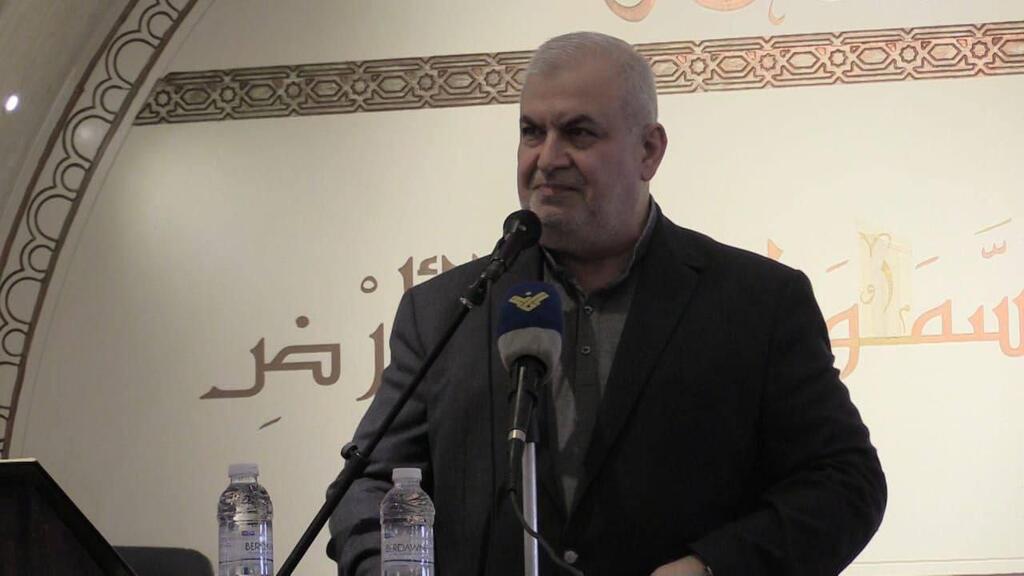
An unverified report pointed to a major assassination in IDF strikes following Hezbollah’s entry into the fighting. Saudi network Al-Hadath reported that overnight strikes between Sunday and Monday, launched after the first rocket fire from Lebanon in 18 months, killed Mohammed Raad, head of Hezbollah’s bloc in the Lebanese Parliament and effectively the political chief of the Shiite terrorist organization.
According to Lebanon’s Health Ministry, 31 people were killed and 149 wounded in the strikes in southern Lebanon and Beirut’s Dahieh district.
Footage from the strikes in Dahieh


Last month, Lebanese media reported that Raad was expected to be appointed deputy secretary-general of the terrorist organization, serving under Naim Qassem. His son was killed during the previous war.
Following strikes in Beirut’s Dahieh district overnight, the IDF said it had carried out “targeted strikes against senior Hezbollah terrorists in the Beirut area and a central terrorist operative in southern Lebanon.”
Drone interception in the Upper Galilee
(Photo: Yehonatan Eliam)
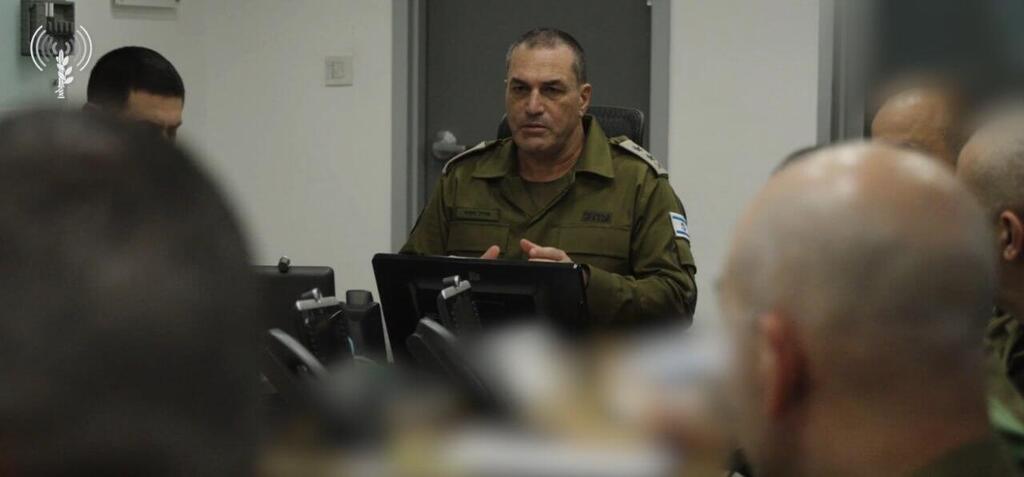
'Seizing opportunities' Chief of Staff Lt. Gen. Eyal Zamir during a situation assessment overnight
(Photo: IDF)
Shortly before 8 a.m., IDF Chief of Staff Lt. Gen. Eyal Zamir issued a statement saying, “We have launched an offensive campaign against Hezbollah. We are not just defending ourselves, we are now moving onto the offensive. We must prepare for many days of fighting. This requires strong defensive readiness and sustained offensive operations in continuous waves, while constantly seizing opportunities.”
At around 1 a.m., Hezbollah carried out its threat to attack if Iran’s Supreme Leader Ayatollah Ali Khamenei were assassinated, launching missiles and drones from south of the Litani River toward the Carmel area. No injuries were reported. The launches triggered sirens in Haifa and its surrounding area, and repeated drone infiltration alerts were activated in northern communities. Damage was reported in the Shlomi area and at a moshav in the Upper Galilee as a result of drone interceptions.
Lebanon’s justice minister, Adel Nassar, said he had ordered the arrest of those involved in the launches.
At least one of the drone interceptions was carried out by the “Or Eitan” laser defense system, which became operational only at the end of last year. Hezbollah later launched rockets toward central Israel. The projectiles landed in open areas without triggering sirens, though the blasts were clearly heard.
Fire at an apartment in Dahieh after an Israeli airstrike
Interception by Or Eitan laser system
(Video: From social media, used in accordance with Section 27a of the Copyright Law)
In response, the IDF said it had prepared in advance and launched a wave of strikes in Beirut and southern Lebanon. Residents of northern Israeli communities were informed that the strikes were expected to continue for several days, along with further Hezbollah launches.
The IDF issued evacuation warnings for more than 50 villages in southern Lebanon. Residents had already begun fleeing those areas and Beirut’s Dahieh district before the warning was published, and roads were congested despite the late hour.
According to the Hezbollah-affiliated Lebanese outlet Al-Akhbar, the villages of al-Hallousiyeh and Batouliyeh were struck, along with the area between al-Taybeh and al-Qantara and the village of al-Shaabiya.
Lebanon’s prime minister described the launches toward Israel as “irresponsible” and pledged to “hold those responsible accountable.” President Joseph Aoun also condemned the fire, saying it undermined “all the efforts Lebanon has invested to distance itself from dangerous military confrontations in the region.”
Lebanese officials claimed the launches were carried out from north of the Litani River, not from the demilitarized zone that had been declared.