

The United Arab Emirates views the latest Iranian attacks as a dangerous escalation that threatens regional stability but has not shaken public confidence in the country’s security systems or institutions, Emirati political analyst Sultan Alali said on Thursday.
Speaking to ynet Global from Abu Dhabi after Iran launched attacks for the second consecutive day this week, Alali said the UAE public largely sees the strikes as “reckless” actions that fail to change the broader strategic balance in the region.
Interview with Emirati political analyst Sultan Alali
(Video: Ori Davidovich)


“Stability and sovereignty are non-negotiable,” Alali said. “The country remains calm because confidence in the UAE, in the defense system and in the state institutions, is extremely high. The UAE is acting like a serious regional power, not a reacting emotional country.”
While the United States has reportedly not classified the attacks as a breach of the ceasefire, Alali said many across the Gulf believe that pressure on Iran without enforcement risks prolonging instability. “Many in the region believe pressure without enforcement only delays the problem,” he said. “Security is directly tied to global energy, trade and stability.”
Despite growing tensions, Alali said daily life across the UAE has continued uninterrupted, with airports, ports and infrastructure operating normally. “The public remains strong because daily life, infrastructure, airports, ports and security systems continue operating very normally and efficiently,” he said.
The comments came after Prime Minister Benjamin Netanyahu held a phone call with UAE President Sheikh Mohamed bin Zayed Al Nahyan following the attacks, a move Alali said reflects the UAE’s growing role as a central strategic actor in the region.
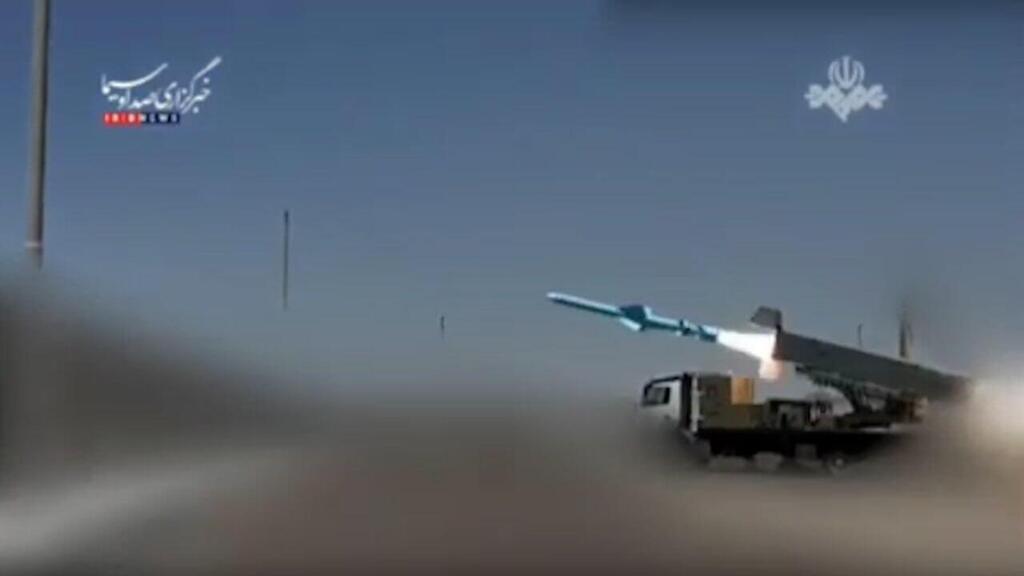
Iran fires missiles at US ships in the Strait of Hormuz
“Security coordination in the region is becoming more interconnected and more intelligence-driven,” he said, adding that Israel’s advanced defense capabilities are increasingly viewed as an important regional asset.
Asked whether the crisis could lead to expanded cooperation between Israel and Gulf states, and potentially broader regional normalization efforts involving Saudi Arabia, Alali said rising threats tend to strengthen pragmatic partnerships. “The bigger the regional threat becomes, the more valuable strategic partnerships become,” he said. “The UAE positioned itself early as a bridge with an increasingly pragmatic approach rather than a symbolic one.”
Alali also delivered a direct message to Israelis, describing Israelis as “friends” and emphasizing shared regional interests and resilience.
“We have a common thing, our defense systems are very strong,” he said. “We send our support and hope Israelis continue to stay resilient.”