


Since the start of Israel’s strikes on Iranian territory, Tehran has significantly ramped up its crude oil exports to global markets, Bloomberg reported Thursday.
The regime has been moving large volumes of oil from its ports to tankers and simultaneously stockpiling crude at Kharg Island—the country’s primary oil export terminal—as a precautionary measure to reduce potential trade disruptions from Israeli attacks
Traders and investors are closely watching to assess how Israel’s strikes on Iran’s nuclear sites, military facilities and energy infrastructure might impact oil exports from Iran and the broader Persian Gulf region.
According to the report, Iran’s exports have surged since Israel launched its offensive roughly a week ago. In the first five days of the campaign, Iran exported an average of 2.23 million barrels of oil per day—a 44% increase from previous levels.
Get the Ynetnews app on your smartphone: Google Play: https://bit.ly/4eJ37pE | Apple App Store: https://bit.ly/3ZL7iNv
“To me, it seems very clear what they’re doing,” Samir Madani of TankerTrackers, a firm specializing in monitoring oil shipments, told Bloomberg. “They’re trying to get out as many barrels they can but with safety as their number one priority.”
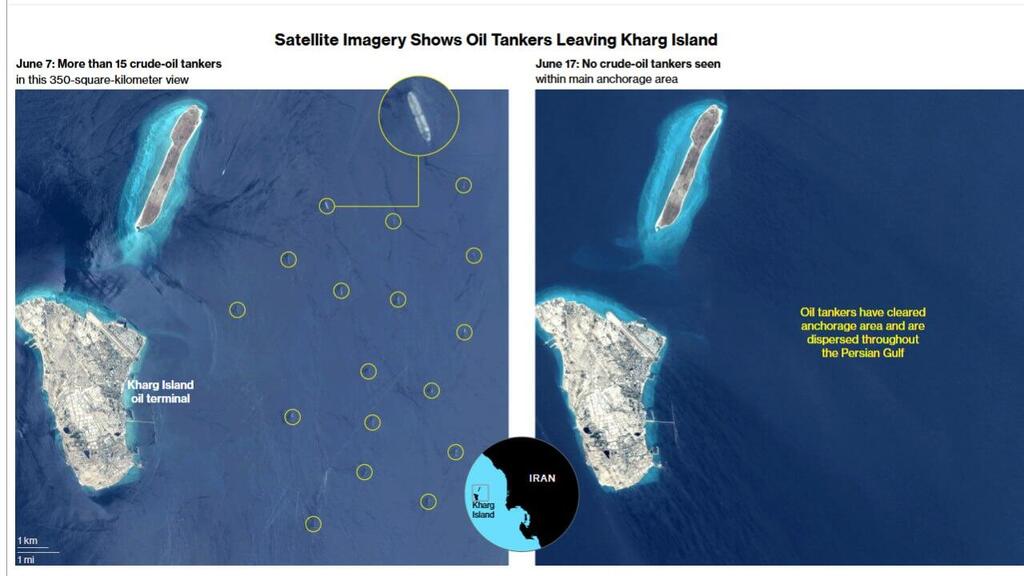
In a further sign of Iran’s heightened logistical precautions, Bloomberg noted that many oil tankers are now anchoring far from Kharg Island—unlike in normal times—and are making only brief stops to load oil before quickly leaving the area.
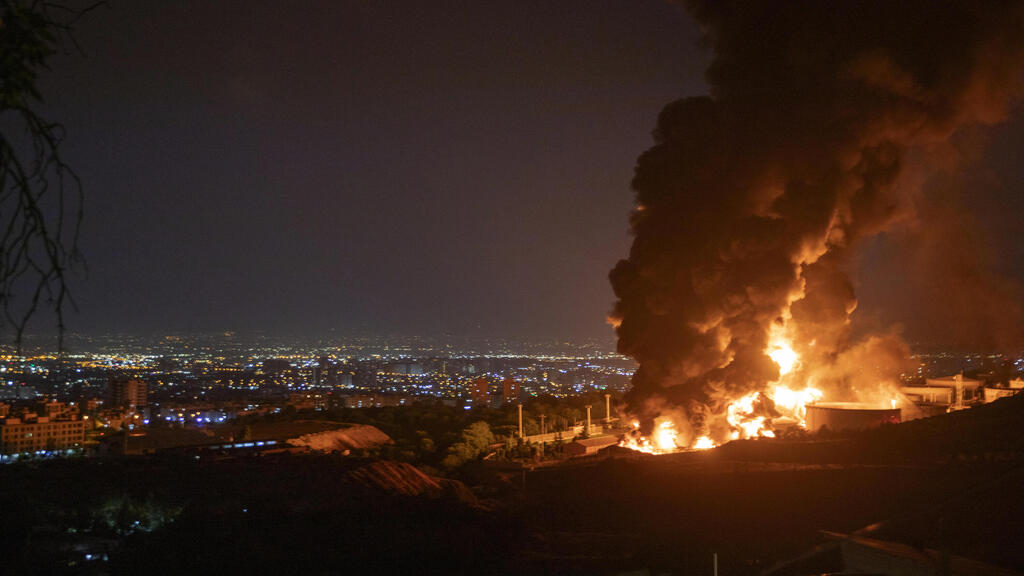
Israeli strike on Iran's oil stockpiles
(Photo: Stringer/Getty Images)
Satellite images from Planet Labs, published by Bloomberg, show the shift. On June 11—two days before Israel began striking inside Iran—tankers could be seen anchored between Kharg and Iran’s coastline. But by June 17, none remained visible near the island.
Bloomberg noted that Iran employed a similar strategy last October when it was targeted by Israeli attacks, continuing oil exports without significant disruption.