


Almost 20 years separate the moment Rivana Tendler’s world was destroyed from the moment the same tragedy came to Hilit Yanai’s door. Both lost daughters in fighting against Hezbollah in Lebanon: Keren Tendler, the first female airborne mechanic on the IDF’s CH-53 Sikorsky helicopters, was killed in the Second Lebanon War; Rotem Yanai, a welfare noncommissioned officer in the Givati Brigade, was killed about three months ago by a first-person view (FPV) drone. Rivana has spent two decades living with the longing. She has learned how to get up in the morning, return to work, commemorate her daughter and continue living alongside the absence. Hilit is only at the beginning of that journey.
One post Rivana published at the end of May brought the two women together: a mother who knows the long road after losing a daughter and a mother who had only just begun walking it — and wanted to ask her one thing: Is it possible to go on living?
Gallery
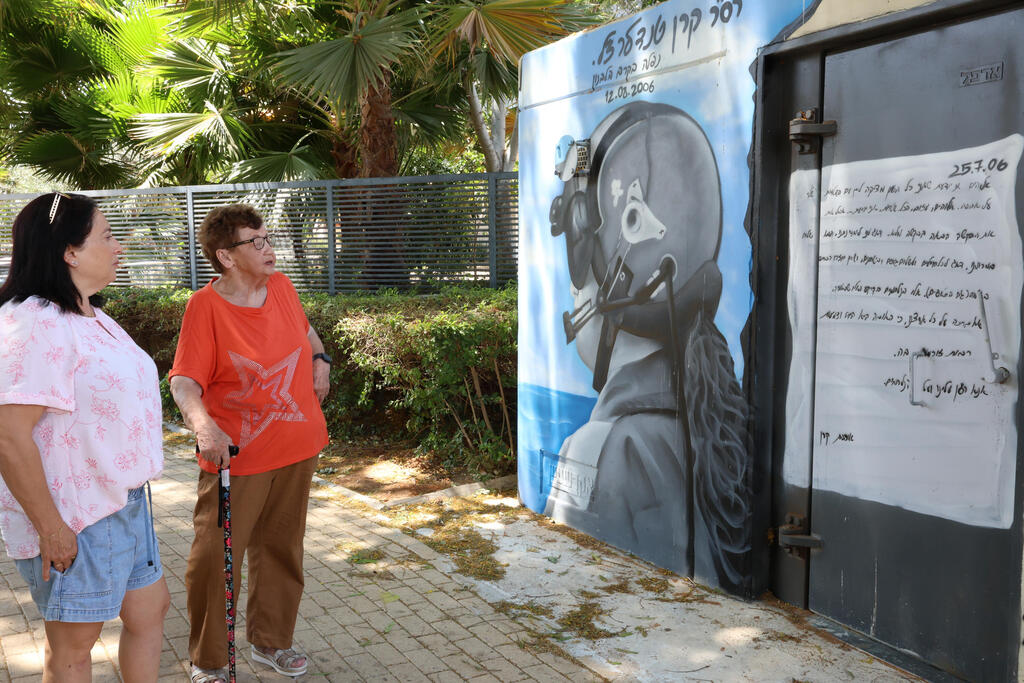
“I went upstairs and started screaming.” Hilit Yanai (left) with Rivana Tendler at the memorial garden for Keren Tendler in Rehovot
(Photo: Shaul Golan)
“My daughter Keren was killed in Lebanon,” Rivana wrote in a post published May 29, 2026. “She fell when a missile fired by Hezbollah terrorists struck her helicopter and her crewmates in Lebanon, moments after they had landed paratroopers deep inside Lebanese territory.”
She added: “Keren’s remains were not found for several days, from the moment we were told she had been killed in Lebanon and was missing until soldiers from Unit 669 and Sayeret Shaldag found her and returned her body to Israel on foot, making the long journey to the Israeli border accompanied by paratroopers. Keren, the first female airborne mechanic on the IDF’s Yasur helicopters, was also the first female soldier killed in Lebanon. It will soon be 20 years. Keren was my only daughter, one of two children I brought into the world. Next week I will turn 77, and I miss Keren terribly.”
Hilit responded to the post: “My daughter was buried Wednesday. I’d be happy to meet you after the shiva (a traditional seven-day mourning period) and draw strength from you. I feel like I’ll never recover.”

'I have peace knowing she did what she wanted.' Rotem Yanai
(Photo: Courtesy of the family)
Rivana replied: “Yesterday I wrote in response to your photo from the funeral on one of the pages that it took me straight back to the day I said goodbye to Keren myself. Unfortunately, we are now bound by the same terrible pain of losing a daughter. You lost an amazing daughter who was born the year Keren fell, and it hurts so much to think about that. It will happen slowly. We’ll stay in touch. You are not alone.”
'I swore I would choose life, but it’s terribly hard'
At ynet’s initiative, the two mothers met at a memorial garden for Keren in Rehovot, near her favorite running route and across from the cemetery where she was laid to rest. Among graffiti drawings of the Sikorsky helicopter, the two sat down to talk about coping with the loss of the people dearest to them — the mother who has lived with the pain for 20 years and the mother seeking tools to cope with her fresh grief.
“I wanted from the very first second to know that one day I would be able to continue living,” Hilit explained about her decision to reach out to Rivana. “That stays with me to this day. At Rotem’s grave, I swore that I would choose life — but even when you choose it, it’s terribly hard. I want parents who already have experience to tell me that it’s possible,” she added painfully.
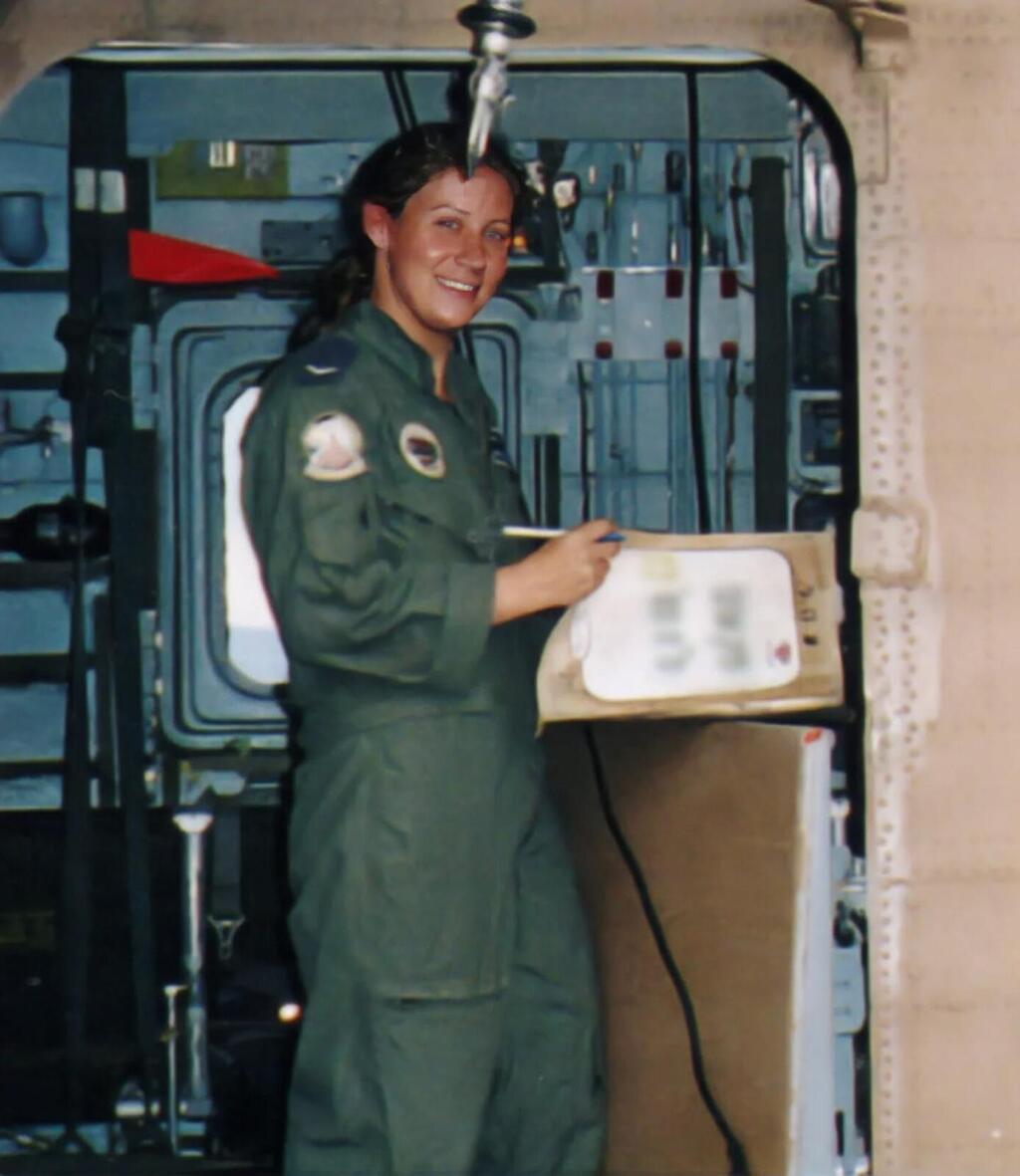
'She said that if she were captured, she would cut her wrists.' Keren Tendler
(Photo: Courtesy of the family)
Rivana described herself as a “veteran at this,” adding sadly: “You live with it your whole life.”
Both women vividly remember the moment they received the news.
“From the moment they knocked on my door until I went to identify her, six hours of my life disappeared. The first thing I wanted was to see her. I couldn’t go on otherwise,” Hilit said.
Rivana said the news came to her at 1:45 a.m. “They knocked on the door, and Dan (the father) and Nadav (the brother) said I had said, ‘Soldiers have arrived.’ To this day I don’t remember saying that,” she recalled.
Hilit said she saw the soldiers from the window but did not understand what had happened and thought they were Rotem’s friends. “When I opened the door, I saw my ex-husband and our two children — and I understood,” she said. “I went upstairs and started screaming. I remember thinking maybe she was only wounded. I screamed, ‘Tell me she’s only wounded!’ and from their reaction I understood.”
Rivana had similar feelings when she received the news. “At first they said they were missing. That gave me hope that she had been wounded, that maybe Hezbollah had kidnapped her,” she said. “But I was gradually coming to understand, until I learned that she was the one who had been hit by the missile.”
Both women also vividly remember their last conversations with their daughters — one more than 20 years ago and the other only about three months ago.
Hilit said her conversation with Rotem took place just two hours before her daughter was killed. “She was supposed to go home. She had already packed her bag. To this day I’m angry with myself that I didn’t give her my full attention,” she said painfully. “But the conversation ended with laughter. She cursed because they had closed the canteen.”
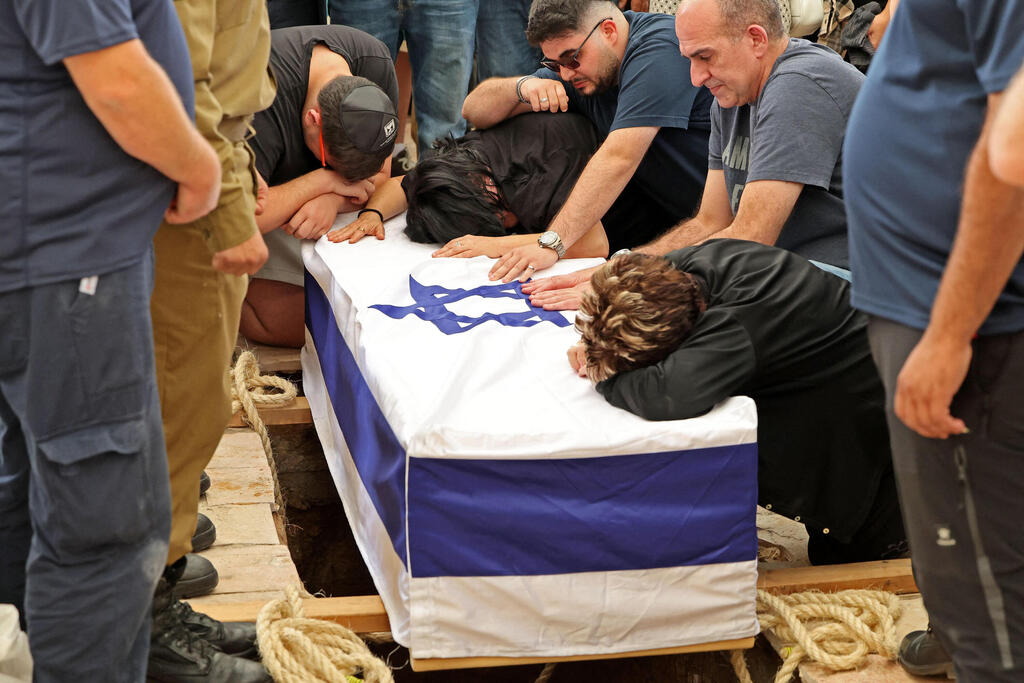
'I won’t go back to being the same person. It’s beyond nature. It doesn’t make sense' The funeral of Rotem Yanai
(Photo: Jack GUEZ / AFP)
Rivana recalled that at midnight her daughter came home from another flight. “When I asked how it had been, she said it was quiet. Only afterward did we learn that a missile had missed them,” she said.
Rotem also projected confidence to Hilit throughout her service near the Lebanese border. “In retrospect, we learned that one of her friends had been wounded by an explosive drone a month earlier. They were under constant threat from drones, spending hours in shelters. She didn’t tell me. She didn’t say anything. She told me everything was fine,” Hilit said.
A bag for the helicopter and a bag for swimming
Unlike the confidence Keren conveyed to Rivana, her brother Nadav recalled their final conversation on Aug. 12, 2006.
“Before she left for the base, she asked me to bring her a knife. She said that if she were captured, she would cut her wrists so she wouldn’t be at Hezbollah’s mercy,” he said.
Hilit first met Nadav during Rotem’s shiva. “When they see bereaved parents, it has an effect,” he said. “It was important for me to speak with him, to understand how to cope with the children,” Hilit said.
Both daughters were determined to reach the positions they ultimately held.
“That position did not come easily to her. She fought for it,” Rivana said of Keren, the first woman to serve as an airborne mechanic. “In 1999 she entered the technical school in Haifa, where her love affair with the Sikorsky helicopters began. It didn’t matter to her that there were still no women in the position. From the first moment, she knew this was what she would do,” Rivana recalled.
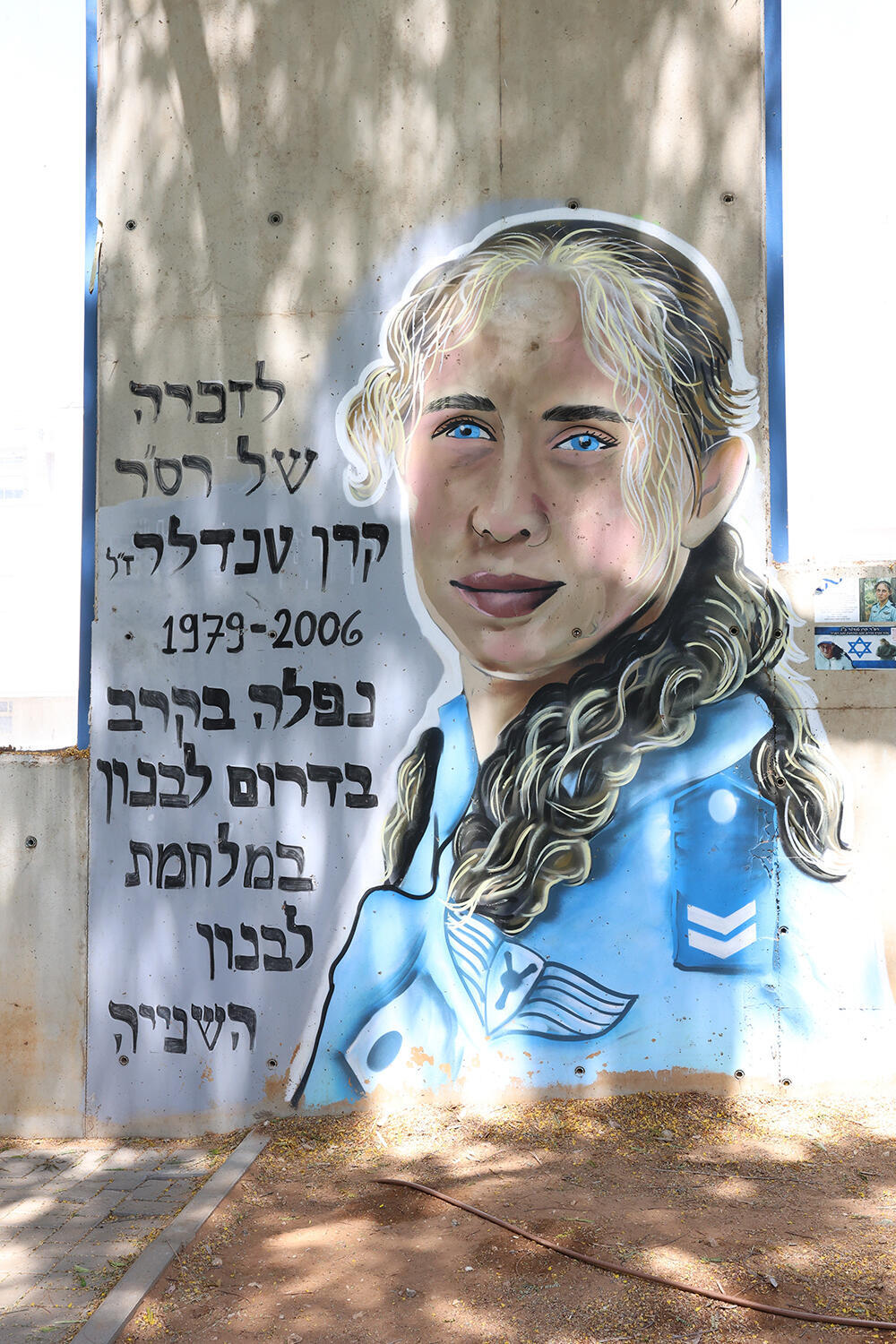
'I admit there’s jealousy.' A memorial for Keren Tendler at the garden in Rehovot
(Photo: Shaul Golan)
After eight years of service, Keren was discharged in 2005 but continued reporting for reserve duty on a permanent-service basis. “She didn’t give up on the military, even while studying for a law degree. During the day she studied for exams, at night she flew. In her car she had two things — a helicopter bag, where she knew every screw, and a swimming bag,” Rivana said, describing her daughter’s insistence on taking part in operations beyond enemy lines.
Hilit said Rotem wanted to serve as a welfare NCO and graduated from her training course with distinction.
“They wanted her to go to officer training, but she preferred to remain in the field. She was popular, always at the center, the glue. She would bring children who had been bullied or struggled to fit in into her group. In the Scouts, she was a counselor for autistic children. After she was killed, children told me how she had supported them, the light she had given them. I always said she was destined for great things. Everything she did, she did right,” Hilit said.
The two women draw strength from the strong motivation their daughters had to fulfill their roles.
“I have peace from knowing that she did what she wanted,” Hilit said.
Rivana added: “At least she fell doing the job she loved most.”
'Rotem was born the year Keren was killed'
Since their losses, Hilit and Rivana say, everything has changed.
“We’re not the same person,” Rivana said.
“I won’t go back to being the same either. It’s beyond nature. It doesn’t make sense,” Hilit added.
Alongside coping with Rotem’s death, Hilit is also supporting her son Dor, Rotem’s older brother, who was wounded on Oct. 7 and is dealing with combat trauma.
“I feel like they took two children from me — one mentally and one physically,” she said painfully.
Hilit said that at first she asked herself: “What would I have preferred — that she had never been born in the first place and I wouldn’t have had to endure the nightmare of losing her, or that I had 20 years with her and now I’m suffering? I came to the conclusion that I’m glad I had her.”
Rivana said: “Rotem was born the year Keren was killed. She would have turned 47 this year. Sometimes I think she could have been the mother of a fallen soldier from the current war who is now buried beside her.”
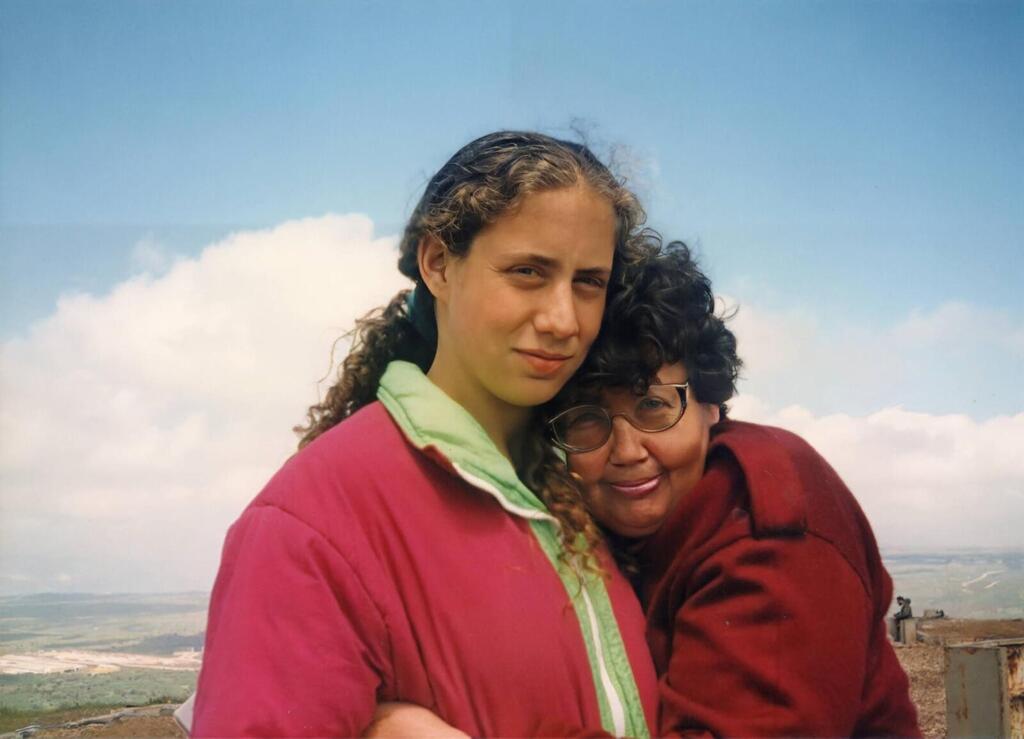
Keren and Rivana Tendler
(Photo: Courtesy of the family)
Looking to the future, Hilit, a lawyer by profession, said she does not think she will return to work. Once she gathers the strength, her goal is clear: to promote legislative changes for fallen soldiers and bereaved families.
“Every soldier, male and female, should be asked when they enlist whether they want their sperm or eggs to be retrieved and preserved in case they fall,” she said.
The two women agreed that they would have welcomed the possibility of having descendants from their daughters.
“A bereaved family today receives eight days of mourning. Can someone expect me to return to work when I don’t even remember what my name is? There needs to be bereavement recovery leave for a child,” Hilit added, describing another cause she hopes to advance in Rotem’s name.
'After a child is gone, the way to be a parent is through commemoration'
The similarities between the two women are also reflected in their choice to remain active.
“Some people become inactive and some become hyperactive. I’m constantly doing things because I feel that if I don’t, I’ll drown,” Hilit said. “I don’t sleep all night. I’m tired. If I don’t do this, I don’t know how I’ll survive.”
Rivana said: “After work, I continued volunteering in teaching. I didn’t go to a psychologist. There’s a pool across from my house, and twice a week I go for water exercise. The moment I’m in the water, I relax. It’s been 16 years.”
An integral part of their activity is commemorating their daughters.
“I call it a different kind of parenting. After a child is gone, the way you can be a parent is through commemoration,” Hilit said. She always carries a flag bearing Rotem’s photograph.
“That’s the way to make her present, so something of her remains,” she added.
Rivana said: “To remember her, you have to fight your whole life. It’s a way of continuing her life, as if she’s with us all the time.”

Rotem Yanai
(Photo: Courtesy of the family)
Commemoration is also Hilit’s way of giving voice to her pain.
“Our lives were turned upside down. I used to see memorial stickers on walls. Today I understand that every sticker represents a family that has been shattered, a family that will never be what it was.”
Commemorating their daughters also reminds the women of the lives their daughters could have had.
“Rotem’s friends come to my house every weekend. Their presence is very important to me. They’re part of our family,” Hilit said. She recalled a conversation with another bereaved mother who said that at first she was surrounded by friends but that today she finds it difficult to be around them.
Rivana immediately identified with that difficulty.
“I understand her. They move forward and we stayed behind. Over the years, Keren’s friends grew distant. On one hand, I want a connection. On the other hand, I admit there’s jealousy,” she said.
Hilit summed it up: “Rotem won’t get married. She won’t have a family of her own. The longing isn’t only for what was. It’s also for what will never be.”