


Sgt. First Class (res.) G., 25, from Bethlehem of the Galilee, enlisted in August 2019 as a combat soldier in the Sky Rider unit of the Artillery Corps, becoming a role model for her two younger sisters.
About four years later In November 2023,, G.'s sister, Staff Sgt. N., 21, received the Artillery Corps beret upon completing the combat training track in the Moran In August, the youngest sister, Cpl. A., 19, joined them, enlisting as a combat soldier in Battalion 405 of the 282nd Brigade, also in the Artillery Corps.
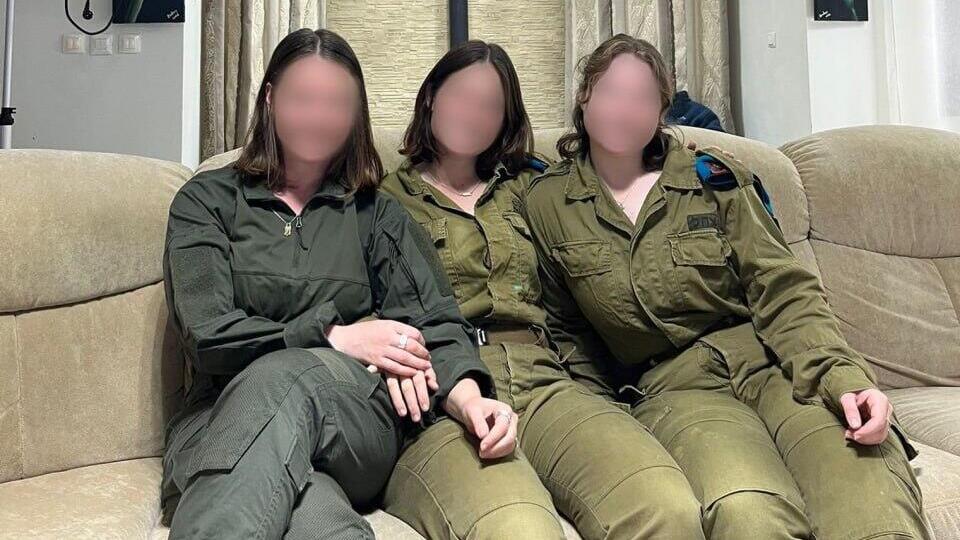
“Being a combat soldier was not my lifelong dream,” G. admitted. “But then, looking at the roles I was offered, I wanted something meaningful that would challenge me, and I decided to become a combat soldier. Throughout my service, I felt I was breaking glass ceilings. It was harder than I thought, but also extremely meaningful. I would not change a thing.”
Ahead of her own enlistment, N. consulted with her older sister. “I told her that if she thinks combat service suits her, she should not hesitate,” G. said.
“Like G., I also wanted a service where I could fully realize my abilities,” N. added. “I had a figure to look up to, a model in my older sister. I wanted to be a combat soldier like her.”
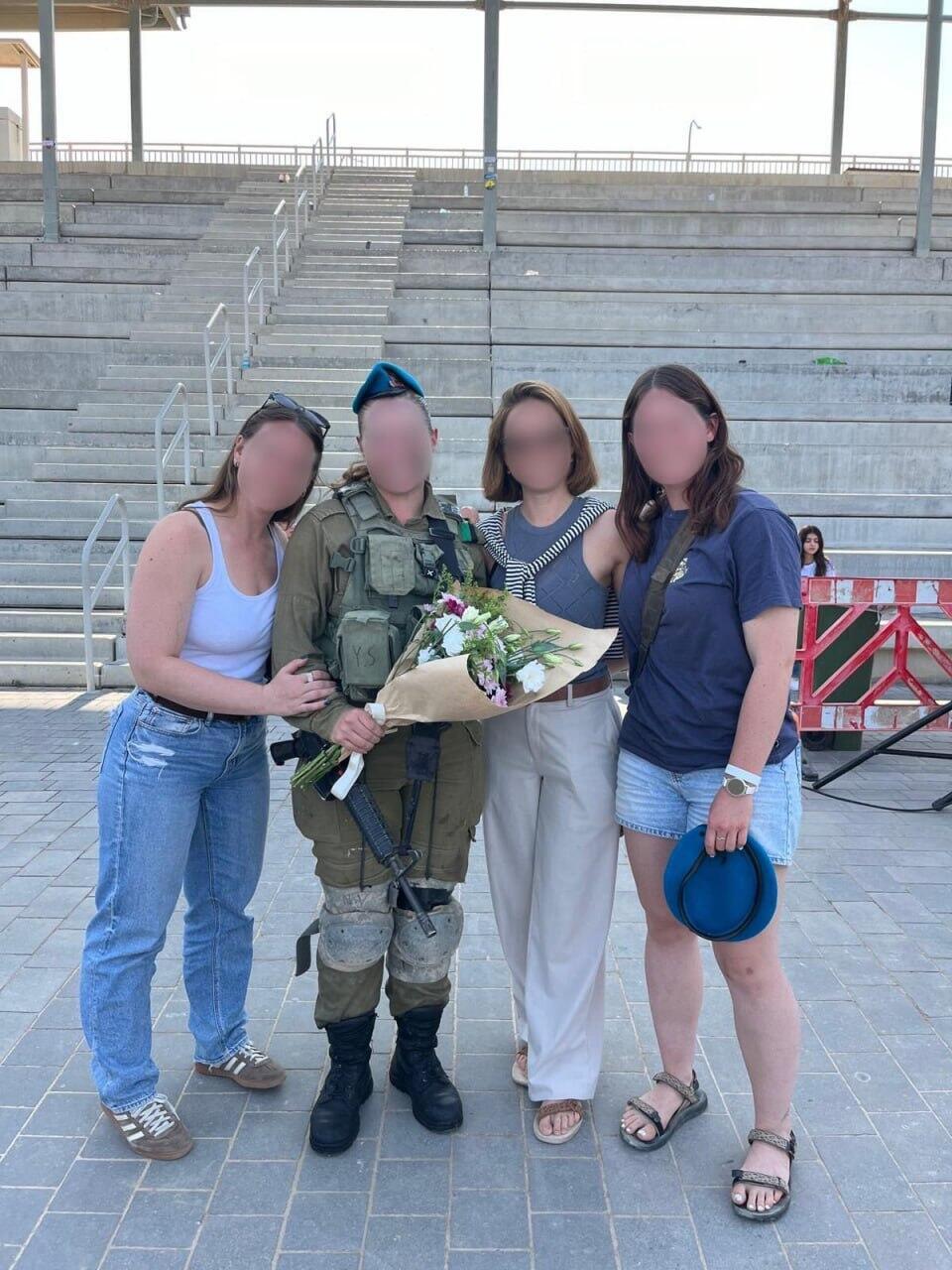
“Of course we supported her decision to go into combat. Who are we to say otherwise?" Cpl. A in uniform.
N. said that G. was a steady source of support, always ready to listen and offer encouragement. “When I started basic combat training, which is known for being difficult, I called her during personal time complaining,” N. recalled. “She reminded me how much I wanted to be a combat soldier and how important it was for me to contribute as much as possible.”
Reflecting on her service during the war, N. said: “You feel the unit’s significance on the ground. We can see that things happen because of our work. No matter how difficult it gets, we keep that in mind.”
‘Every day ended with a sisters’ conversation’
Last year, the youngest sister also chose to serve as a combat soldier in the Artillery Corps. “If N. consulted with G., I consulted with both of them,” A. said. “It helped me more than anything to have two sisters who know exactly what I’m going through, because they were there before me.”
“At the end of every day in basic training, we had a sisters’ conversation,” N. said. “Of course we supported her decision to go into combat. Who are we to say otherwise?”
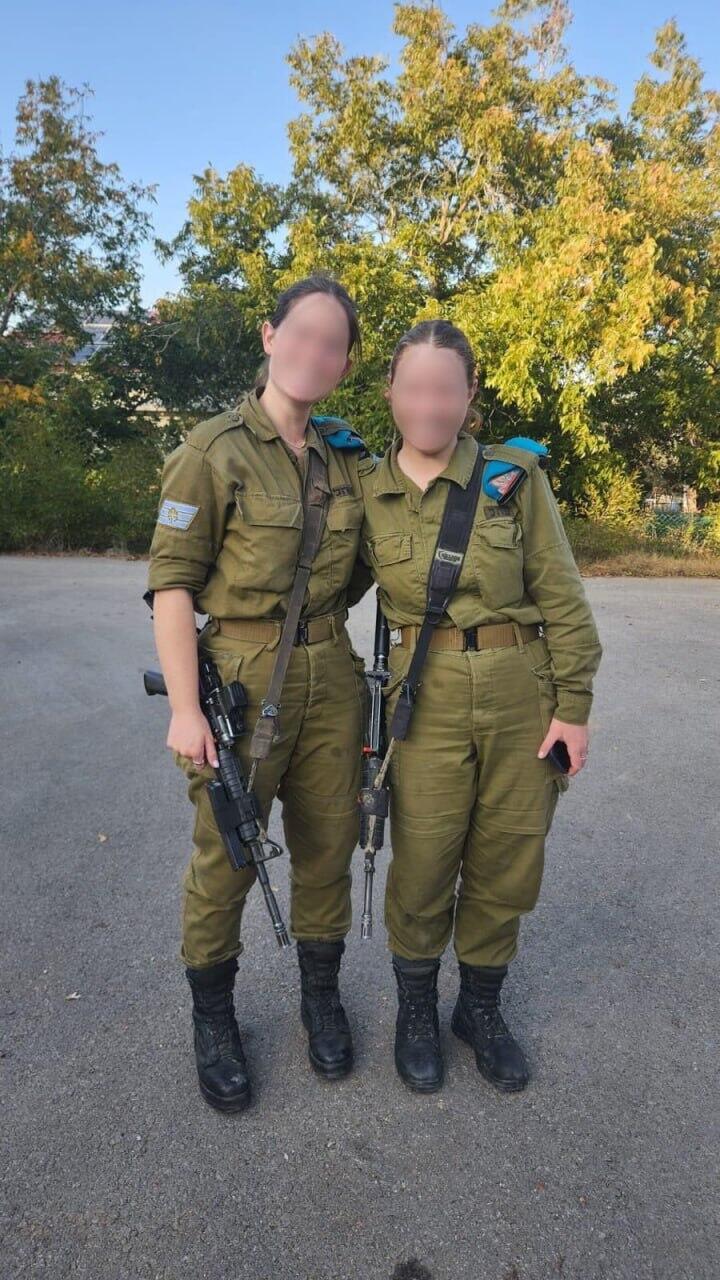
Staff Sgt. N. (left) with Cpl. A.
During the war, G. reported for reserve duty while her two younger sisters were serving in mandatory service, meaning all three served simultaneously. “In our parents’ military days, there were no female combat soldiers,” G. said. “They learned what it means to have daughters in combat, who go through difficult things, take part in operations and fight.
“I think they worry about us in private, but when they’re with us they mostly show support, always offering words of encouragement", G. added.
The sisters also addressed those who question whether women belong on the battlefield or in the IDF more broadly. “Reality proves itself,” N. said. “In my unit, the boys and the girls do exactly the same thing. There is no difference in approach or expectations, and that works best.”