

A New York school district will pay $125,000 to a Pakistani American Muslim high school student after erasing a pro-Palestinian artwork she created on her assigned school parking spot. The student had painted a watermelon with a keffiyeh on the space she received ahead of graduation, but school officials removed the artwork after an image of it was posted in a pro-Israel Facebook group.
The young woman filed a lawsuit in March 2025, leading to the current settlement. Under the agreement, the district will pay the sum without requiring a nondisclosure agreement and without admitting wrongdoing.
Gallery
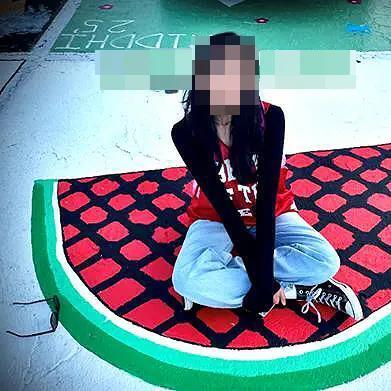
A Muslim high school student from New York will receive compensation after a watermelon artwork was erased from her parking spot
The incident took place in September 2024 at a high school in Dix Hills, Long Island. Most students at the school come from affluent neighborhoods in an area with a significant Jewish community and large community centers that operate many youth movements. Among the school’s prominent alumni are actor Ralph Macchio of “The Karate Kid,” film director Todd Phillips of “Joker” and “Starsky & Hutch,” NBA player Tobias Harris and Jewish congresswoman Debbie Wasserman Schultz.
Under an annual school tradition, seniors receive a personal parking space and are allowed to decorate it. The student, identified in court documents by the pseudonym “Jane Khan,” said she spent two weeks designing the space with the help of a close Jewish friend and the friend’s mother. The design included the greeting “peace be upon you” in Arabic, her name, her nickname and a drawing of a watermelon with a keffiyeh pattern.
The lawsuit explained that “the watermelon is a longstanding symbol of Palestinian solidarity” because it contains the colors of the Palestinian flag. The student said the drawing expressed her solidarity with Palestinian suffering as a Muslim and a Pakistani American. According to her, her family has a personal connection to the conflict, including a relative whose partner is Palestinian and a family friend who lost 135 relatives in the war in Gaza.
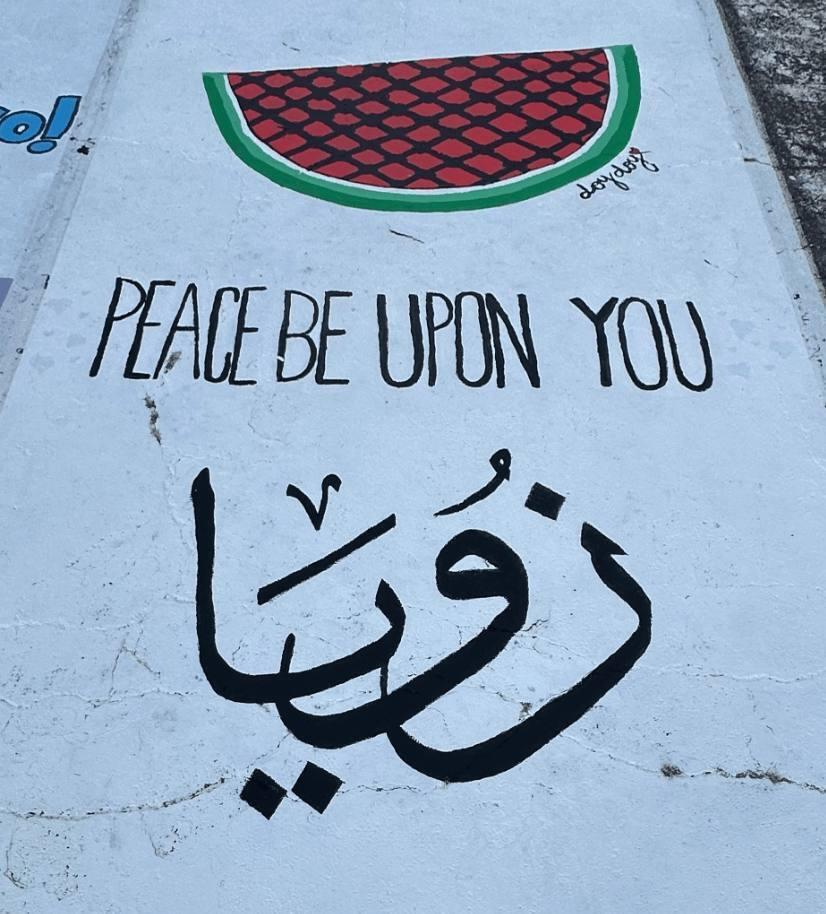
A few days after the school year began, a Facebook user posted a photo of the decorated parking space in a private group called “Never Again Is Now – Jewish Lives Matter,” which at the time had nearly 60,000 members. The user, the mother of a student at the school, called on group members to contact the district superintendent and demand that the artwork be removed.
The discussion among parents and students was divided. Some compared the watermelon to the Confederate flag, while others argued that the student had the right to express herself in her personal parking space, just as others were allowed to display a Star of David or a cross.
A few days later, Khan was summoned to the principal’s office. According to the lawsuit, principal Dr. Michael Catapano and another staff member questioned her behind closed doors about the meaning of the artwork and threatened disciplinary action without contacting her parents. Khan said she tearfully explained the cultural meaning of the keffiyeh and her desire to support Palestinians.
Two days later, school officials painted the parking space white, erasing only the part of the artwork that included the watermelon and keffiyeh.
The student’s mother, Nighat Malik, said her daughter came home crying and shaking. Malik contacted a Muslim American civil rights organization, which helped secure a civil rights attorney. The lawsuit, filed in March 2025, two months after U.S. President Donald Trump began his second term, alleged a serious violation of the First Amendment, which protects free speech, among other rights, as well as “emotional trauma.”
Khan’s attorneys argued that the school had previously allowed students to paint political symbols on parking spaces without interference, including a Black Lives Matter fist, a Pride flag and symbols of the Democratic and Republican parties.
The school district’s attorney, Steven Stern, argued that the high school had a duty to supervise paintings on its property and said that regardless of the student’s intentions, the message had been understood as an expression of antisemitism and support for a terrorist organization. To support that claim, the district cited a public radio article about the history of the keffiyeh, but Khan’s lawyers argued that the article actually showed that people wearing keffiyehs have been targets of discrimination and violent racism.
U.S. District Judge Kiyo Matsumoto recommended that the sides reach a settlement and expressed concern about discrimination based on viewpoint by the school, especially given that students had not been required to present opposing views alongside Pride flag or Black Lives Matter artwork.
The school district agreed to publish a public apology, but insisted on writing that the student “did not intend” to express a hateful message through her artwork. The student’s attorneys objected to that wording because they feared it implied that the symbols themselves — the watermelon and the keffiyeh — were indeed offensive, and that only the student’s specific intent absolved her of blame.
The plaintiffs were concerned that if the district apologized only for misunderstanding the student’s “intent,” school officials could continue banning other students from displaying Palestinian symbols in the future.
The student’s attorney, Andrew Stoll, demanded an unequivocal statement saying the artwork was not an expression of hate and that rejecting the watermelon or keffiyeh symbols was unreasonable. After the sides failed to agree on the word “intended,” district representatives withdrew the plan to publish an apology and demanded that the student and her family sign a nondisclosure agreement preventing them from discussing the case.
Khan’s lawyers firmly refused to sign an NDA. Ultimately, the district agreed to pay $125,000 to avoid publishing an apology, without admitting liability and without requiring the plaintiffs to remain silent.
Khan’s attorney said the size of the settlement “proves without a doubt that they knew they were going to lose this case, meaning they knew they had completely violated this young woman’s First Amendment rights, and that one way or another they were going to have to pay.”
Khan, who is now in college, said she “hopes this whole story will really encourage minorities and the Muslim community and the Palestinian community not to be silent and not to be censored, and to know that they have a right and that their voice matters.”
Desk note: The legal language is intentionally restrained: the district agreed to pay but did not admit liability, while claims about First Amendment violations and discrimination remain attributed to the lawsuit, judge or attorneys.