

U.S. President Donald Trump insists that a deal to reopen the Strait of Hormuz is expected very soon, perhaps as early as Wednesday, after reports said he had demanded that the deal be completed Tuesday. But so far, there has been no announcement, and on Wednesday afternoon CNN reported that the declaration may wait until Friday. A senior Gulf official told the American network there is a “50-50” chance the deal will be reached Friday.
Shortly after that report, in a move that is still unclear but may have been intended as a goodwill gesture toward Tehran, the U.S. Treasury Department announced the removal of sanctions against two aircraft and three airlines linked to Iran’s Revolutionary Guards.
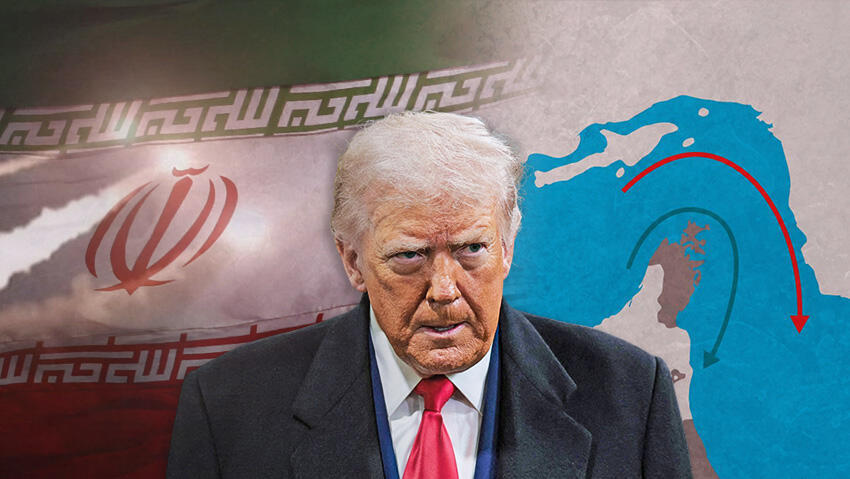
At the center of the contacts is a temporary agreement to reopen Hormuz under a framework that would effectively accept at least some of Iran’s demands for control over traffic in the strait - the oil artery of the global economy - as part of its refusal to give up the strategic pressure lever it gained during the war by blocking it. Talks over how the strait will be managed under the temporary agreement are officially being held only between Iran and its neighbor on the strait, Oman, but in practice the U.S. is also involved.
The official who spoke with CNN said the Iranian delegation in the talks does not include the “voice” of the Revolutionary Guards, the most powerful military force in Iran, which now effectively controls decision-making in the ayatollahs’ regime. According to the official, the Guards will be required to give final approval to any agreement reached.
Trump himself gave a somewhat similar timeline Wednesday morning, after reports said he had demanded that the agreement be reached Tuesday. “We’ll know within 48 hours. Things are moving nicely,” he said. Earlier, in an overnight interview with Fox News, he said that “the strait will open soon, or they [Iran] will be hit hard and then it will open.” He claimed that if Iran leaves the talks, “they will be hit very hard.”
A senior Iranian official addressed the negotiations on an agreement, telling Qatar’s Al Jazeera that “only one or two issues remain unresolved before an agreement can be reached.” According to him, those issues “can be resolved.” He concluded that “any closure or reopening of the Strait of Hormuz depends on any action Washington takes.”
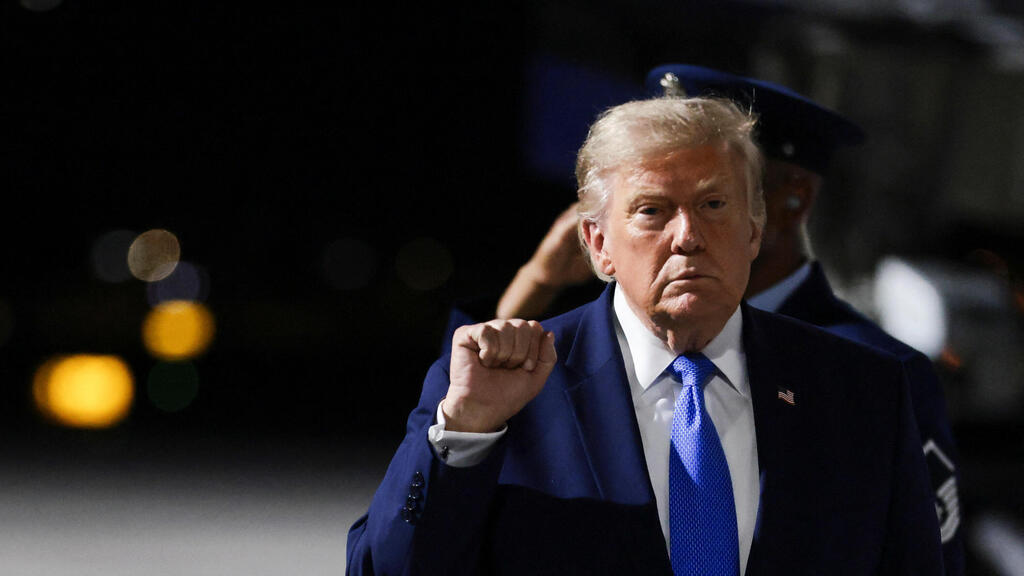
U.S. President Donald Trump insists that a deal to reopen the Strait of Hormuz is expected soon
(Photo: Evelyn Hockstein/Reuters)
On Wednesday evening, Iran’s Foreign Ministry said that “the geographic characteristics of the route in the Strait of Hormuz have been agreed upon between Iran and Oman.” The ministry’s spokesperson said that “a joint Iran-Oman statement is in its final stage — if a certain ‘third party’ does not interfere.” He added a caveat: “The agreement in itself does not mean the strait is safe.”
According to reports, Iran is continuing to insist that under any arrangement it will retain control of the strait. U.S. officials told The Wall Street Journal that Washington expects an agreement similar to the one already reached in a memorandum of understanding signed in June. Under the agreement, a ceasefire would first be reached, which in the memorandum also included the opening of Hormuz, and only then would negotiations be held on the “heavy” issues, such as the nuclear program.
In the interview aired overnight on Fox News, Trump sounded disappointed with Iran’s conduct, under which Tehran denies any contact with the Americans. “They called and very politely said, ‘Please, can we talk?’ and I said, ‘Yes, let’s get this finished,’” he said. “It’s a little embarrassing. You say we’re having great talks, and then someone in Iran says, ‘We didn’t meet.’ That’s a lie. ‘We didn’t talk about nuclear.’ So what did we talk about? Sitting and waiting? It doesn’t matter. What matters is actions — and if they don’t make a deal, it will be a shame.”
Axios reported overnight that Saudi Arabia is also involved in the talks with Iran on opening the strait. White House officials are directly involved, and in recent days, according to the report, talks have been held between Trump’s envoy Steve Witkoff, Iranian Foreign Minister Abbas Araghchi and Omani Foreign Minister Badr al-Busaidi.
Two regional officials told Axios that Araghchi agreed in principle to the emerging agreement on the Strait of Hormuz, adding that he still requires approval from Mojtaba Khamenei, Iran’s supreme leader, and from Iran’s National Security Council. A U.S. official claimed that the approval process in the Iranian leadership was completed Tuesday.
Secretary of State Marco Rubio also expressed optimism Tuesday, saying progress had been made in contacts between Iran and Oman on increasing the number of ships that would be allowed to cross Hormuz, but stressed that it was too early to announce a final agreement. “We hope it will happen very soon,” he told reporters in Washington.
According to The New York Times, the parties are nearing an agreement under a framework in which vessels entering the Persian Gulf through the strait would pass through its northern route, the one closer to the Iranian coast, while vessels leaving the Gulf would pass through the southern route, which is closer to Oman. Iranian officials told The Times that they do not plan to collect tolls, but do plan to collect another payment that would be branded as a “service fee.” The payment is supposedly meant to cover the “environmental consequences” of managing the strait and the “security” of tankers. It was claimed that the revenue would be divided equally between Iran and Oman.
Until the war, passage through the Strait of Hormuz was completely free, with one-fifth of global oil and gas consumption passing through it, in accordance with its definition as an international shipping lane. Since Iran carried out its threats and blocked it during the war, and began attacking vessels that tried to cross the area, it has claimed ownership of it and insisted on receiving transit fees from every ship that crosses.
To bypass the dispute, the memorandum was deliberately worded ambiguously, stating that the strait would be opened temporarily for 60 days without a demand for payment, and that Iran and Oman would negotiate over how it would be managed in the future. The agreement collapsed when Iran continued to attack ships that crossed the strait along its southern route, the one closer to Oman, which does not demand payment from vessels.
First published: 17:42, 08.05.26