

Prime Minister Benjamin Netanyahu said Sunday that he and U.S. President Donald Trump agreed that any final deal with Iran must dismantle Tehran’s nuclear enrichment facilities and remove enriched nuclear material from Iranian territory.
In his first direct public response to the emerging understandings between Washington and Tehran, Netanyahu said he spoke with Trump on Saturday night about a memorandum of understanding to open the Strait of Hormuz and the expected negotiations toward a final agreement on Iran’s nuclear program.
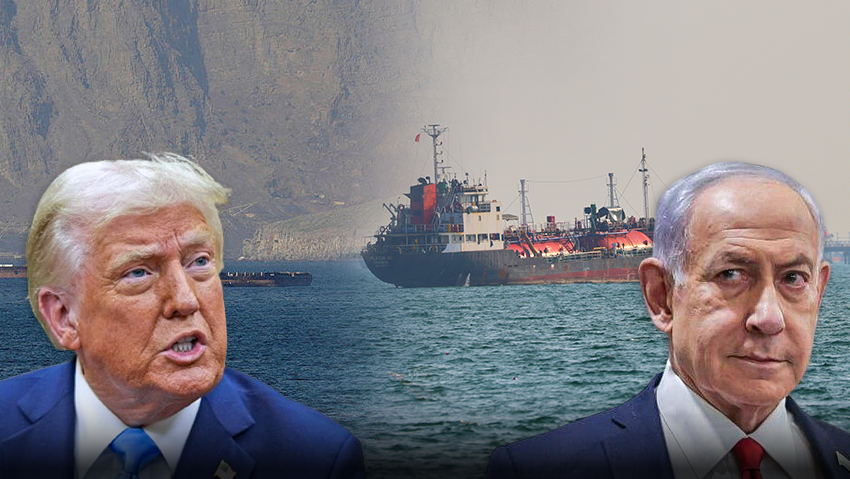
Donald Trump and Benjamin Netanyahu
(Photo: Miriam Alster, Evan Vucci/AP, shutterstock, REUTERS/Stringer/File Photo)
“The meaning is the dismantling of Iran’s nuclear enrichment facilities and the removal of enriched nuclear material from its territory,” Netanyahu said, referring to what he described as the shared position reached with Trump.
Netanyahu said he expressed “deep appreciation” to Trump for his “firm commitment to Israel’s security,” including the fighting in Iran, in which he said American and Israeli forces fought “shoulder to shoulder” against the Iranian threat.
According to Netanyahu, he and Trump agreed that “any final agreement with Iran must remove the nuclear threat.” He also said Trump reaffirmed Israel’s right to defend itself against threats on all fronts, including Lebanon.
“The partnership between us and between our two countries was proven on the battlefield and has never been stronger,” Netanyahu said. “My policy, like President Trump’s policy, remains unchanged: Iran will not have a nuclear weapon.”
Trump, in a Truth Social post, said he had instructed US negotiators not to rush into a deal with Iran, saying “time is on our side” and that the blockade would remain “in full force and effect” until an agreement is “reached, certified, and signed.”
He framed the emerging talks as a tougher alternative to the 2015 Iran nuclear deal reached under former president Barack Obama, calling that agreement “one of the worst deals ever made” by the United States. Trump said the current negotiations were “proceeding in an orderly and constructive manner,” but warned that “there can be no mistakes” and that Iran must understand it cannot develop or obtain a “Nuclear Weapon or Bomb.”
Earlier Sunday, Trump told ABC that he could not discuss the details of the potential agreement. “I can’t talk about the deal; it’s totally up to me, and if there’s news, it’ll be good news. I don’t make bad deals,” he said.
On Saturday, Trump wrote on Truth Social that “the final aspects and details of the deal are being discussed” and would be announced soon. He said the Strait of Hormuz “will be opened,” along with other elements of the agreement, and described the deal as “mostly agreed to.”
Iranian officials have pushed back on parts of Trump’s description. Iran’s Fars news agency reported that the Strait of Hormuz would remain under Iranian management under the emerging agreement, whose draft had been exchanged between the parties. The agency described Trump’s claim about the opening of the strait as incomplete and inconsistent with reality.
A senior Iranian source told CNN that the negotiations could mark a “turning point” in efforts to end the war and bring the Middle East “a new era of stability and prosperity.” The source said “great progress” had been made in recent days toward a memorandum of understanding to end the conflict between the United States and Iran, and expressed hope that the Trump administration would seize the opportunity for a stable solution.
Addressing Trump’s claim on Hormuz, the source said the route had already been open, but that coordination with the relevant Iranian authorities was needed to ensure safe passage. The source also warned that renewed military action would risk “uncontrollable escalation” in the Middle East and beyond.