

Lebanon's information minister said the cabinet had approved on Thursday only the objectives of a U.S. proposal for disarming Hezbollah by the end of the year, along with ending Israel's military operations in the country, but they did not discuss the full details of it.
Earlier, it was reported that Hezbollah ministers and their Shiite allies walked out of the meeting in protest of the plan.
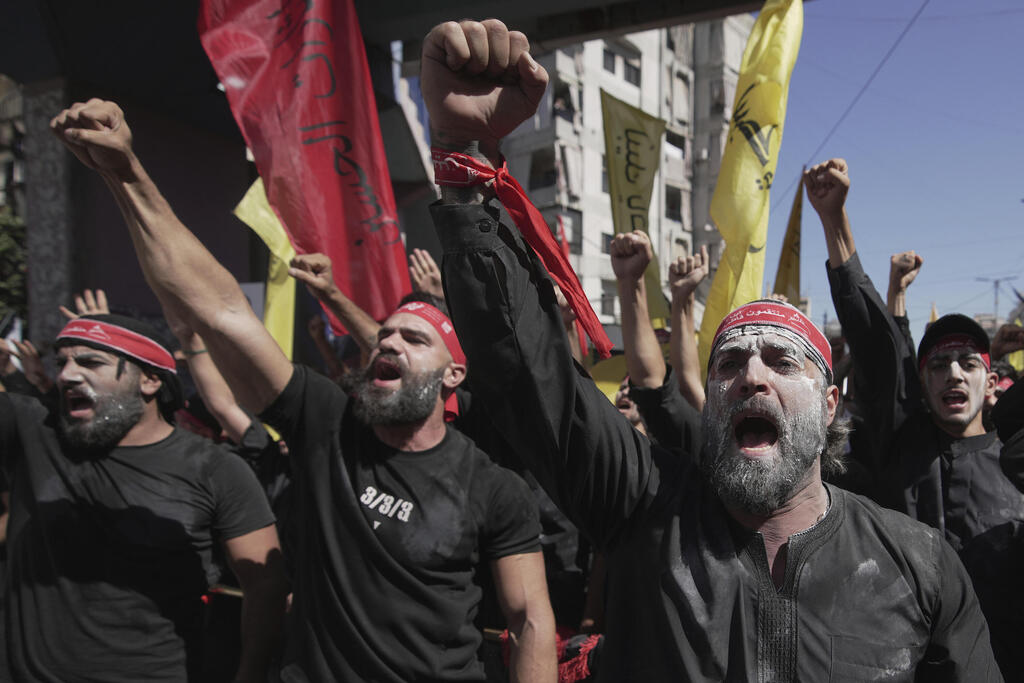
The walkout came during a tense cabinet session — the second this week — as ministers debated a dramatic proposal aimed at stripping Hezbollah of its weapons, a move that would mark a historic turning point for Lebanon. Prime Minister Nawaf Salam had said earlier this week that the Lebanese Army would draft an implementation plan by the end of August. The goal, according to Salam, is to complete the disarmament process by December 31. But no formal decision has been announced amid fears of unrest and potential violence from Hezbollah supporters.
The U.S. plan, submitted by President Donald Trump’s envoy Thomas Barrack and obtained by Reuters, lays out a four-phase framework: a cabinet decree within 15 days committing to Hezbollah’s disarmament; implementation within 60 days; phased Israeli withdrawals from southern Lebanon; and an international economic conference in the final stage to support reconstruction. The final phase requires Hezbollah’s remaining heavy weapons — including drones and missiles — to be dismantled under Lebanese Army supervision.
While publicly supporting state sovereignty, Hezbollah has fiercely rejected the plan. Following Tuesday’s cabinet directive, the group issued a statement calling the move “a grave sin,” accusing the government of endangering Lebanese sovereignty and enabling Israeli interference. “We consider this decision nonexistent,” Hezbollah said, vowing to ignore it.
The cabinet discussions reflect a dramatic political shift since last year’s war between Israel and Hezbollah, which erupted after the terrorist group launched cross-border fire in support of Hamas at the start of the Gaza war in October 2023. The war ended in a fragile ceasefire in November, but not before Israel killed top Hezbollah commanders and eliminated its long-serving leader, Hassan Nasrallah, dealing the group its most serious blow in decades.
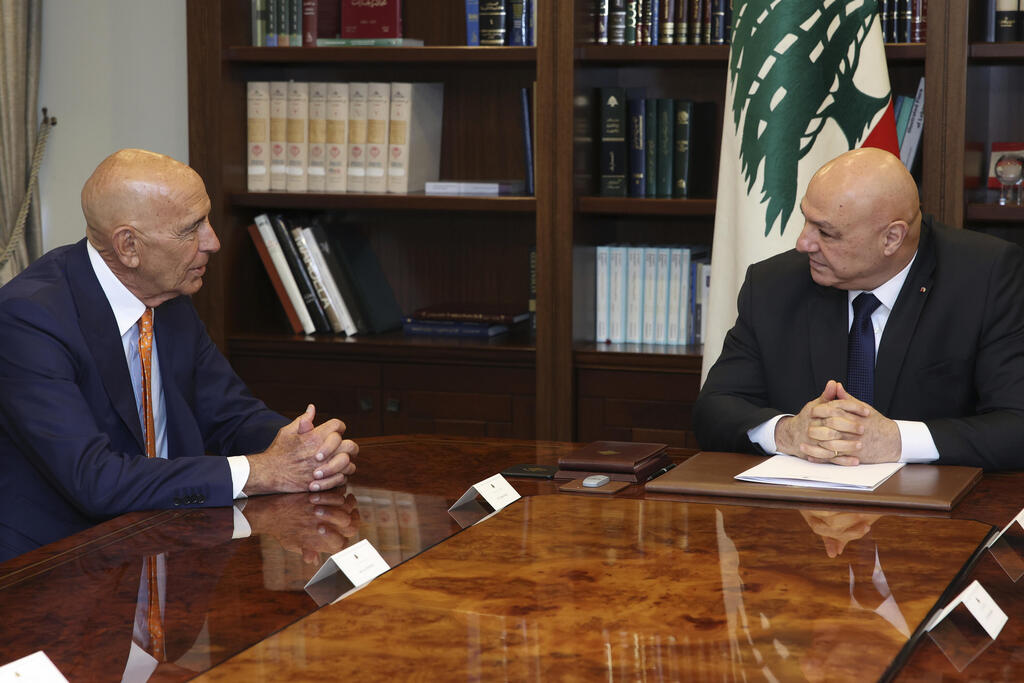
Lebanese President Joseph Aoun meeting with U.S. envoy Thomas Barrack
(Photo: Lebanese Presidency Press Office/AP)
Hezbollah’s weakening on the battlefield helped end a two-year political deadlock and led to the election of President Joseph Aoun, a former army chief. Aoun and Prime Minister Salam are now spearheading what they call a “historic” effort to restore the Lebanese state’s monopoly on weapons.
In an interview with Saudi-owned Al-Hadath TV, Aoun declared: “The state’s monopoly on arms will be achieved despite the obstacles. We await the army’s plan to regulate weapons and we will discuss and approve it.”
The proposal has the backing of Washington and other Western and Arab governments. It also includes provisions for halting Israeli airstrikes, releasing Lebanese prisoners held by Israel and securing U.S., French and Qatari guarantees to support implementation. But Aoun acknowledged the plan requires Syrian and Israeli consent to move forward.
Foreign Minister Youssef Rajji, a Christian politician known for his opposition to Hezbollah and Iran’s influence in Lebanon, condemned recent remarks by Iranian Foreign Minister Abbas Araghchi, who defended Hezbollah’s weapons and said the group “has proven its strength on the battlefield.” Rajji said such statements constituted “unacceptable interference” in Lebanon’s internal affairs and sovereignty. “It is unacceptable for bilateral relations to be used to promote actors operating outside the framework of the state,” he said.
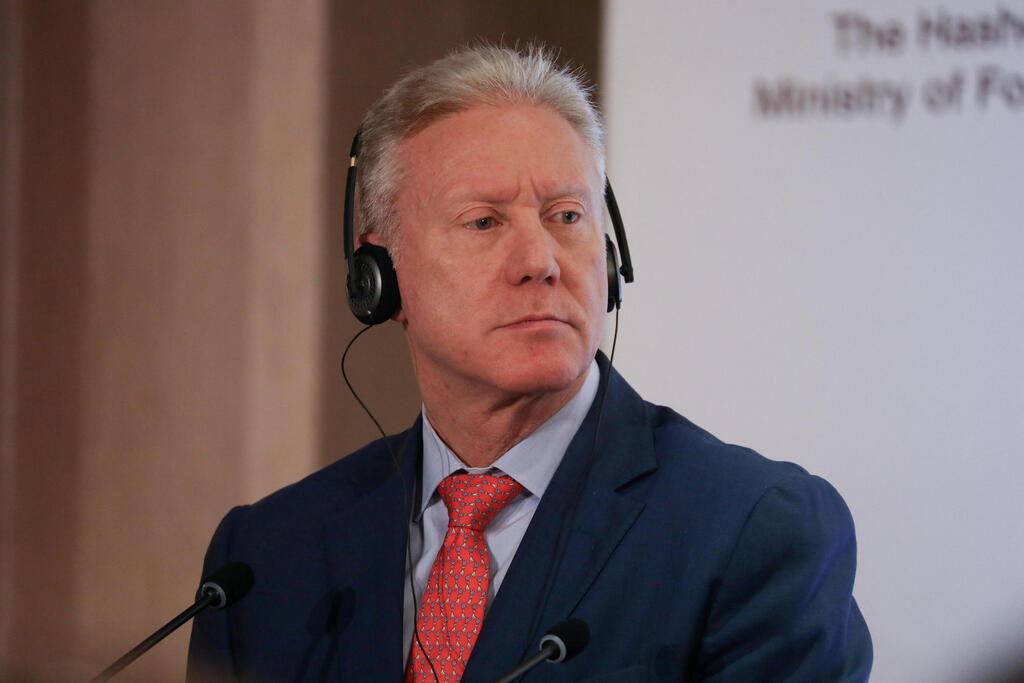
Foreign Minister Youssef Rajji
(Photo: REUTERS/Alaa Al Sukhni)
Christian Parliament lawmaker Samy Gemayel urged the Foreign Ministry to summon Iran’s ambassador as a first step toward expulsion.
As tensions rose ahead of Thursday’s session, the pro-Hezbollah daily Al-Akhbar published a warning citing unnamed sources that Hezbollah and the Amal movement were prepared to escalate politically if the disarmament plan advanced — including a possible resignation from the government and a no-confidence vote in parliament where the Shiite bloc controls 27 seats. The paper also warned of mass street protests if the cabinet decision is seen as “an attack on a large segment of the Lebanese population.”
Get the Ynetnews app on your smartphone: Google Play: https://bit.ly/4eJ37pE | Apple App Store: https://bit.ly/3ZL7iNv
Hezbollah Parliament lawmaker Ali Mekdad told Qatar-based Al-Araby TV that his party “will not recognize any government decision regarding the disarmament or surrender of weapons.” He said Hezbollah ministers would not vote for such a plan and warned that it would grant Israel “legitimacy to occupy Lebanese land.”
Still, Mekdad called for calm and dialogue, saying: “Talk of civil war is not part of our thinking.”
Iran, Hezbollah’s longtime sponsor, has also stepped up its messaging. “This is not the first attempt to disarm Hezbollah,” Araghchi said. “They believe that after the recent war they can succeed — but the resistance has shown strength.”
Despite the tensions, President Aoun insisted Lebanon would move forward. “The state’s control over weapons does not harm Lebanon’s sovereignty,” he said. “It restores it.”