



U.S. President Donald Trump continues deliberating whether to join Israel in attacking Iran's nuclear facilities, as Tehran intensifies efforts to deter such action.
Recent Iranian threats now include not only missile and drone attacks against U.S. forces in the Middle East but also a dramatic move to close the strategic Strait of Hormuz – a step that would trigger an immediate global spike in oil and gas prices.
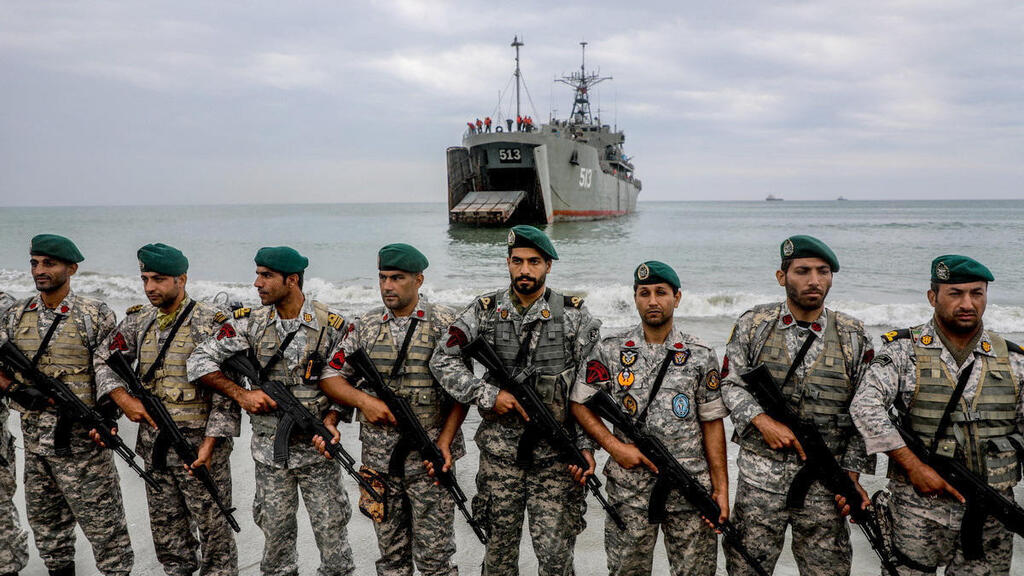
An Iranian source quoted Tuesday in Qatar’s Al-Araby Al-Jadeed newspaper warned of "additional measures," including strait closure plans ready for implementation if conflict escalates to "all-out war" with U.S. involvement.
Mohsen Rezaee, a member of Iran’s Expediency Discernment Council advising Supreme Leader Ali Khamenei, echoed the threat Wednesday: "We have severely punished the enemy but it is not enough. We have not yet used our land and sea capabilities, oil, the Strait of Hormuz, [or] new missile technologies."
The narrow Strait of Hormuz – spanning 34 km (21 miles) at its tightest point – serves as a critical global transit artery, handling one-third of the world’s seaborne oil and one-fifth of its liquefied natural gas.
Blocking this maritime chokepoint would sharply inflate energy costs, potentially giving Iran leverage to force an end to hostilities. Such price volatility carries particular sensitivity in the U.S.
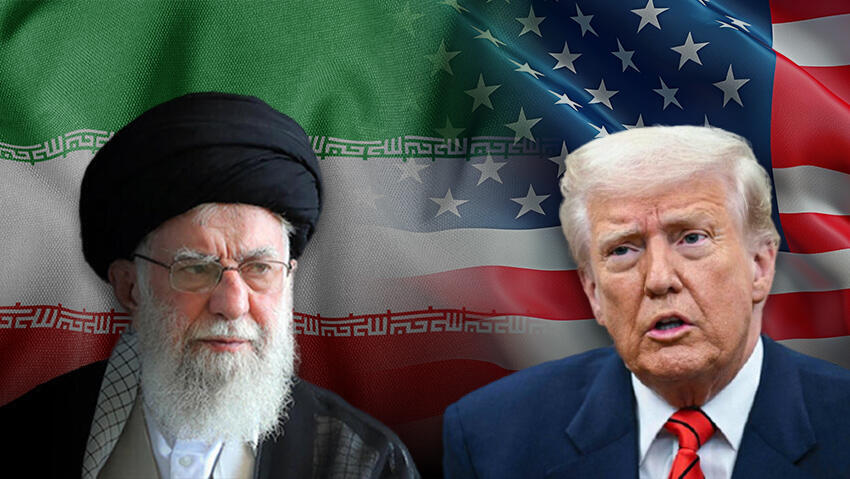
Iran's Supreme Leader Ali Khamenei, U.S. President Donald Trump
(Photo: CameraObscura82 shutterstock, Smolkov Vladislav shutterstock, REUTERS/Mohammed Yassin, Iranian Leader's Press Office, Mandel NGAN / AFP)
While Israel has degraded many of Iran’s strategic military assets, focusing on nuclear and missile sites, it has not targeted Iran’s naval forces. A Wednesday New York Times report noted Iran retains sufficient naval assets to disrupt Hormuz traffic by mining its waters.
U.S. military officials warned the paper this could endanger American naval forces in the Persian Gulf, prompting White House discussions on preparing for such a scenario.
Get the Ynetnews app on your smartphone: Google Play: https://bit.ly/4eJ37pE | Apple App Store: https://bit.ly/3ZL7iNv
Two U.S. defense officials told the outlet an Iranian blockade could isolate American minesweepers – specialized warships for clearing naval mines – potentially trapping them on one side of the Gulf. The U.S. military is reportedly repositioning vessels to reduce vulnerability.
Retired U.S. General Joseph Votel, former CENTCOM commander, and retired Vice Admiral Kevin Donegan, former U.S. Naval Forces Central Command chief, both told the outlet Iran possesses the operational capability to mine and block Hormuz.
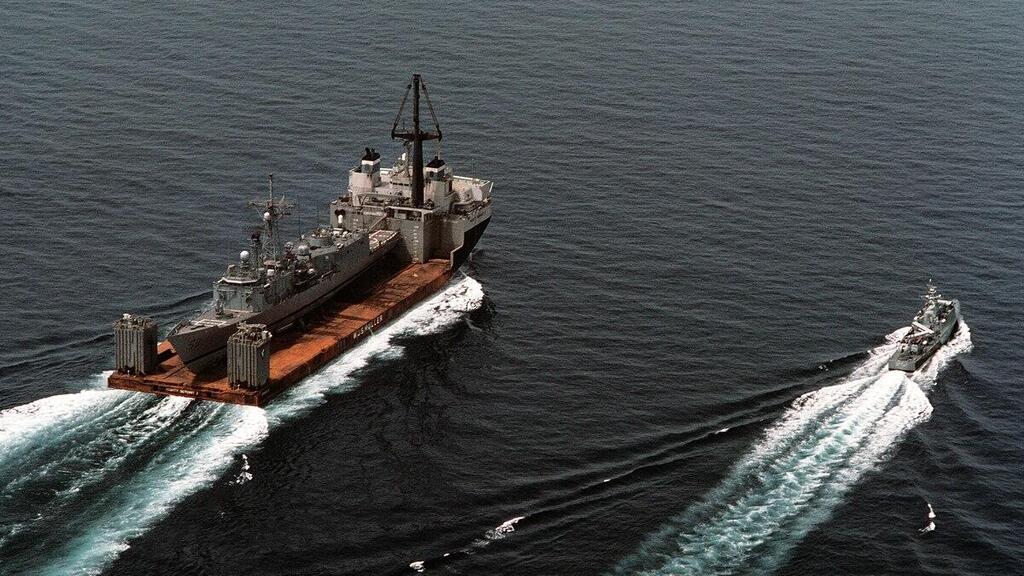
The USS Samuel B. Roberts at the Strait of Hormuz in 1988
(Photo: U.S. Navy)
Donegan noted this could pressure Israel diplomatically but would inevitably provoke a "massive U.S. military response," further straining Iran’s struggling economy. "Mining would also hurt Iran. They could lose significant oil revenue to China," Donegan said, adding Tehran’s leadership – now prioritizing regime survival – might be willing to "absorb" that cost.
Johns Hopkins University Iran expert Prof. Vali Nasr assessed Tehran aims to "remind" Trump it retains means to harm U.S. regional interests "whether weakened or not." He cautioned a U.S. strike brings "big unknowns," noting "so much could go wrong."
Karim Sadjadpour of the Carnegie Endowment for International Peace described Iran’s options as the "strategic equivalent of a suicide bombing," capable of inflicting massive damage through mining, attacking regional oil facilities or missile barrages against Israel – but potentially unable to "survive the retaliation."
Iran has demonstrated this capability before, notably during the 1988 Tanker War with Iraq when it mined Hormuz. One mine struck the U.S.S. Samuel B. Roberts, nearly sinking the guided-missile frigate.
A former U.S. Navy officer who served on a minesweeper told the New York Times that any new Iranian mining campaign would make clearance operations extremely costly and dangerous, likely exposing U.S. sailors to direct danger.
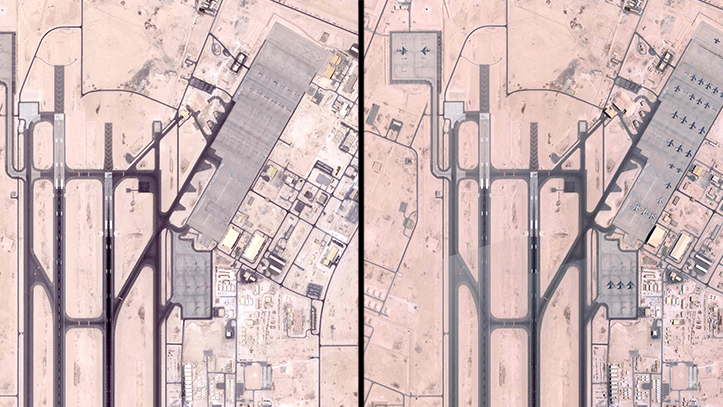
Al Udeid Air Base in Qatar after and before U.S. forces evacuation
(Photo: Handout / PLANET LABS / AFP)
Iran possesses multiple mine types: limpet mines (small explosives attached by divers to hulls), moored mines (anchored explosives floating below the surface) and sophisticated bottom mines (resting on the seabed and triggered by magnetic, acoustic or pressure sensors).
The U.S. Navy has four minesweepers in the Gulf, each with about 100 sailors based in Bahrain. Clearance would fall to the Navy’s Task Force 56, potentially employing advanced technologies like undersea robots for faster sonar scanning – though divers might still be needed for high-risk mine disposal.
Despite the Hormuz threat, defense officials emphasized that missiles and drones targeting U.S. bases housing over 40,000 troops remain the primary concern. "These would be short-range versions, not those fired toward Israel," Donegan clarified, noting these Iranian capabilities remain intact.
Reflecting this threat, the U.S. reportedly evacuated dozens of aircraft from Al Udeid Air Base in Qatar – its largest regional base – with recent satellite imagery showing only three transport planes remaining where nearly 40 were visible earlier this month.