

About 40 people—including 9 families from the Golan Heights and the West Bank—gathered Monday in the Golan buffer zone for a cornerstone-laying ceremony of a planned community called “Neve HaBashan,” named after the Syrian city of Neve.
Placing a cornerstone for a planned community
(Photo: Pioneers of Bashan)


Among the participants, who call themselves the “Pioneers of Bashan,” seven youths went further east, crossing several feet into Syrian territory. They planted an Israeli flag and a sign before IDF troops escorted them back. The group was detained for questioning and released that evening.
Police said several girls present claimed the border gate had been open and they were unaware crossing was illegal. They were summoned for further questioning set for Wednesday but are unlikely to face charges, given that weeks earlier thousands of Druze crossed into Syria without prosecution.
Professor Amos Azaria, 44, from Ariel in the West Bank, said the purpose was to promote Jewish settlement across the Bashan region. “We came for the cornerstone ceremony of Neve HaBashan, named after a Syrian community about 9 miles east of here. This area was captured in 1973, handed back to Assad’s regime in 1974, and in December the prime minister said that agreement had collapsed. He declared the area under Israeli control and that it should be an inseparable part of the State of Israel,” he said.
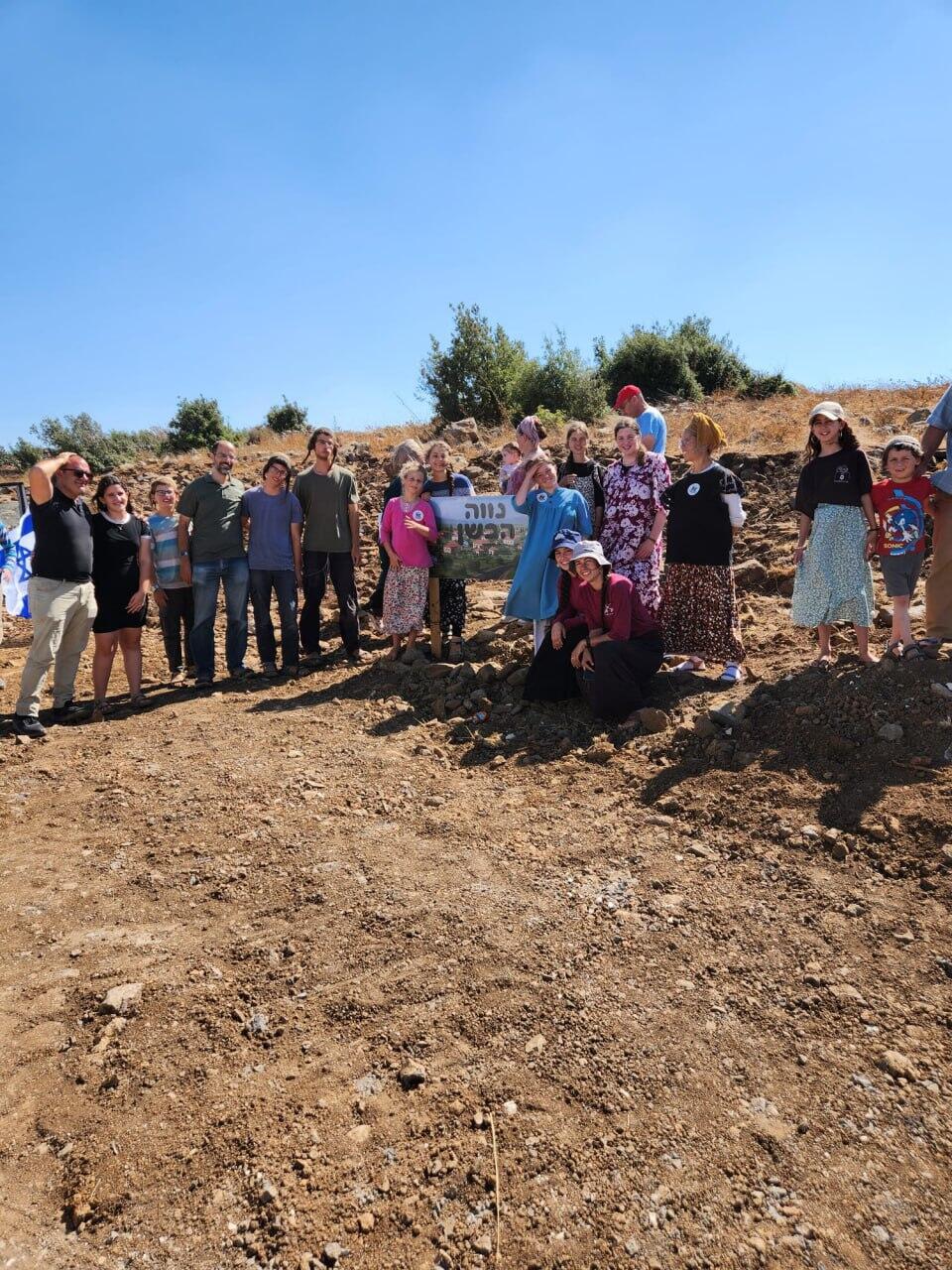
Azaria described how the incident unfolded on Monday. “We were there for a long time. The gate was open and we crossed. After a while, a jeep with two soldiers came and told us we had to leave, so we left. A group lingered and was later summoned by police. We placed a Neve HaBashan sign, and the family of Yehuda Dror Yahalom set a cornerstone in his memory. His father said it strengthened him, that this is the way to commemorate his son and win the war,” he said.
“All of Bashan is an integral part of the Land of Israel for generations," he added. "This is land Moses conquered. Today Druze live on Mount Bashan further east, while between the Golan and the mountain are Sunni jihadists waiting to slaughter us or the Druze. That whole area must be cleared and settled—it’s part of our land. The Druze would welcome us living alongside them.”
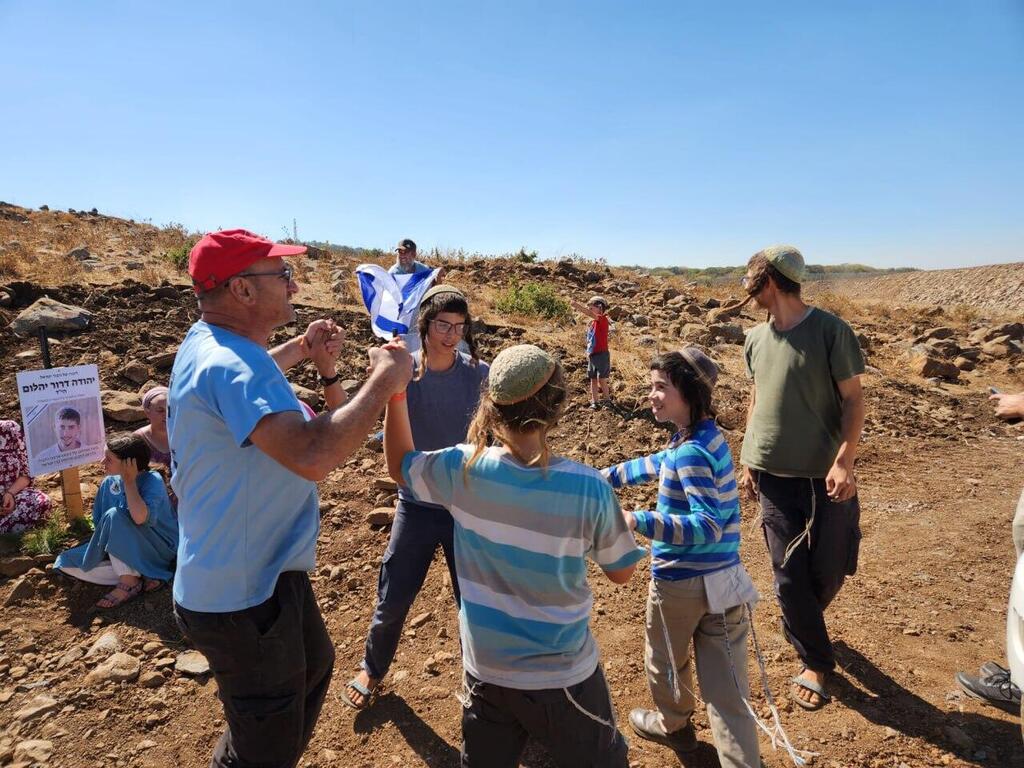
(Photo: Pioneers of Bashan)
Ori Kallner, head of the Golan Regional Council, condemned the crossing. “This was a red line. Entering Syrian territory is not only illegal but a personal, security and community risk. Golan residents live responsibly, and we expect visitors to respect the law and the soldiers protecting us. Such actions are unnecessary and dangerous,” he said.
The “Pioneers of Bashan” fired back in a statement: “We regret that the council head chose to slander pioneering families, some from the Golan itself, who are working to settle the land—just as Merom Golan was established three months after the Six-Day War. Believing fences and barriers will protect us from jihadists just beyond is a dangerous illusion. We expect the Golan Council head to lead in praising Jewish settlement in Bashan, to bring security first to Golan residents, and with them to all Israel.”