


Nearly 20 years after the last Palestinian legislative elections, Hamas is holding talks with Palestinian Islamic Jihad, the Fatah reformist faction associated with Mohammed Dahlan and several other groups over the creation of a broad “national alliance” ahead of elections scheduled for November 28.
The talks, which follow weeks of meetings among Palestinian factions in Cairo, could produce one of the most unusual political coalitions in recent Palestinian history.
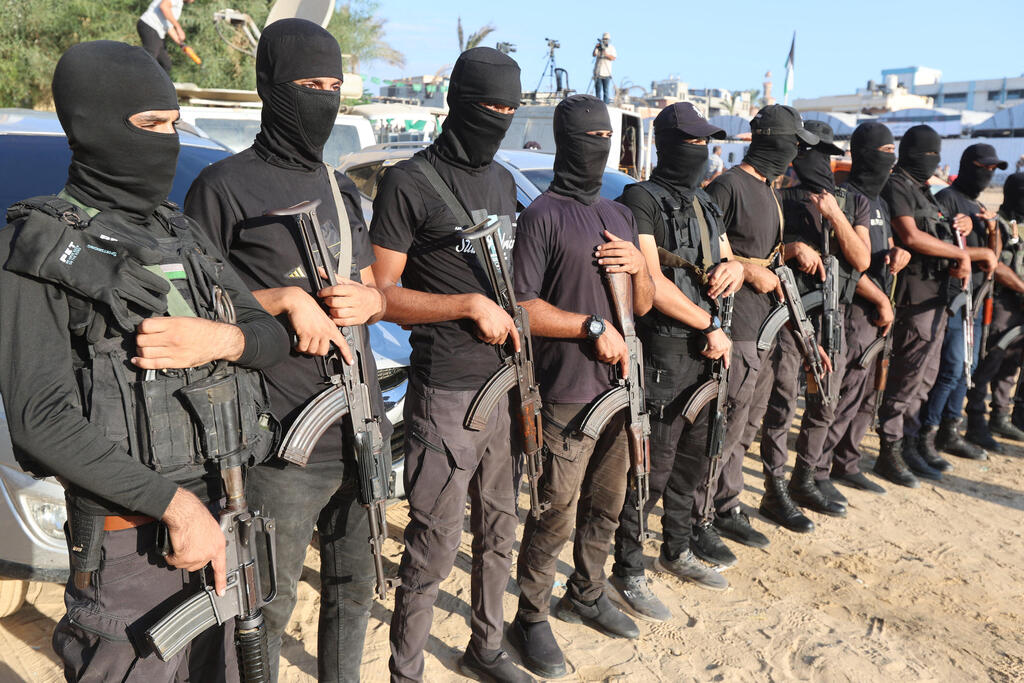
Palestinian sources say the emerging alliance could also include the Popular Front for the Liberation of Palestine, the Democratic Front for the Liberation of Palestine, the Popular Resistance Committees and independent candidates.
But behind the electoral maneuvering lies a larger question: whether one of the indirect political consequences of the Gaza war will be the integration of Hamas and other armed factions into the Palestinian political system as legitimate institutional players.
Hamas has already announced that it intends to participate in the election as part of the broadest possible coalition. Senior Hamas official Husam Badran said the movement would work to establish a list representing a wide range of Palestinian society.
This time, Palestinian Islamic Jihad could also take part. If that happens, it would mark a significant shift for a movement that has traditionally operated primarily through armed activity and remained outside Palestinian electoral politics.
From armed factions to political players
Hamas and Islamic Jihad are not entering the race as new political movements. Both have armed wings and are designated terrorist organizations by the United States and other countries.
Their possible participation therefore raises a fundamental question about the postwar Palestinian political order: Can participation in elections grant institutional and public legitimacy to movements that retain armed capabilities and have not abandoned their ideology?
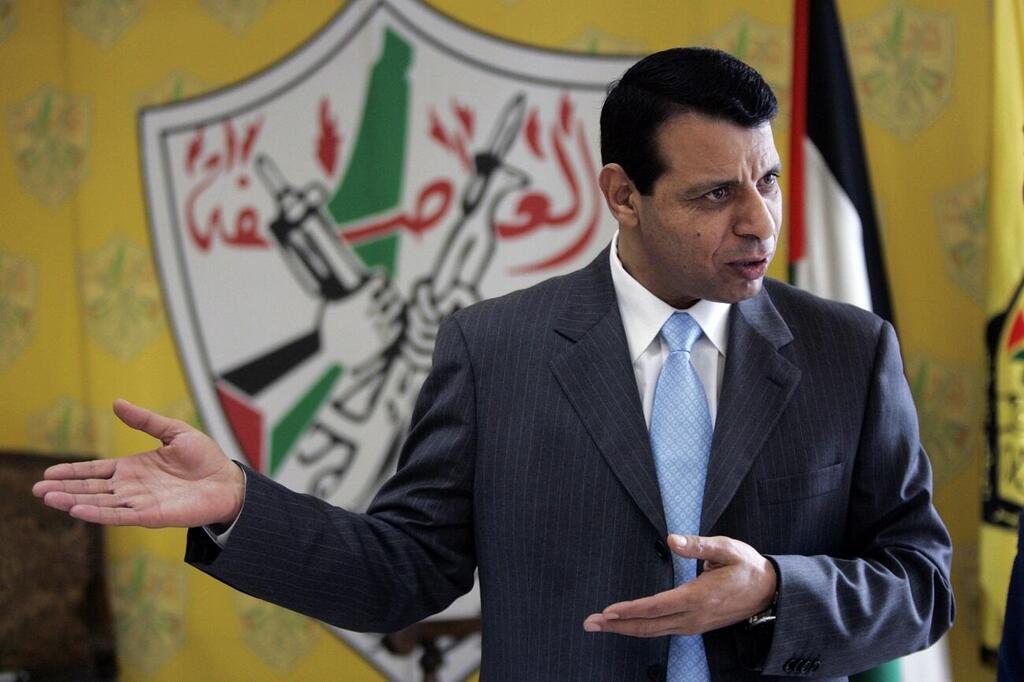
An effort to create a framework bringing together Hamas on one side and the Dahlan camp on the other
(Photo: Majdi Mohammed, AP)
There is currently no indication that either organization intends to give up its weapons or fundamentally alter its positions. Instead, the emerging model could combine participation in formal political institutions with continued military power.
Some Palestinian and international actors see broader factional participation as a possible means of addressing the long-running division between the West Bank and Gaza and creating a more inclusive Palestinian governing structure.
For Israel and countries that designate Hamas and Islamic Jihad as terrorist organizations, however, their potential entry into elected institutions presents a far more complicated challenge.
Supporters of the proposed alliance describe it as an effort to build “national partnership” and challenge what they see as political exclusion and centralized decision-making. Ismail Thawabta, who is associated with Hamas in Gaza, welcomed the initiative and portrayed it as an alternative to excluding factions from political decision-making.
Those involved in the talks say discussions include a common political platform, corruption and favoritism, preventing “political exclusion” and the future relationship between the West Bank and Gaza.
In practice, the talks represent an attempt to bring together factions from very different parts of the Palestinian political spectrum: Hamas, the Dahlan camp, Islamic Jihad and other groups.
Fatah, however, has already rejected the possibility of running on a joint list with Hamas. According to Al Jazeera, a Fatah spokesman said the movement intends to run its own slate and that internal party rules do not permit it to participate on a unified list with Hamas.
Preparations for the vote are continuing in parallel. The Palestinian Central Elections Commission said 87.2% of eligible voters in the West Bank have registered, totaling more than 1.62 million people. The November 28, 2026 election is expected to be the first vote for the Palestinian Legislative Council since January 2006.
But reaching the ballot box is far from guaranteed. Deep disagreements remain among Palestinian factions over candidate lists, political programs and participation. Elections were also scheduled in 2021 before being canceled.
Palestinian analyst and researcher Alaa Rimawi has pointed to two main scenarios: postponement because of political disputes, or elections in which the emerging alliance makes significant gains.
The second scenario could dramatically alter the Palestinian political landscape. If Hamas, Islamic Jihad, the Dahlan camp and other factions run together and perform strongly, the central question may no longer be simply who won the election, but who is entitled to form the Palestinian leadership and what role armed factions will hold inside it.
Dr. Ali Abu Rizq, a Gaza-based expert on Palestinian affairs, has warned that the formation of such an alliance could itself become one of the factors threatening whether the elections take place. He also noted that Fatah could split into several competing lists, as happened ahead of the canceled 2021 election.
If so, the November vote could become far more than another contest for seats in the legislature. It could turn into a struggle over the future structure, legitimacy and leadership of the Palestinian political system.