

The Israeli Air Force launched a wave of strikes across southern Lebanon on Sunday morning after Hezbollah fired two explosive drones at IDF troops operating in the area. Soldiers intercepted one of the drones, and no Israeli casualties were reported.
Security officials said the launches were intended to stop or delay the IDF’s destruction of Hezbollah infrastructure on the strategic Ali Taher ridge, where Israeli forces recently completed a major operation.
IDF strikes in southern Lebanon


Following an evacuation warning, the IDF struck a building in Arab Salim in the Nabatieh district. Lebanese reports said one person was killed and three others were wounded. A three-story building was also struck in Kfar Roummane, while Lebanese media later reported a strike on a motorcycle in Nabatieh.
Another strike in Nabatieh al-Fawqa hit a building belonging to Randor Hospital. Lebanese reports described it as a hospital building, while Israeli security officials told ynet it was completely empty and was being used as a Hezbollah command headquarters.
“The IDF is currently operating, and will continue to operate forcefully, against Hezbollah terrorist organization’s repeated attempts to harm our troops,” the military said.
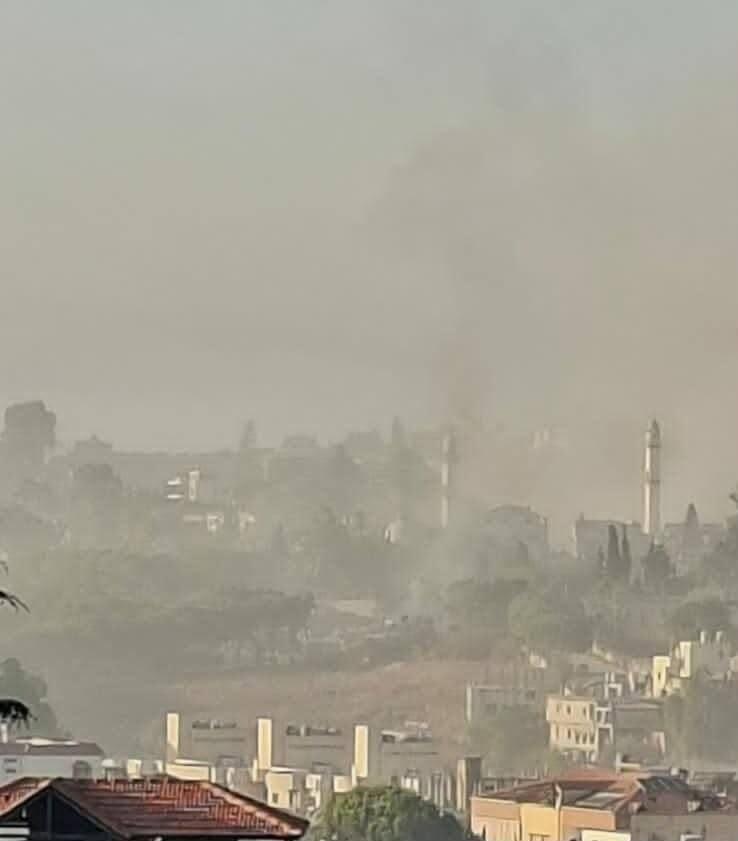
Images from the hospital area. Security officials: Hezbollah command post
Separately, the IDF announced a surprise General Staff exercise to test readiness for a sudden multi-front escalation. The drill is examining alert levels, the mobilization of forces and reserves, decision-making procedures and operational responses across the military.
The exercise was kept within a tightly restricted circle to surprise even senior generals and includes the rapid deployment of a battalion by helicopter. The IDF said increased movement of troops and aircraft would be noticeable across Israel, stressing that there was no actual security incident.
The military said the drill also incorporates lessons from fighting on multiple fronts and from the October 7 attack.
Hezbollah pressure over Ali Taher
Last week, the IDF said special forces had completed clearing the Ali Taher ridge of Hezbollah operatives. Security officials said no Iranian advisers or Quds Force members were identified there during the weeks-long operation.
According to the military, troops trapped Hezbollah operatives inside the compound, monitored escape routes and blocked outside assistance. Underground facilities included command rooms, weapons stores, generator rooms, living quarters, showers and a kitchen.
The IDF described the site as strategic infrastructure built over two decades with Iranian funding and planning.
First published: 06:59, 09.06.26