

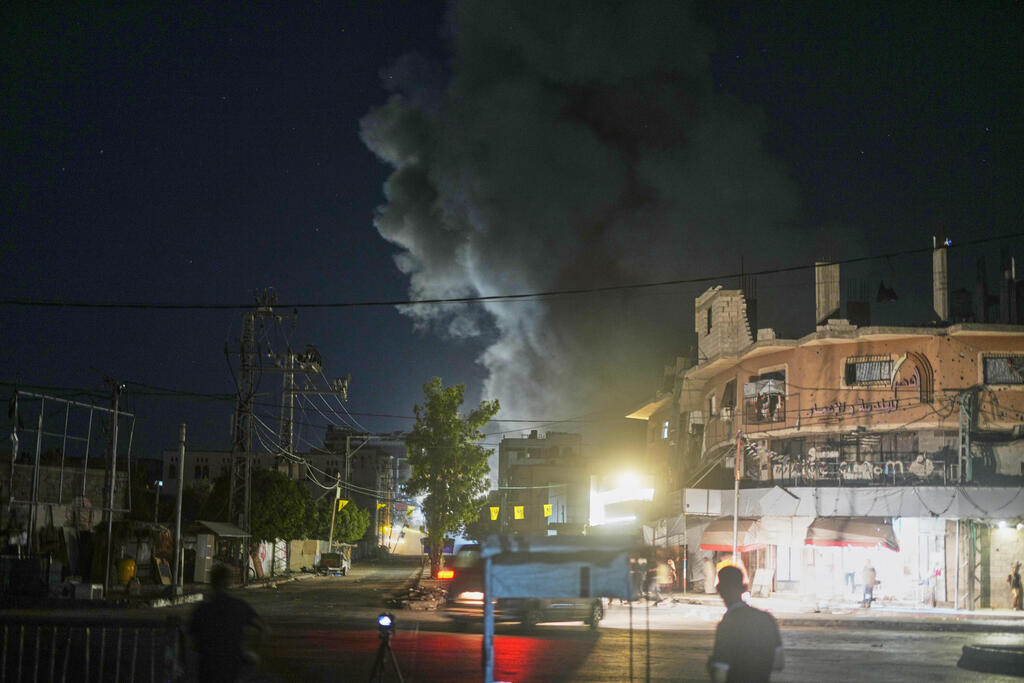
Two days of Israeli strikes across the Gaza Strip have killed civilians, destroyed vital medical supplies and threatened to derail efforts to advance a comprehensive agreement on the territory’s future, High Representative for Gaza Nickolay Mladenov, who heads the U.S.-backed Board of Peace, said Sunday.
Mladenov said he and his team were working “around the clock” with Israel, Palestinian factions, mediators and regional partners to de-escalate the situation and create the conditions needed to implement U.S. President Donald Trump’s Gaza peace plan.
“Two days of strikes across Gaza have killed civilians and destroyed medical supplies that people depend on,” Mladenov wrote. “This comes after intense efforts by the Board of Peace and the mediators, Egypt, Türkiye, Qatar and the U.S., to bring the Palestinian factions in Gaza to agree to a Roadmap on the full implementation of President Trump’s plan, to hand over civilian governance and to decommission their weapons.”
He said both Israel and the Palestinian factions remained bound by obligations under Trump’s Comprehensive Plan and the Sharm el-Sheikh agreement that secured the release of all hostages.
“Achieving a lasting peace is hard but achievable if everyone makes their best efforts,” he said.
The proposed roadmap is intended to complete the implementation of Trump’s plan through a phased process linking Hamas’ removal from power and the dismantling of armed factions to an Israeli withdrawal, new Palestinian governance and internationally supervised reconstruction.
The framework has been promoted by the Board of Peace, the international body established to oversee Gaza’s transition under the plan. The roadmap remains under negotiation, with significant disputes over disarmament, verification and the sequence of Israeli withdrawal.
One authority, one law, one weapon
Under the proposal, the United States, Israel, Hamas and the other Palestinian factions would adopt Trump’s Comprehensive Plan as the basis for a permanent arrangement in Gaza.
Its declared objectives include ending the fighting, completing Israel’s withdrawal from the territory, establishing a new Palestinian governing mechanism, rebuilding Gaza and advancing a political process toward Palestinian self-determination and statehood.
Progress from one stage to the next would depend on the parties fulfilling their obligations, subject to confirmation by an international verification committee.
Hamas and the other factions would relinquish all civilian and security authority to a new Palestinian committee responsible for governing Gaza. It would become the territory’s sole civilian and security authority, operating under the principle of “one authority, one law, one weapon.”
The committee would manage Gaza’s institutions, public services, police and public assets. Hamas and other armed factions would have no direct or indirect role in governing the territory.
At the same time, a gradual and internationally supervised process would begin to decommission heavy weapons, tunnels, weapons-production facilities and arms depots. Once completed, only the new Palestinian authority would be permitted to hold weapons in Gaza.
Militia members would not be incorporated into the new security services, while privately held weapons would be subject to registration, licensing and enforcement by the new Palestinian authorities.
The plan provides for phased implementation, with each step verified before the parties proceed to the next stage.
International force and Israeli withdrawal
An International Stabilization Force would be deployed in Gaza to monitor the ceasefire, protect humanitarian assistance, support the transfer of weapons and train the new Palestinian police.
The force would not conduct regular policing operations. Those responsibilities would remain with vetted Palestinian officers operating under the new governing committee.
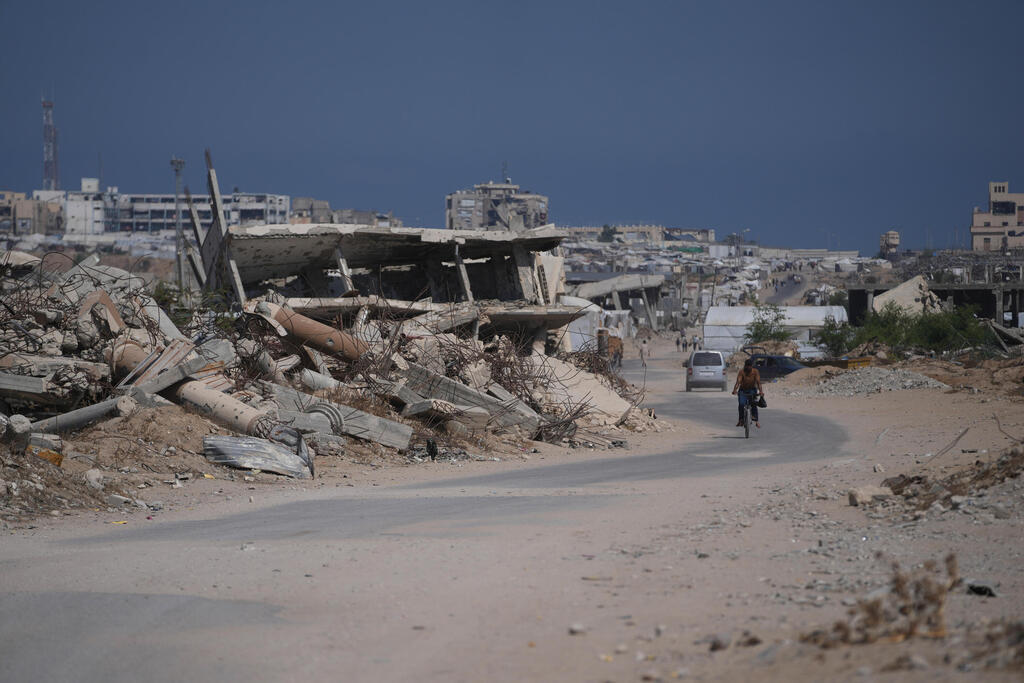
Israeli forces would gradually withdraw from Gaza according to an agreed timetable and verified progress in the disarmament process. The IDF would ultimately pull back to the territory’s perimeter, while the international force would serve as a buffer and support the transition.
(Photo: AP Photo/Abdel Kareem Hana)
A multiyear reconstruction program would begin in areas certified as disarmed and placed under the authority of the new Palestinian administration. Funding and oversight would be provided internationally.
The proposal also calls for an internal Palestinian peace agreement prohibiting political violence, revenge attacks, armed demonstrations and military parades.
Mladenov’s warning came as the latest violence raised fears that renewed fighting could undermine the negotiations before the roadmap is finalized.
His message placed responsibility on both sides: Palestinian factions must surrender governing authority and decommission their weapons, while Israel must uphold the ceasefire and fulfill the withdrawal and humanitarian obligations contained in the broader agreement.
The central challenge is turning those parallel commitments into a sequence both parties accept. Without verified disarmament, the plan’s governance and reconstruction provisions cannot proceed. Without Israeli restraint and withdrawal, Palestinian factions and mediators are unlikely to accept the process.
Mladenov said his immediate priority was therefore to halt the escalation and preserve the diplomatic space required to put the roadmap into effect.