


Security officials have decided to overhaul their operational approach to preventing violence in West Bank areas under Palestinian Authority control, citing growing difficulties in coordination and enforcement, officials said on Sunday.
Under the new plan, primary operational responsibility will shift to Border Police in the West Bank, led by Assistant Commissioner Niso Guetta, while overall authority will remain with the IDF Central Command.
Palestinian attacks Jewish shepherd in West Bank


The West Bank is divided into Areas A, B and C under the framework of the Oslo Accords, an interim agreement between Israel and the Palestinians.
Area A is under full Palestinian civil and security control and includes major Palestinian cities. Area B is under Palestinian civil administration, while Israel retains overall security authority. Area C, which makes up the majority of the territory, is under full Israeli civil and security control and includes Israeli settlements as well as sparsely populated Palestinian areas.
The decision was made jointly by the Central Command, the Shin Bet internal security agency and the Judea and Samaria District of the Israel Police, following what officials described as persistent operational gaps in addressing ongoing incidents.
Security officials said the current structure — in which the military operates in Areas A and B, while police are responsible for enforcement in Area C — has created “blind spots” in law enforcement. Soldiers are not trained to carry out arrests of Israeli civilians, and police forces often face delays coordinating entry into Areas A and B, hindering timely response and, in some cases, the collection of evidence.
Under the revised framework, Border Police forces, which already operate in Areas A and B as part of their security role and have broader arrest authority, will take full responsibility for prevention efforts. Officials said the force is uniquely positioned to bridge the gap between military capability and police authority.
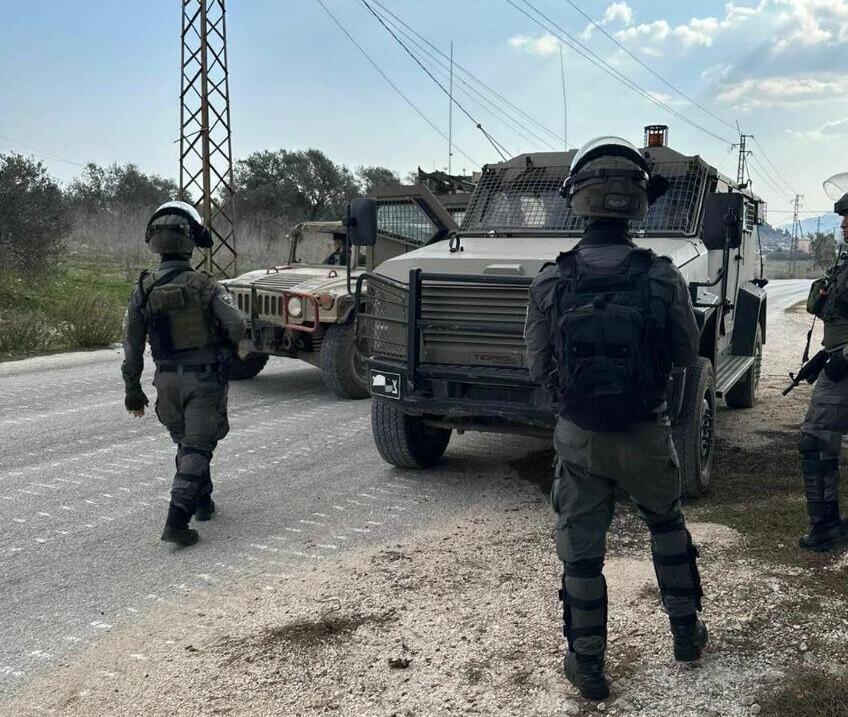
The need for change was underscored in a summary document compiled after a series of security discussions and following a directive from the prime minister to restore operations of a command center tasked with addressing nationalist crime. The document noted that after about two weeks of renewed activity, gaps remained that required tighter operational coordination between the command center and territorial responsibilities to enable effective prevention and rapid response to emerging incidents.
Guetta, who heads the Border Police’s West Bank unit, was specifically cited in the document as leading the prevention effort by leveraging the force’s relative advantages, including its deployment across the territory, expanded policing authority compared to IDF soldiers and combat capabilities.
Jewish assailants attempt to set fire to a Palestinian home
As part of the new operational plan, security forces will implement enhanced tactics based on intelligence and technological capabilities. These include force deployment guided by precise terrain analysis developed at a dedicated command center, as well as increased use of drone units and advanced surveillance to identify potential flashpoints early.
Special police patrol units will also be integrated into operations as needed, with Border Police deployments coordinated with IDF brigade and regional commanders.
Security officials described the move as a renewed and significant attempt to curb the phenomenon after previous measures failed to produce the desired results.
“We are adopting a different operational pattern,” officials said. “The goal is not only to respond, but to be present before incidents occur, act appropriately within the areas of responsibility in the West Bank, and synchronize the capabilities and authorities of the various agencies.”
Israeli forces operated overnight in the Palestinian village of Duma in the northern West Bank after a resident allegedly injured a Jewish shepherd during the Sabbath by throwing stones, striking him in the head, the military said.
During the operation, a Palestinian local attempted to snatch a weapon from one of the soldiers and was shot in the leg, according to the army. Palestinian reports said two people were wounded by Israeli fire.
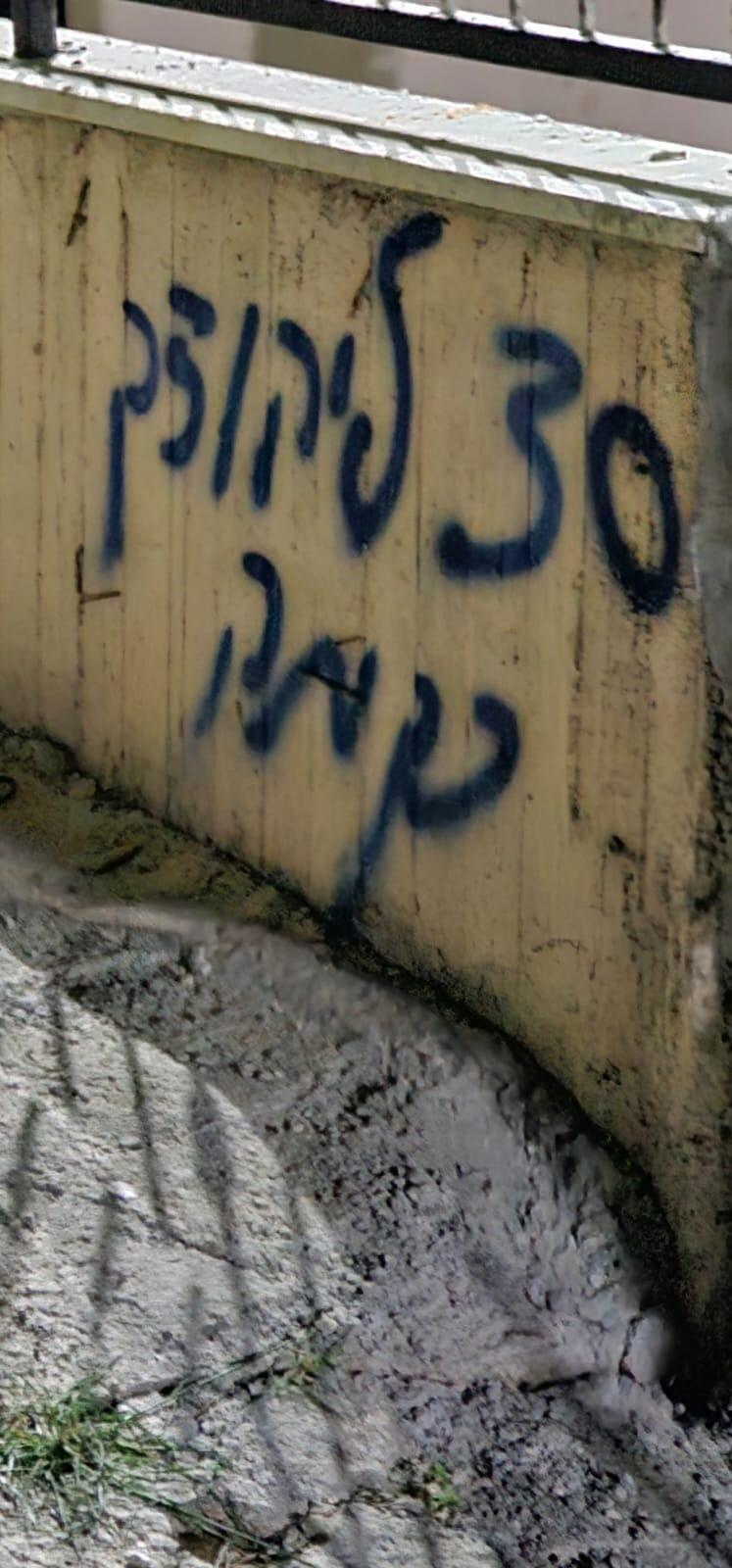
A graffiti reading '30 to Yehuda, revenge' left by settlers on a Palestinian home in West Bank
The Magen David Adom emergency service reported that a man in his 20s sustained a light head injury from stone-throwing near a village in the Nablus area. Paramedics evacuated him to Shaare Zedek Medical Center in Jerusalem with head trauma.
Several days earlier, also in the Nablus area, Jewish assailants attempted to set fire to a Palestinian home in the village of Beit Imrin, according to Palestinian reports. Eight family members, including an infant, were inside at the time and were affected by smoke inhalation.
The attempted arson was captured on security cameras, and local sources said residents prevented the house from burning after confronting the suspected arsonists. Two vehicles were also set on fire in the village.
The suspects daubed graffiti on a wall reading “30 to Yehuda, revenge,” in an apparent reference to Yehuda Shmuel Sherman, an 18-year-old Israeli civilian killed last month after being struck by a vehicle while riding an ATV in the West Bank. Authorities did not rule out the possibility of a nationalistic attack.
The army said forces were dispatched to the scene, but the suspects had fled. Police said an investigation has been opened.